Showing posts with label Spirit of 76. Show all posts

Monday, January 16, 2017

Barack Obama: American Stoic

If the Founding Fathers had a chance to meet Barack Obama, they would of course be shocked. Even the most enlightened of them were not prepared to imagine an African-American President. And what they would think about his policies is anyone's guess: the Founders' political philosophies were shaped by their political environments, and they wouldn't fit easily into today's debates. But I'm pretty confident that they would be impressed with President Obama's personal bearing, which sometimes seems to have more in common with their ideas of deportment and decorum than with our generation's ideas. The Founders would never have expected Obama, but they would have understood him. It's not just that Washington, Jefferson, and Adams would have been able to smell what Obama is cooking. It's that Obama is cooking from the Founders' favorite menu.

Barack Obama behaves in many ways like a Stoic. By that, I don't just mean someone quiet and uncomplaining, the way we use the word "stoic" today. I mean that Obama acts very much like a follower of the Stoic philosophy followed by many classical Greeks and Romans. The Stoics taught that you should master your emotions through reason and self-discipline and focus on living a virtuous life. They also taught that virtue, reason, and discipline could free you, psychologically, from the impermanence and unpredictability of the world around us. The Stoic definition of virtue was both personal and civic, and the test of virtue was your actions, not your feelings. The point was not to feel righteous or spiritually exalted, but to live a good and just life day to day. By definition, that meant being a virtuous citizen of your community.

I have never seen or heard Obama using the specific language of Stoicism, but he certainly acts like one, and for the real Stoics that's the test. (Someone who "believes in" Stoicism but lives corruptly, or in thrall to intemperate emotions, is not a Stoic. Someone who has never heard of Stoicism but walks the walk meets the most important standard.) Obama's behavior since the election has been one very illuminating example: being Obama, he has put his personal feelings aside and focused doing what seemed best for the country, and at certain moments his behavior seems at odds with what he's presumably feeling. If "what seems best" has varied over the last few weeks, it has been because of new information or changing events, not because of Obama's mood. It is not about his mood; "No-Drama" Obama considers his own mood the lowest priority, and would see it as a serious moral failure if he let his mood interfere with his duty.

The Founders would recognize and applaud this immediately. It's almost exactly the way they conceived of virtue. The other Founders loved and admired Washington because they saw him as a man who had been born with strong natural passions (not least his naturally ferocious temper), who subordinated those passions under iron self-control. (When Washington's mastery of his temper did slip, as it sometimes did during the setbacks of the Revolutionary War, the results could be volcanic.) Washington exemplified the reason-over-emotion approach that his era held up as the ideal.

And Washington's favorite work of literature, bar none, was Joseph Addison's play Cato, a historical tragedy about a Roman statesman and his Stoic civic virtue. Washington actually put on a production of Cato at Valley Forge, because it was a good example of how to put moral virtue and duty over merely physical problems like hunger, cold, and fear. In fact, Cato was a huge favorite among many of the Founders; Washington and Franklin are always quoting it, although we no longer recognize those lines as quotes. Nathan Hale's famous line, "My only regret is that I have but one life to give for my country," is straight out of Cato.

It is not a surprise that someone like Obama, who reads widely in history, philosophy, and literature, would absorb some Stoic ideas. Those ideas have been steadily passed down. The Renaissance saw a huge revival of interest in Stoicism, and the 17th and18th centuries, with their love of reason and order, borrowed freely from Stoic thought. (Joseph Addison didn't write a play about Cato for no reason.) Stoic ideas have found their way into our wider tradition. And the Obama's Stoicism-without-the-name has clear antecedents in the Civil Rights Movement and Martin Luther King Jr.'s approach to civil disobedience. That non-violent civil disobedience is, in practical terms, straight Stoicism: the protestors used their intellect and self-discipline to overcome danger, fear, and anger, so that violence, fear, and anger could not be used to control them. John Lewis sacrificing his body on the bridge at Selma, willingly allowing himself to be beaten rather submit to wrongful authority, is practical Stoicism of the highest order. Stoicism understands self-discipline as a synonym for freedom. If you can master yourself, you are free from other masters.

But Stoic self-control has so far out of fashion that we have trouble understanding it, trouble even calling it by its proper name. When most of us hear about someone subordinating their emotions to their reason, we tend to think of terms like "repressed" or "inhibited," terms that suggest that the person doesn't have full access to his or her feelings, or is too fearful to express them. We usually think that such a person needs to loosen up and become less inhibited, to express their emotions more. This started with the Romantic movement in the early 1800s, which prioritized emotional intensity above all, and was consolidated by psychoanalysis's attempts to free patients from genuine repression. At this point, a huge chunk of our popular culture is built around the proposition that everybody would be happier with less impulse control. We love stories about maverick-y cops and maverick-y fighter pilots and maverick-y scientists (all professions where mavericks can be genuinely dangerous). We watch reality TV, which deliberately showcases people who respond irrationally and hysterically to the most trivial challenges. We imagine a character like Mr. Spock, whose project superficially resembles the Stoics', as unable to feel, unable to name his feelings. When we have a Broadway hit about one of the Founders, we choose Hamilton, the one who was most volatile and out of control. (I love that show, but it only has a second act because Hamilton self-destructed.) And Key and Peele joke, hilariously, about President Obama's need for an "Anger Translator," who speaks the truths that Obama is imagined as unable to speak or to recognize.

All of this badly misunderstands Stoicism. Mastering your passions with reason and discipline does not mean being passionless. (George Washington did not need any Anger Translator. George spoke anger very fluently, and could release a poetic torrent of rage if he liked.) It does not mean lacking emotions, or lacking access to emotions. In fact, real self-control usually demands some serious self-knowledge. You cannot master your feelings if you do not know them. The difference between Stoicism and repression is that a repressed person cannot choose to express an emotion, even if they would like to, while an accomplished Stoic chooses whether and how to express something. From the Stoic perspective, a repressed man and a hysterical "maverick" are two sides of one debased coin: one cannot choose to express a feeling and the other who cannot keep himself from expressing it, but neither has any real control over their emotions. Obama's public performance over the last decade testifies both to his self-control and to his self-knowledge. He has more self-control than we are used to seeing in politicians, but also brings a sense of emotional authenticity, or genuineness, that few other politicians can match.

Obama's successor, of course, lacks anything like Obama's discipline. He seems to have given himself over entirely to uncontrolled passions. From a Stoic point of view, he is (as Hamlet puts it) "passion's slave." Because the President-Elect has no -- and apparently seeks no -- mastery of his own emotions, he is mastered by them, in the thrall of every momentary impulse or upheaval. On a profound level, he is not free. He is unable to govern his own emotional responses or his own behavior. He is the subject of a tyrant, and his response is to try to exert tyrannical control over those around him. But, tyrant that he may be, he is also exceptionally vulnerable to control and manipulation by others. Certainly, some of his advisers play on his emotional weaknesses. And although it is startling for the President-Elect of the world's most powerful nation to be under the thumb of a lesser foreign power's leader, this President-Elect's inability to govern his emotional life renders him, as the Stoics would expect, naturally servile.

The Founders, like the Roman Stoics before them, believed that only individual self-control, the ability of citizens to discipline their own passions and impulses, could make self-governing republics possible. Self-government is only possible through self-government, and when the citizens can no longer rule themselves through their reason and self-control, they will lose their collective ability to govern the republic or, worse, give that power away. It is the nature of the unmastered soul to seek a master elsewhere.  

This President-Elect is also a product of our wider culture, which has come to misunderstand "authenticity" as self-expression unfettered by decorum or reason. Only that fundamental misunderstanding allows the President-Elect to be misunderstood, by part of the public, as a person capable of leadership. The question for America, and for us as Americans, is whether we can regain the personal and civic discipline to keep our Republic free.

cross-posted from, and all comments welcome at, Dagblog

Sunday, November 13, 2016

I'm Staying American. How About You?

Because I love my country, Tuesday's election broke my heart. My fellow Americans -- less than half of us, but still too many -- turned their backs on what is best in our country to elect a man who has no love and no understanding of the things that make America great: freedom and equality.

Somewhere between forty-seven and forty-eight percent of voters decided that they wanted a race-baiting authoritarian instead. Those voters turned out not to love the same country I do, not to love it for the reasons it is worth loving.

But I still believe in that America. I believe in the America of liberty, equality, and justice for all, the America that has not always lived up to its values but still always had them. I am not quitting on that country. I was raised to love it, and I will die believing in it.

If America is about white people hating brown people, you can have it. That version of America can go to hell, and will. Yes, I know our history of racist violence and plunder. I cannot deny it. But I have no allegiance to that history. The America I believe in, the America worth believing in, has always existed alongside that uglier vision. They are the wrestling sides of the American soul. I am not done wrestling. If we give up on our better angels, there's no country left for me to love.

For the last five nights and days, I have been asking myself what I am going to do now. And I still have no answer but Whatever I have to. The path forward is not yet clear, and I am not ready for everything I may need to do. I am not eager for any of it. This is not the fight I would have chosen.

But I have had it easy. I grew up lucky in a free country, in a generation that was not asked much. I was a sunshine patriot, born in the sun. I could praise the heroes of our past, the Franklins and the Lincolns and the Dr. Kings, without having to ask if I would have met their challenge. That isn't true anymore. I wish it were, but it's not.

Some generations are asked to go to Valley Forge: to stand by their country when the outlook is darkest. Some generations are chosen to stand up for the American experiment, to risk and suffer for it, to bear witness. We have now become one of those generations, and we are off to a sorry start.  But this, of all times, is not the time to quit. This is when America, the America we grew up loving, needs us most. The time for the sunshine patriot is gone. These are the times that try men's souls.

crossposted from, and all comments welcome at, Dagblog


freedom for all under the law, equal protection and opportunity, and America dedicated to expanding

Sunday, March 06, 2016

Trump vs Hamilton

A brash loudmouth from New York City has been taking America by storm lately, to the consternation of the traditional political elite. I'm talking, of course, about Alexander Hamilton, and about Hamilton, Lin-Manuel Miranda's monstrous, Grammy-winning Broadway hit. A rap-driven Broadway musical with a racially diverse cast has managed to delight many conservatives with its joyful, reverent embrace of the Revolution and of the American Experiment. It's sold out a year in advance, and legions of fans, including me, bide time listening to the original soundtrack album over and over. (To quote Miranda's lyrics: his poor wife.) Hamilton isn't just a ground-breaking piece of theater; it's also a vision of America.

It's very different from the idea of America being peddled by that other phenomenal loudmouth from New York City, Donald Trump. Both Hamilton and Trump are enjoying unexpected, unprecedented success right now. So it's worth thinking about the competing national visions they're promoting.

Trump's vision is deeply anti-intellectual. There's a deep streak of know-nothingism in our history; Richard Hofstadter's classic Anti-Intellectualism in American Life makes the case so convincingly it breaks your heart. But Trump represents a new low point. His "speeches," which aren't really speeches but grab-bags of unrelated remarks, are pitched at something like a third-grade reading level, completely empty of anything like a policy, a plan, or an idea. (One of the secrets of Trump's success on Twitter is that he never has a thought too complicated for 140 characters. In fact, most of his tweets include three distinct sentences, with three Trump-sized thoughts.) And he is openly hostile to thinking, to expertise, to knowledge. Remember, this is a guy who believes every dumbass thing he sees on the internet. Trump appeals to a "poorly educated" voter base (Trump's words, not mine) by appealing to their resentment of education, and he's good at channeling that resentment because he shares it.

Hamilton, on the other hand, openly celebrates the Founders' intellectual achievements. America has a long anti-intellectual tradition, but it was founded by some serious thinkers and writers. Jefferson, Franklin, Adams, Madison, Hamilton: that's a serious murderers' row of brainpower. The biggest exception, Washington, was a man of action with little formal education, but Washington wasn't bragging about that. He was part of a rich intellectual culture and he valued others for their intellectual attainments. (Compare even a random letter of Washington's with a Trump speech sometime and ask yourself which of them went to college.) The first sentence of Miranda's musical introduces Hamilton as "a hero and a scholar" and there is a constant focus on Hamilton's ferocious intelligence, his "top-notch brain" and his incredible gifts as a writer. ("Hamilton's a host unto himself. As long as he can hold a pen/ He's a threat.") You can watch Miranda pitching the idea of the show to an initially skeptical White House audience a few years ago, saying that Hamilton's success was "all on the strength of his writing; I think he embodies the word's ability to make a difference."

That emphasis on Hamilton's literary power is part of Miranda's surprising but effective case that Hamilton is like a rapper; verbal facility is the key (as is coming up from nowhere and getting in endless beefs). Hamilton recreates a sense of the Founders' intimidating brilliance through the most intricate and dazzlingly complicated raps that Broadway has ever seen. The result is that Hamilton clocks in at a staggering twenty thousand words, performed at a lightning-fast clip: faster than Sondheim, four times the speed of Gilbert & Sullivan, faster even than the famous "Model of a Major-General" song. You come away from Hamilton with the sense that the Revolution and hip-hop are part of a single, larger American conversation. But you also come away with the sense that nothing is more American than being smart. After all, America's inventors were so smart it was scary.

Hamilton is the story of an intellectual, but also of an immigrant. While Trump and bashes immigrants on the campaign trail, Hamilton celebrates its Caribbean-born hero as "another immigrant/ Comin' up from the bottom." Hamilton gets called an "immigrant" over and over, by nearly everyone in the show. (At Yorktown, Hamilton and Lafayette cheer each other with the phrase "Immigrants! We get the job done!") And Hamilton itself is deliberately cast across color lines, with African-American, Latino, and Asian performers playing various white historical figures; that's both a radical move, because casting a black Jefferson is nowhere close to a neutral choice, but also a completely legible move, growing out of decades of color-blind casting in classical theater. (If you can cast a black Juliet on Broadway without the audience getting too literal, a black George Washington is just one more step.) Hamilton is celebrating America as a glorious melting pot and casting a Hispanic writer-performer in the lead while Republicans are seething with xenophobia on the campaign trail and ranting about a wall to keep out Mexican immigrants (because no human smuggler has ever thought of using tunnels. Loser of a plan. Sad!). Hamilton's America looks like America; Trump's America is nativist and whites-only.

So one vision of America is pro-immigrant and pro-intellectual; the other is anti-minority and anti-intellectual. Those combinations are not accidental. They're not inevitable either; Jefferson was both an intellectual and a racist. But anti-intellectualism and either nativism or outright racism have gone tightly together for a long time. One early anti-immigrant party was literally called the Know-Nothings. It comes down to the question of how we define America.

America was created in recent history, as countries go, and that makes it all too obvious that we don't really have to be here. Older nations have grown up over much, much longer periods of time (and went through some long, difficult pains to develop national identities). Being French is pretty straightforward. But being American ... what even is that?

One answer is that America is defined by a set of ideas (and ideals): America is the Constitution, the Bill of Rights, the belief in liberty. We're an invented country, and the thing that holds us together is our shared democratic beliefs. That's an appealing story, on a lot of levels, and it's at least partly the truth. That story also has the virtue of providing a relatively clear test that gets around the murkiness that ethnic or racial definitions of America fall into: there are these documents and principles, and if you embrace them you're one of us. That vision lends itself to immigration, because you can be one of us, in the most important way of all, the second you step off the boat. And that's inevitably an intellectual definition of being American; it's about philosophical ideas. Hamilton reflects this time-honored vision.

But that intellectual definition isn't very welcoming to people who dislike abstract thought or who actively resent it. It's all pretty airy-fairy, and not really about concrete facts. So there's always been another answer to the question "What is America?" that gives an answer based in race and ethnicity. Being American is being white, speaking English, being culturally and ethnically like the other "real" Americans. This idea never dies. And it allows people to justify taking things (land, money, labor) from groups who get defined as "not American," so it can, uh, whitewash things like land grabs as noble and virtuous rather than, you know, criminal. It's always had that base economic appeal. Of course, because the question of who a "real American" is, or who counts as white, is never straightforward and has constantly changed throughout our history, this vision of America is always, at best, intellectually incoherent and usually flat-out stupid. (I mean, the main thing that makes us American is ... being like the English? What?) But this is the Trump vision.

This is the vision of America that allows some people to say, matter-of-factly, that New York City is not American. Note that one of Ted Cruz's counterattacks on Trump is that he has "New York City values" which means not being really American. From any sane perspective, New York City is as American as America gets. Is London not English? Is Paris not French? Don't be a jerk.

It would be nice to say that one of these visions is the real answer, and the other is not. Clearly, I prefer America-as-idea to America-as-ethnic-tribe. The truth is that both answers are partial truths, and both have been operating throughout America's history. But that doesn't mean that one vision isn't better than the other. The Hamilton vision is better than the Trump vision in every way, morally and pragmatically. It is worth fighting for. It is worth winning for. And it's no accident that Hamilton is joyous and forward-looking while Trumpism is pessimistic and aggrieved, endlessly talking about past grievances and lost greatness. The politics of ethnic resentment demand that you claim to have been robbed, which is pretty hilarious coming from white Americans, so that it always looks back to the lost good old days and treats modernity as awful. But Hamilton's vision is American in its optimism. The vision of America as ideal can always look forward. Our ideas, our beliefs, will always have a future. We can always build America. We can always make America better. And new Americans will flock to that banner every day. Those of us who embrace America, the idea, have not yet begun to fight.

I'll let George Washington sing us to the chorus:

cross-posted from, and all comments welcome at, Dagblog


Saturday, December 19, 2015

Terrorism, Elections, and Keeping Faith in America

What I would love, more than nearly any other possible thing, is for the Republican presidential to shut their mouths about how frightening Daesh is. That's exactly what Daesh wants, and it is shameful that Trump, Carson, Christie, Cruz, and the rest give Daesh that satisfaction. It is still more disgraceful still to give terrorists any advantage in the hopes of gaining political advantage oneself. But my biggest question is, where is their national pride? When did the Republican candidates forget they were Americans?

I love America. It has done many things it should not, including some things of which I will always be ashamed. But it has also done things that I will be proud of until the day I die. And America has relegated not just one or two despots, but a long, proud list of despotisms to the ash heap of history. We've been doing it for hundreds of years. Some people will tell you that liberal democracies with civil liberties aren't strong enough to defeat fascists or authoritarians or kings. To those people I say only: SCOREBOARD.

Our generally liberal, fairly democratic system has been reliably kicking the ass of more repressive authoritarian regimes for nearly two hundred and forty years. Monarchists, fascists, Communists, Nazis: you name them, we've beat them, because authoritarian systems are fundamentally weak and stupid. Our system is better. Their systems suck. The Islamists in Daesh are just one more pack of narrow-minded totalitarians headed for history's trash bin. To them, I say: join the line.

(While we're on the topic, those assholes in Iraq and Syria are named "Daesh." They're not "ISIS" or "the Islamic State" or - get real for a minute - the "Caliphate." I mean, seriously, in their dreams. They are not a functioning nation, and let alone a return of the Abbasid Dynasty. They're a gang of fanatics who've taken advantage of a temporary power vacuum to claw their way to minor-local-warlord status. Their name is Daesh. They hate that name, and think it's demeaning. So fuck them. That's their name.)

I'm not making light of their crimes, or saying that they do not enrage me. They are, to use the most precise and well-defined terms I can, murdering scum. I have not lost any friends to Daesh, but some friends of mine have; no one Daesh has murdered deserved to die. But the threat they actually pose to Americans is tiny. The vast majority of people Daesh has killed, obviously, are other Muslims. In this country, even if you credit Daesh for the San Bernardino killings, that means they have only barely managed to become approximately as dangerous to the average American as, say, deranged college students. (That comparison is not a joke, and certainly not to me. Not where I work.) Americans aren't in any more danger from Daesh than Americans who work or study on college campuses are in danger already. The proper response to that threat level is mostly to keep calm and carry on. If we could all kept the same stiff upper lip about Daesh that, say, college librarians these days keep, we would be doing pretty well as a country.

To those who talk about Daesh as an important threat, I have to say: compared to what? The nuclear-armed Soviet Union? The Japanese Navy in 1941? Get real. Drunk drivers kill more Americans than terrorists ever have. Puffing up Daesh into some invincible bogeyman gives them what they want, and talking as if America ought to be intimidated by them disrespects some of America's proudest achievements. Let's stop talking about being afraid of them, and begin remembering the things they should be afraid of. Authoritarian movements are justly terrified of liberty, at home or abroad, because free systems make smarter and more flexible decisions over the long term. Freedom scares them because freedom can beat them.

These Republican candidates speak as if it were the other way around, as if freedom were perpetually weak and tyranny always strong. A few of them are just pandering to voters' fear, cynically and inexcusably. But worse still, some of these candidates, maybe even most of them, believe what they are saying. They think a free America is weaker than an unfree enemy, almost any unfree enemy. They believe this despite the empirical weakness of Daesh's position and resources, because they believe, as an article of faith, that repressive ideologies are more powerful than democracy. They believe this without evidence. They believe this despite the evidence. The historical record shows America beating monarch after dictator after generalissimo after king, and these clowns refuse to believe what America's history has repeatedly proved: dictators are weak.

They do not believe in America. They do not believe in democracy or civil rights. They look at our greatest strengths and see weaknesses, ignoring the scoreboard of history. We don't need to make America great again, because America, for all its flaws, has always been great. Donald Trump cannot begin to fathom that greatness. He does not love America, because he has never understood what America is. He is impressed by Vladimir Putin, and vice versa, because he is a coward and a fool.

This is why the Republican plans for fighting Daesh are simultaneously un-American and useless.
They believe in authoritarianism and repression as goods in themselves. They want to take steps with no real security value, to take steps that actually make things worse, exactly because those steps are repressive and against American values. Being un-American is their goal. Closing borders, discriminating against hundreds of millions on the basis of religion, censoring the internet -- none of these things will work to make us safer. They will each make things much worse. But this sorry collection of Republicans want to do exactly these things, because this collection of Republicans is driven by faith. They have faith in repression and in tyranny, and no amount of evidence can shake that faith. They believe, deep in their hearts, that the American experiment will fail, that its success is just an illusion. They are wrong, and America will prove it. Not for the first time, and not for the last.

I have faith that America's success has never been a fluke. I have faith that America has defeated an assorted list of tyrants and tyrannies for good and clearly explicable reasons. I believe that this time will be no different, because none of the important things have changed. I believe that the Tories who talked about George III being unbeatable and the appeasers who talked about Hitler being unbeatable and the frightened fearmongers who talk about "ISIS" being unbeatable have all drunk the same tainted Kool-Aid, the same dreams about the power of tyrants. I believe such Kool-Aid is bad for one's health. I believe that the fearmongers are wrong: wrong about our past, wrong about our future, and wrong about the day before us. I do not believe that we need to choose between liberty and security, or that such a choice is possible. I believe that liberty is the smartest and most prudent path to our continued security, that only a free society can be safe.

America, now just as before, must keep its faith with our Founders, not because the Founders were divinely inspired but because they were such practical realists. They believed in an open society because they saw it could work, and because they saw it working. How many times have we seen that they were right? How many more times do we need to be shown the wisdom and safety of remaining free?

These are the times that try men's souls, as another American wrote, the week of another Christmas, when America's future looked dark and naysayers were claiming that our experiment could never work, because democracy was not strong enough. That was the Christmas of 1776. Nothing that matters has changed.

cross-posted from, and all comments welcome at, Dagblog
Thursday, July 03, 2014

Religious Freedom vs. Religious Privilege (or, Franklin vs. Penn)

The version of "religious liberty" currently promoted by the American right, best exemplified by the Hobby Lobby decision and the "Religious Freedom Restoration Act," is not only a recipe for future religious disputes and persecution. It represents an approach to religious freedom that has already created trouble. It was tried and abandoned so early in the American Experiment that most of us don't learn it in school. That's because the policy of providing religious groups extensive privileges or exemptions, rather than maintaining a neutral public square for all, failed before the Revolution.

Many of today's religious conservatives object to a religiously-neutral public square (where, for example, everyone has to follow the same laws). This, they say, restricts their free exercise of religion. They feel entitled to exercise their "sincerely held" religious beliefs in full. The problem with this is that when everyone enjoys maximal rights of free exercise, parties inevitably infringe on other parties' rights to free exercise. People of other faiths are not allowed to practice, or people are forced to abide by some religious precept which they do not believe. (For example, non-Catholics might not be denied certain health coverage benefits because of a Papal encyclical from 1968, forcing those non-Catholics to abide by the tenets of someone else's faith.) The approach that Justice Kennedy et al. have so improvidently revived grants certain parties (especially powerful parties) particular carve-outs or concessions, allowing them spheres of influence where they are exempted from the ordinary rules.

Some of the original Thirteen Colonies, of course, began as religious concessions on a grand scale, with particular religious minorities (in the 17th-century English context) granted their own domains to settle and govern. The most obvious of these are Puritan New England (settled by radical Congregationalists and Presbyterians), Maryland (granted to the Roman Catholic Lord Baltimore as a personal fiefdom), and Pennsylvania (granted to the Quaker William Penn as his personal property). This idea of colony-as-denominational-ghetto is, of course, an outgrowth of 17th- and 18th-century England's own sorry resistance to religious toleration, and its bias toward its own official Church; better to give the Quakers huge swaths of territory in the New World than to accept an England where all faiths were welcome.

But in all of these colonies, albeit in different ways, there was serious conflict between the locally privileged religion and people of other faiths. Maryland never quite got off the ground as planned, because so many of the colonists were resistant to the idea that Catholicism would be specially privileged; the colonists had to struggle with a superior civil authority in order to achieve a more level and neutral public square, with the same rules for all.

Puritan New England became a site of significant religious persecution, as the Puritans battled non-Puritan groups and one another. That Massachusetts, Connecticut, and Rhode Island are three different states is testimony to the Massachusetts Bay Puritans' gift for squabbling and schism. Connecticut and Rhode Island were founded by Puritan religious dissenters from Massachusetts. The struggle between the Congregationalists and Presbyterians was more peaceful, but bitter and socially divisive. And other religious groups had no rights at all. Baptists and Quakers were not only expelled from Massachusetts, but whipped for good measure; the Massachusetts Puritans insisted on their religious freedom not to intermingle with other faiths. The final extreme was the execution of some Quakers for being Quakers, at which point the royal government had to step in. A superior civic authority had to restrain the majority of the colonists from oppressing and persecuting their neighbors.

(One of the ironies that I've blogged about before is that Mitt Romney has enjoyed far more religious liberty in modern secular Massachusetts than he would have in colonial religion-in-the-public-square version. Secular Massachusetts elected him Governor; theocratic Massachusetts might well have hanged him. When modern religious conservatives complain that the "secular culture" oppresses them and limits their freedom, they have NO idea what they're talking about.)

In Pennsylvania, the case was most complicated, with the colony owned by a family of Quaker proprietors and the colonists divided between a Quaker-led political faction and a non-Quaker faction. But the special privileges accorded to the Quaker faith did, inevitably, burden the rest of the Commonwealth. The most startling example was the reluctance by the pacifist Quakers to countenance a colonial militia despite recurring armed conflicts with the French and the Native Americans. That left their fellow-colonists with the choice of going undefended, and thus dying for beliefs they did not share, or of shouldering the entire risk and expense of colonial defense themselves, without any contribution from the Quakers. In the 1740s Benjamin Franklin (nobody's military man) had to organize an all-volunteer militia without legislative sanction; essentially a self-funded private club to defend the colony. The Pennsylvania legislature wouldn't actually fund a state militia until 1756, two years after the French and Indian War had begun in Pennsylvania, and a year after the colonial commander of the British Army had been killed in action there.

The Quakers' special prerogatives could only be sustained by limiting the political freedoms of others. "Religious liberty" conceived as special privileges or exemptions for believers has repeatedly, inevitably, become an infringement on others' liberty.

Franklin stands as an exemplar of the other, more successful approach to religious freedom. Franklin advocated a public square open to all, with no special advantage or favor to any sect. This often put him at odds with the Quaker party in colonial politics. But, since it is the eve of the Fourth of July, let me be bold on the great Franklin's behalf: he was right, and his political opponents were wrong.

Franklin, who belonged to no organized church and swore to no particular creed, advocated a "secular" public sphere, the true religious equality where all believers (and unbelievers) are accepted by the commonwealth and all accept the same obligations to the commonwealth. Franklin remained on friendly terms, by his own account in the Autobiography, with every religious denomination in Philadelphia by donating money whenever someone was trying to build a church. He believed in a Philadelphia where faith was a choice and every citizen had the same freedoms, where every conscience was free and where no one had to bear the burden of a stranger's beliefs.

The William Penn model has failed, more than once. Now that the RFRA and five short-sighted Supreme Court justices have revived that long-discarded model, it will fail again, but only at the cost of burdening Americans' liberty. Under the Penn model, some people have more religious freedom than others; the rest of us are free to exercise someone else's religion. And that tends, always, to mean extra religious freedom for  the rich and powerful at the expense of ordinary citizens' freedom. The rest of us are free to worship as my Lord Baltimore pleases, free to sacrifice to William Penn's lofty principles, free to have the chief shareholder of the corporation that employs us make moral decisions about our wombs. The model of "religious liberty" as special privilege always ends up giving all the liberty to the privileged.

That was not the America Benjamin Franklin wanted. And I say, this Glorious Fourth, that Benjamin Franklin was right in 1776, and right in 1787, and Benjamin Franklin is right today. Freedom of conscience is not about exemptions or concessions. Every conscience is, and can only be, equally free. And only a neutral public square, where all have equal standing, allows religious equality. Franklin was right, and history will continue to prove it.

Happy Independence Day.

cross-posted from Dagblog


Wednesday, July 04, 2012

Thanks, Lafayette! Happy Fourth of July

cross-posted from Dagblog

I've come back from a month overseas in time for the Glorious Fourth. I'm happy to have spent it back in my native land, in my own back yard, grilling a holiday meal. It would have felt a bit odd to extend my European adventure past Independence Day, or to celebrate it outside America. There's only one day a year when cooking a burger feels like an act of national solidarity, and only one day when listening to John Philip Sousa feels like a pleasure. I like spending that day in the States. And spending it anywhere else feels slightly unpatriotic.

But it shouldn't. The Founders spent a lot of their time abroad, and the Revolution would never have succeeded and the early Republic would not have thrived without the time that the Founders spent lobbying in foreign capitals. Ben Franklin's Big European adventure was indispensable to the cause; we would never have made it without such a skilled diplomat in Paris. And frankly, we would never have made it without French help: French money, French troops, and the French fleet that finally bottled up Cornwallis at Yorktown. Washington didn't go abroad during the war, for obvious reasons, but France came to him, most notably in the form of Lafayette.

The story of American independence is the story of underdog frontiersman standing up to a great empire, and Americans are justly proud of that. But it was never quite a story of those underdog colonists doing it all by themselves, and we do the Revolutionary generation an injustice when we distort the history. Independence does not mean some kind of survivalist self-reliance. We would not have achieved independence without allies.

Some latter-day fans of the American Revolution use it to point to dubious virtues that the Continental Army did not share: a belief in never accepting outside aid, a nationalism that verges on xenophobia, a reflexive contempt for "Old Europe." But none of those "Tea Party" values were values of the actual Founders. They were patriots, but not parochial, colonists but also surprisingly cosmopolitan. Jefferson and Franklin might have been the icons of the Virginian countryside and of burgeoning Philadelphia, but they were very much at home in Paris, a city that loved them and received their love.

So, today I'd like to give a few thoughts for American internationalism: a part of our oldest national heritage, and a value without which our nation would have no heritage. God bless America, and God bless her many friends abroad. And merci beaucoup to Lafayette, our Founding Ally.


Tuesday, August 02, 2011

God Bless the National Debt

cross-posted from Dagblog

Let's get one thing straight: without a national debt, there is no national defense. This has always been true.

We can all sputter righteously about the evils of borrowing and debt, but a United States government that did not borrow would either have to do without any military at all or else make do with a tiny, ill-equipped military with troops who almost never got their pay, which is what we had before the Washington Administration. Access to credit has always been central to effective government operations, and especially to effective military operations. Gimmicks like "debt ceilings" and "balanced budget amendments" not only threaten the effectiveness of basic, everyday governance but make the government completely incapable of responding to an emergency.

Alexander Hamilton, our first Treasury Secretary, understood how important it was to finance government operations, because he had served at Valley Forge, where American soldiers went without food, without blankets, and without shoes. Hamilton did not blame the British for that suffering; he blamed the Continental Congress and he was right. (Congress was also to blame, after the Revolution, for refusing to pay the veterans of Valley Forge the pensions they had been promised. Next time you hear a "principled conservative" rhapsodizing over the Articles of Confederation, that's what they're rhapsodizing over.)

Hamilton (and Washington) understood that this was no way to run an army or a country, which is why they supported the Constitution, and why Washington backed Hamilton's program to put the nation on a sound financial footing. That footing required America to pay its debts, but also to contract them; nationalizing the debt, assuming the individual war debts run up by the thirteen states, was a key element in the program. God bless the national debt; it is part of the legacy of the Founders, and we'd be in trouble without it.

Of course, our national debt has grown much larger since FDR's presidency, an increase which is generally associated with New Deal social programs. But the largest New Deal program still kicking, Social Security, has taken in $2.6 trillion dollars more than it's paid out. (Social Security only "contributes to the deficit" to the extent that the trillions that have been taken from it for other purposes will need to be repaid.) But it was also under FDR that the United States went from having a fairly small standing army to having a huge, permanent military establishment. We did not demobilize after World War II as we did after previous wars. Instead, we built a global military bent on maintaining a significant technological edge over the rest of the world. That takes money. More than money, it takes financing. You don't maintain a fleet of superb fighter planes, or train people for Seal Team Six, by waiting for next month's withholding taxes to come in. The Army, Navy, and Air Force that we've had since the Forties are only possible because we undertake public debt.

The public's power to borrow is most important in emergencies, when there are pressing needs that simply can't wait. If we are ever attacked by a foreign power, we need to win the war first and pay for it later, just as we did during the Revolution. You don't wait to repel an invader until you've saved up for ammunition; if you do, it will be the invader collecting next year's taxes anyway. The same goes for responses to terrorist attacks or natural disasters. Cleaning up September 11 could not wait until the next April 15. Hurricane relief can't wait until we've moved other things around in the budget. And when the Mississippi floods, you have to stop the waters while they're rising, not when you've saved enough in this or that government account.

If politicians feel that the government debt has grown too high, they should consider raising revenues to pay for the programs they've voted for, rather than playing shenanigans with arbitrary "debt ceilings." (The debt ceiling doesn't prevent Congress from putting the government into debt; it just prevents the Treasury from issuing the bonds that keep the country running. It's like sending your kids to the market for a hundred dollars of groceries, handing them forty dollars, and forbidding them to let the store put the rest on account.) What the "debt ceiling" does is prevent the government from responding appropriately to emergencies when it's too close to whatever the artificial magical number is. What would we have done if, God forbid, there had been an earthquake and tsunami in California last month, when the Treasury had officially "exceeded its borrowing authority" and Congress was dithering around? Making it illegal to borrow for present needs, no matter the severity of those needs, is reckless and irrational.

And what would a federal balanced budget amendment do, except render the federal government permanently unable to respond to any event that hadn't been explicitly written into the budget eighteen months in advance? Surely, no one can believe that a "balanced" annual budget would not have every possible penny of the year's revenue spent in advance. The political process would demand that all of the year's revenue be spent, either directly or in tax rebates; if it would really take a Constitutional amendment to keep lawmakers from spending more than that, we should always expect that they will spend every cent that they are able. And how then would a "Budget-Balancing" United States respond to an unexpected military threat, or natural disasters, or any other crisis? How would it be able to respond even to a sudden economic downturn, which would unexpectedly lower the government's incoming tax revenue and throw the budget out of balance in the middle of the year. Imagine, for example, that the country underwent a massive financial crisis followed by a long economic slump while we had two separate armies fighting overseas. I know you can picture it if you try.

If the Republicans had passed a balanced-budget amendment back in 2005, when they had the White House and both Houses of Congress, our nation would likely have gone bankrupt in 2008, unable to deal with the banking crisis or to pay and supply our soldiers in Afghanistan and Iraq. We are lucky that no such suicidally absurd provision appears in our Constitution. And we are lucky that Alexander Hamilton long ago set us on a wiser and sounder path.

God bless the national debt, I say. I am grateful for its role in keeping our country healthy, safe, and sound. And may the credit of the United States extend without blemish for a thousand years.

Monday, July 04, 2011

Happy Fourth of July (Boston Iced Tea Edition)

cross-posted from Dagblog

I'm enjoying the Glorious Fourth from my front porch, with Old Glory flying and a whole fridgeful of red and blue berries just waiting for some patriotic whipped cream to make them a virtuous Yankee dessert. Later today, my Red Sox will be taking on the British Commonwealth's only big-league baseball team, Toronto. I hope they do the Sons of Liberty proud.

In honor of the day, a recipe and a bit of historical trivia. First, the recipe:

Boston Harbor Iced Tea
1. Brew Darjeeling tea and ice it.
2. Rim drinking glasses with sea salt.
3. Pour iced tea into glasses. Sweeten each glass with two spoonfuls of molasses at the bottom.
4. Scoff at the British East India Company.


A bit of trivia, then. Although we talk about the Boston Tea Party as a revolt against taxes, that was only part of the problem. It was actually a revolt against a government-sponsored monopoly. In fact, the British cut the tax on tea.

There had been a tax on tea in the colonies for years. And the colonists did object to it, but not nearly as much as the Stamp Act, which taxed every paper document in the colonies. The Stamp Act led to a bitter series of protests, reprisals and confrontations between the colonists and parliament. At the end, Parliament essentially backed down but left the tax on tea in effect, just to save face. The colonists didn't like it, but sometimes you have to compromise. The Americans were willing to let Parliament walk away from the table with something. And then, of course, to drink black-market tea rather than pay the tax.

Then Parliament decided to pass the Tea Act of 1773, which gave the British East India Company an exclusive monopoly on importing tea to America. (Modern conservatives claim the government should not break up monopolies, but 18th-century Britain created monopolies by fiat.) To sweeten the deal, Parliament lowered the tea tax. But Parliament's goal was to help a powerful, well-connected corporation make more money.

So, in an ongoing slow-burn confrontation over who had the right to levy taxes, you have Parliament going back to undo a compromise. And you had them doing that in order to favor a gigantic, politically-connected business concern over consumers and smaller merchants. (They actually made it illegal for any of the Americans to sell tea, and anyone who bought it had to pay the monopolists' price, not the market's.) Reminds me of something, but I can't say what. Happy Fourth, everybody!

Sunday, March 27, 2011

"Only 1,000 Soldiers"

cross-posted from Dagblog

One of the frequent talking points about the Libyan rebels is that they only have about a thousand trained soldiers in their ranks. As the meme went around, it sometimes turned into only 1000 soldiers, period, which is clearly not true. And the "1000 men" meme has been used to shore up certain anti-intervention talking points, even though it undermines others.

The most obvious use of the "only 1000 soldiers" point was to imply that intervention was hopeless, because there was no way the rebels could win. That argument doesn't look as good this morning, after the rebels have taken Ajdabiya and pushed onward, but things might swing against the rebels again in a few days or weeks.

On the other hand, the "only 1000 soldiers" talking point doesn't go entirely well with the argument that the rebels are just another bunch of bastards for Qaddafi's own security forces. In fact, I'm sure that plenty of people in the emerging rebel leadership are bastards, of one kind or another. I don't expect that Libya is about to produce any leaders that I would vote for myself. But on the other hand, it's also pretty clear that the rebels aren't just a breakaway faction from the Libyan army and police. If this were a bunch of Qaddafi's generals going out on their own, they would have a lot more of their old troops with them, or they wouldn't do it at all. If only 1000 veterans are in this mix, that fits with a genuine ground-up popular revolt. (That doesn't mean that the revolutionaries are completely right and noble. But it might mean they represent a big chunk of Libyan society.)

That said, I don't doubt that a lot of those 1000 trained people got their training in the Libyan army or other parts of the regime. That's where the training happens. If the rebels didn't have anybody who'd ever worn one of Qaddafi's uniforms, they wouldn't have anyone trained at all, or anyone who could train the others. We may not be happy with those guys when the dust clears, but there's no way any of this could happen without some people who've worked for Qaddafi at some point.

In one way (and only this one), the Libyan army resembles the Continental Army circa 1776. Almost none of the American Revolutionary soldiers had much military training, and it was years before Washington could build up a small nucleus of trained soldiers. The rest knew how to fire their weapons, but that was mostly it. They had trouble moving as a group on the battlefield without breaking up (which is an easy way to get killed); they didn't have the tactical skills or the discipline that the British had. Washington's artillery commander was a guy who had owned a bookshop before the Revolution and read all the military science books he could find. (He did okay in the end; they named Fort Knox after him.) And the few people with military training or experience that the rebels had were people who had put in time fighting for one King George or another ... guys like Washington, who'd been a militia colonel in the Seven Years' War, or Horatio Gates, who had been a major in the British Army and who some people originally considered the Americans' best potential general. (He didn't live up to the hype. Don't try putting your gold in Fort Gates.) That's your basic profile of a revolutionary army: a bunch of recruits who need to be shown where their elbow is, and a few people who have military experience but used to work for the regime.

I'm not saying that the Libyan rebels are the American rebels, or that we should view them as morally equivalent to the Continental Army. All I'm saying is that they look pretty much the way you expect an emerging revolutionary army to look.

Monday, November 01, 2010

Republicans Against the Right to Vote

cross-posted at Dagblog

The first time I went to the polls on Election Day I was probably five, tagging along beside my mother. It was a brilliant November day in New Hampshire, and the polls were in a spare room of the town hall, the same room where I would go in later years for Cub Scout meetings and later still walk through on the way to help stock our town's tiny food assistance pantry. There was a larger room upstairs, where the annual Town Meeting was held and where I would someday go for Halloween parties and the soap box derby. The thing I remember most clearly was walking out of Town Hall after Mom was through voting. About ten feet in front of us, an exit poller asked an older man, a genuinely flinty-looking old Yankee, who he'd voted for. He declined to say, with a curt-and-not-unfriendly "no," and kept walking. I asked my mother why the man hadn't answered the question.

"You don't have to tell anyone how you voted," she said. As a five-year-old, I was awestruck by the idea of not having to do anything; that no one could make you was basically the most impressive thing I ever heard. I didn't know the words "inalienable" or "citizen," but the lesson got across and it stuck with me. I can still see the set of that old man's shoulders and his proud, confident stride in the autumn sunlight. It's my picture of American citizenship.

I pretty much fell in love with voting, right then. Haven't gotten over it. Never will.

Six years ago I moved to Ohio, four months before a national election: clearly long enough to establish residency to vote, but more importantly clearly too long to vote in my previous state of residence. The law was very clear about where I should be voting. But there was a problem: the Ohio Secretary of State was actively trying to discourage voter registration.

You read that right. The Secretary of State, the person in charge of state elections, wanted to keep new voters from registering, and actively tried to lay the groundwork to have voter registrations challenged and thrown out. Why? Because he was a Republican, and he thought that the Democrats' voter-registration drive would hurt his party. My favorite moment was when he declared that new voters' registration cards would be summarily thrown out unless they were on 80-pound paper stock. (For comparison, bond paper for legal documents is typically 20 or 24 pounds.) This gambit ultimately failed when it turned out that the Ohio Secretary of State's office did not actually have any paper that heavy itself. Then the Republican Party won the right to put challengers, not observers but challengers, inside polling places on Election Day, trying to get votes thrown out.

As a newly registered voter, I took that to heart. For the first time in my life, I went to my legal polling place feeling nervous about my rights as an American citizen. It was the Ohio Republican Party that made me worry about the exercise of my rights.

That was the first election that I worked as a Democratic volunteer.

The national Republican Party and the Tea Party movement both remain deeply committed to preventing other Americans from voting. They routinely use bogus accusations of voter fraud, dirty tricks, and even illegal polling-place electioneering in order to deprive fellow Americans of their most basic rights as Americans. I have met a voter who had a Republican challenger try to throw out his vote because he signed a "Junior" at the end of his name and the printed list had left out the "junior." That's the spirit of democracy right there. Two years ago, someone went through an African-American neighborhood in Cleveland and put misleading stickers on door hangers: the door hangers reminded people to vote; the stickers were added to deliberately give those voters the wrong address for the polls, hoping that those Americans would be disenfranchised. I saw those stickers myself.

There is no excuse for this. And this is not conservatism. This not American. It's an admission that the Republicans know their policies are bad, and want to prevent people from having their say. But even if the Republicans had the soundest policy ideas in the world, it would be wrong. They have no right to take away anyone else's vote.

Don't tell me about their traditional values. I grew up in a little New England town that still had a town meeting: everyone in town showed up at the town hall and voted on the budget, line by line. I know what old-fashioned American democracy looks like. This is not it. I disagree with the Republicans on policy because I'm a progressive. But it's the conservative part of me, the part that loves what is old and best in America, that actually hates them.

If the Tea Party lends itself to voter suppression and intimidation, it has no right even to speak about the Founders or the Sons of Liberty. Voter suppression is an attack on the Constitution. It is an affront to the Declaration of Independence. And anyone who obstructs another American's rights as a citizen has broken faith with America. This is not an expression of "small town values." It not traditional. It is not conservative. It is an expression of something new, and vicious. It is an expression of hatred for individual rights and personal liberty.

There are issues that require compromise, when compromise is reasonable. The right to vote is not one of them. It never will be.

Monday, August 09, 2010

Judicial "Overreach" Since 1783

cross-posted at dagblog

The inevitable talking point about Perry v. Schwarzenegger, the case overturning Proposition 8, is that it's "judicial overreach." Reason snaps together the prefabricated argument here. For the last generation at least, the allegedly "conservative" position is that judges should not be allowed to "make law" or to defy the will of the voters by ensuring justice or allowing equal protection under the law. Apparently, the self-described "conservative" position is that the judicial branch does not have equal Constitutional authority with the other two branches, the plain text of the Constitution notwithstanding. Obviously these complaints aren't about genuine conservative principle. And for those who complain about the "tyranny" of lawfully appointed judges, guided by centuries of common law, I have one question:

How do people think slavery got outlawed in this country?

We all know how it got outlawed in the South, through the bloodshed and destruction of the Civil War. I'm not talking about that. I'm talking about how slavery was abolished in the North.

We never talk about that. It's easier to imagine that the Northern colonies were always slave-free, from the moment that the Pilgrims got to Plymouth Rock. That's a flattering story for Northerners, and dwelling on the unflattering details would only cast yet more unflattering light on the South, which didn't even manage the slow, grudging abolition that took place in the North. So we all conspire in tactful silence. But here are the facts:

In 1776, slavery was legal in all thirteen of the American colonies. Every one of them.

In 1787, during the Constitutional Convention, slavery was legal in twelve states. Twelve. Sure, slavery was unpopular in the Northern states. It was relatively rare. But it was still legal. Which state's voters had decided that "all men are created equal" actually meant what it said, and outlawed human bondage?

None of them. It wasn't the voters.

Slavery was abolished in Massachusetts by the court decision Commonwealth v Jennison, handed down in 1783. Judicial overreach, my friends. Judicial overreach by some judge in Massachusetts. What is this country coming to?

Should the judge have waited? Should the judge have waited for some referendum, or some vote by the state legislature? Would that have avoided "backlash?" If he had, then a man named Quock Walker, a living human being who had been attacked and brutally beaten with a cane, would have been handed over to his attacker as a slave. The judge had to choose between Walker's freedom and the voters' mood. No contest, I say.

If the courts had to wait for the voters to correct injustice and uphold basic equality, Quock Walker would never have been free. The voters were quite content to let just a few people be held in slavery (or what seemed like a few if you didn't happen to be one of them) rather than make a fuss. Should the courts weigh the public's aversion to controversy more heavily then an individual's rights? No contest, I say.

Let's be frank: when people claim about judicial overreach, they are complaining about courts protecting people's rights. Have you ever heard about "judicial overreach" limiting someone's freedom of speech, or depriving defendants of the right to a trial? No, the complaints come when other Americans get their rights. The people complaining about "judicial overreach" are angry that black schoolkids get to go to desegregated schools. They are angry that Americans can get a lawyer before they're forced to sign a criminal confession. They're angry that black Americans and white Americans can get married without asking the neighbors for permission.

At this point I'd like to quote that dangerous raving lefty, George Washington:

All possess alike liberty of conscience and immunities of citizenship. It is now no more that toleration is spoken of, as if it was by the indulgence of one class of people that another enjoyed the exercise of their inherent natural rights.

Washington isn't worried that courts will overreach by protecting citizens' inherent natural rights even when the rest of the voters don't happen to be feeling tolerant or indulgent. He expects those natural rights to be protected, whether the majority feels like it or not.

When people get angry about judges overreaching, remember this: those people are angry that you have rights. They don't want you to have rights that are unconditionally or absolutely your own. They want your freedom of religion and speech and assembly, your freedom to marry and raise children and think your own thoughts, to be privileges that can be taken away from you, gifts from the neighbors that they can take back if they don't like how you use them. And of course rights that you can't use without permission aren't rights at all. The people who complain about meddling judges are complaining because they want the power to meddle with you. What they want is the power to nullify your rights, whichever rights they please, anytime they can get 50.1% of the neighbors to agree.

It's not judicial overreach but voter overreach that menaces our freedom. When a majority of voters, however large or however slender, decides that they can take away the rights of their fellow citizens with a vote, they are overreaching. When voters decide that their personal comfort or discomfort or their own traditional beliefs outweigh someone else's right to marry as they choose or be paid for their honest labor or worship the God in which they believe, those voters have overreached. My rights are mine, and yours are yours. They do not expire on election day, and I do not need your votes to renew them. When I decide to get married, there are going to be exactly two people who get a vote about that. And if you don't like who I choose, I have two words for you, neighbor: sue me.

Monday, July 19, 2010

How to Lose a Counterinsurgency: Part III


(Or, What the British Army Taught Us About Afghanistan)

Part III: Back Unpopular Locals


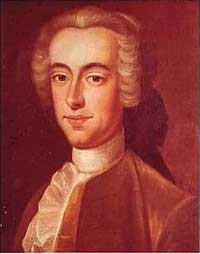
This dapper gent is Thomas Hutchinson, the second-to-last Loyalist governor of the Massachusetts Bay Colony. Hutchinson also has the special distinction of being the last civilian Loyalist governor of Massachusetts. His replacement was a military commander, General Thomas Gage, sent to impose martial law. The governor of Massachusetts after Gage was named John Hancock. So the sequence is: local politician appointed to get control of the colony, followed by a military governor sent from the home country, followed by a local revolutionary. You can see how well getting tough on the colonists worked.

Hutchinson became acting governor in 1769 (he'd been lieutenant governor for 11 years before that), was officially commissioned in 1771, and got replaced in 1774. (Actually, Hutchinson's governorship was only "suspended" during martial law, so technically the man is still the royal governor of the Massachusetts Bay Colony.) That means Hutchinson was governor, acting or official, during the Boston Massacre and the Boston Tea Party.(The classic study is Bernard Bailyn's biography The Ordeal of Thomas Hutchinson. It is, among its many virtues, highly readable.) Hutchinson was George III's man on the ground while Massachusetts hurtled toward Revolution.

Here's the thing. By the time Hutchinson was appointed to run the colony, the Massachusetts "Patriots," the future revolutionaries, already hated him. Back in 1765, when he was Lieutenant Governor, he came to be viewed both as a defender of the hated Stamp Act (which taxed every contract, newspaper, almanac, will, property deed and nine of spades in the colonies) and of elitist privilege generally. So an angry mob went to Hutchinson's house and tore it down.

Four years after Hutchinson watched his fellow Bostonians rip apart his home, he was put in charge of the whole colony. What better guy to make Massachusetts accept unpopular measures than a deeply unpopular governor whom people already found unacceptable?

The British had lost the colonies (or at least Massachusetts) before the Revolution started. By the time they needed the army to impose political order, it was over, because they were fighting to restore a local governor who had already failed. If you need to call in the army because Governor Hutchinson can't control the province, your strategy can't be about returning Governor Hutchinson to power. Fighting a counterinsurgency does mean that you eventually turn the area you're fighting for over to local political control. The point of the counterinsurgency is to build support for that local government. But the strategy is only as viable as the proposed government is. If that government can't build or sustain support on its own, then there is no end, and no possibility of victory.

Similarly, our own counterinsurgency in Afghanistan and our involvement in Iraq depend upon the viability of the local governments that we back there, and those government's abilities to garner sufficient support on the ground. In Afghanistan's case, we began with a local partner, Hamid Karzai, who as far as I can tell was initially quite plausible. Hamid Karzai putting together an Afghan government was not a crazy plan. He was a known quantity, with genuine connections, and he could likely have built the support he needed. At this point, it should be clear that he has not. No mob has arrived to demolish his home, but the last election made it obvious that he is no longer remains entirely viable or entirely legitimate. We can't win in Afghanistan until Karzai (or some other leader) can build a central government with sufficient popular support. That hasn't happened, and Karzai is no longer capable of making it happen.

But what alternative? Karzai seems to some American policy-makers like the only person we could work with, so he has to win. But it doesn't work like that. A local leader doesn't become viable simply because we can't accept the alternatives. Consider Thomas Hutchinson: he may have been hated by his fellow colonists, but the British needed somebody who would follow their policies. The leaders who were popular in the colony, the ones who could garner widespread support, were popular exactly because they opposed the Stamp Act, quartering British soldiers, the East India Company's monopoly on tea, and so forth. The British couldn't work with them. And they certainly couldn't deal with someone like Massachusetts' representative in London, Benjamin Franklin, who was always talking about conciliation with the colonists. Eventually, Franklin leaked some of Hutchinson's letters (which sneered at the idea of Englishmen being entitled to rights), and was humiliatingly dressed-down and punished by the Privy Council. Franklin clearly had no character, and was clearly not a real Loyalist. They told Franklin that last part, and eventually convinced him they were right. In the meantime, there was no one else the King and Parliament could trust. So they stuck with Hutchinson and sent more troops.

It's not a plan. It never was.

Tuesday, July 06, 2010

How to Lose a Counter-Insurgency: Part II


(Or, Lessons the British Army Taught Us)

Part II: Let the War Drag On and On

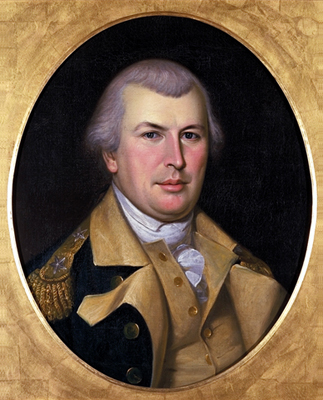
This is General Nathanael Greene, George Washington's most trusted and innovative lieutenant. Greene is the person Washington turned to when it got ugly. He assigned Greene to cover the Continental Army's retreat from New York when the British had all but finished the American army off; he assigned Greene to solve the supply problem at Valley Forge; and he sent Greene to lead the campaign in the South after the British had positively crushed Horatio Gates and destroyed the Americans' southern army. The British were winning the South, and Nathanael Greene is the reason they didn't.

The British had begun to win in the Carolinas because they had belatedly begun a strategy that emphasized political support on the ground. The Southern colonies (or at least their coastal areas) tended to be fairly rich in British loyalists for cultural and sectarian reasons. The Southerners along the coast tended to be Church of England, unlike the various dissenting Protestants who abounded in the North. So after some military setbacks the British sent Cornwallis to take Charleston and then organize and rally the local Loyalists into militia units that could pacify the countryside and squelch the rebel militias. The early stages of the plan worked well. Then Greene, with a little help from officers like Daniel Morgan and Light-Horse Harry Lee, ruined the strategy and wrecked Cornwallis's nerves.

It's not that Greene defeated Cornwallis. He never had the troops to win a direct assault, and he lost every pitched battle he tried. Part of the rebels' success involved upsets over smaller detachments of Cornwallis's army, which kept getting smaller. But mostly Greene won by not losing. He kept his "fugitive army" in the field. He kept living to fight another day. When he was in trouble, he made brilliant and even daring retreats. (Yes, there is such a thing as a daring retreat. Greene could choose the path that led to safety through danger and pull it off.) He floated like a butterfly. He stung like a bee.

The result is that even when Cornwallis won his objectives, his forces got weaker and weaker. But worse for Cornwallis, the Revolutionary militias kept rallying, and the Loyalists volunteers dribbled away. (Although one large and misguided group did attempt to join Light-Horse Harry Lee, under the impression that he was someone else.) As long as Greene stayed in the fight, his local sympathizers stayed in the fight, too. All Greene needed was to force a series of stalemates. Cornwallis needed a decisive checkmate, which every month got harder to achieve. As long as Greene hadn't lost, he was winning. As long as Cornwallis hadn't won, he was losing.

The lesson for counterinsurgencies, including the ones that we're fighting now is that ties go to the home team. The occupying army, like Cornwallis, has to win by destroying the opposition outright. The insurgency gains strength and support just by keeping the fight going. The longer the occupying force goes without defeating the insurgents the less likely the locals are to believe that they ever will. And once you decide the occupier can't win, you start planning for the next chapter.

We began fighting in Afghanistan in October 2001, and started occupying bases there in November of that year. (If you're wondering, the Soviets spent nine years and two months fighting in Afghanistan; we are six months from breaking their record.) We are still fighting the Taliban. Can the Taliban forcibly drive us from Kabul? Hardly. Could they directly assault the main body of our forces? Of course not. They can't afford to do that. But they don't need to.

Nathanael Greene couldn't drive Cornwallis out of Charleston. He never bothered to try. And for that matter, Washington couldn't drive the British out of New York, which they took from him in late 1776 and kept for the whole war. They took Philadelphia, too, chasing out the Continental Congress and Washington couldn't do much about it. But the British couldn't win that way, and neither can we. If we can't destroy the Taliban as an effective force, they can wait us out forever. They have nowhere else to go. Charles Cornwallis wanted to go back to England someday; Nathanael Greene was already home. The visiting team needs to end the contest.

Many people complain that setting any specific date for a draw-down or withdrawal simply encourages our military enemies (whether in Afghanistan or Iraq) to wait us out. This is logical enough, but it ignores one basic fact. Our opponents in Afghanistan and Iraq have always been waiting us out. They're not going to decide to wait us out because they have a specific date to look forward to. Their original schedule was to wait us out forever. (Washington, bidding farewell to his troops in 1783, talks about gaining the victory "so much sooner than we could have expected.") Giving them a date to circle on the calendar doesn't change their plans. They will resist as long as they can. The only way to stop them is to destroy their means of resistance.

There are really only two choices for an occupying force: win or go home.

cross-posted at Dagblog

Sunday, July 04, 2010

Happy Independence Day


I am apt to believe that it will be celebrated, by succeeding Generations, as the great anniversary Festival. It ought to be commemorated, as the Day of Deliverance by solemn Acts of Devotion to God Almighty. It ought to be solemnized with Pomp and Parade, with Shews, Games, Sports, Guns, Bells, Bonfires and Illuminations from one End of this Continent to the other from this Time forward forever more. You will think me transported with Enthusiasm but I am not. I am well aware of the Toil and Blood and Treasure, that it will cost Us to maintain this Declaration, and support and defend these States. Yet through all the Gloom I can see the Rays of ravishing Light and Glory.
-John Adams to Abigail Adams, 1776

Wednesday, June 30, 2010

How to Lose a Counter-Insurgency: Part I


PART I: Kill Civilians


The Senate Armed Services Committee is apparently very concerned about our rules of engagement in Afghanistan. Before they confirm General David Petraeus to the Afghanistan command, they want to make sure that he will loosen up those rules of engagement to allow more airstrikes and more artillery strikes. He has made soothing voices to the effect that he will be sure not to hold back the heavy firepower too strictly.

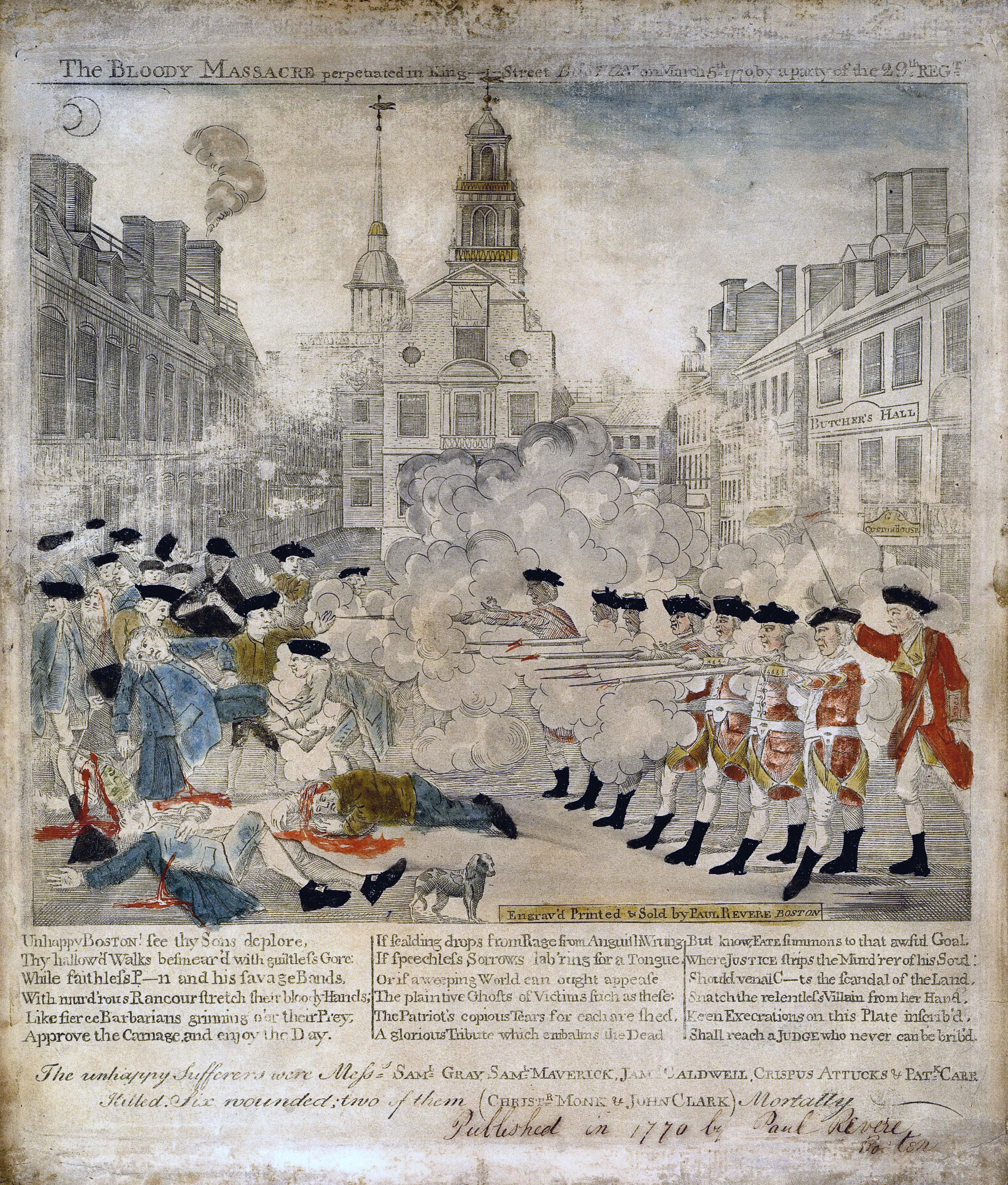
As soon as you're worried that your counterinsurgency troops aren't using heavy enough firepower, the counterinsurgency strategy is all but dead. I could easily write a thousand tedious words explaining why, but I would like to offer this image instead.

The Senators' concerns seem to have been specifically prompted by the Rolling Stone article that brought down General Stanley McChrystal. In addition to featuring a number of shockingly undisciplined and insubordinate remarks by McChrystal and his aides, that article includes a number of complaints of the strictness of McChrystal's rules of engagement from frustrated rank and file soldiers who'd prefer to "get [their] gun on." While I've criticized McChrystal's strategy and believe (based mostly on the results in Marja) that it's failing, the problem isn't that McChrystal is too squeamish about accidentally blowing away civilians. "Too careful about killing civilians" can really never be the problem with executing a counterinsurgency. But a reflexive desire to do more shooting, whether that reflex is expressed by grumbling soldiers on the front lines or anxious lawmakers in the capital, is a sign that the counterinsurgency strategy hasn't been fully accepted or understood. The goal of a counterinsurgency is to protect the civilian population and build up political support on the ground. Killing Afghan civilians achieves all of the key counterinsurgency goals, but it achieves them for the Taliban.

Our British cousins have generously provided us with a clinic on how to lose a counterinsurgency. In fact, they demonstrated those lessons for us in person, at great sacrifice, over two hundred years ago. Consider that knowledge base part of the United States' national starter kit. Since we seem to have lost touch with those lessons, I'd like to celebrate the Glorious Fourth (in part) with a short series of posts reviewing a few of the military tutorials left by Generals Gage, Howe, Clinton, Burgoyne, and Cornwallis, with generous underwriting by George III.

Am I really comparing George Washington to the Taliban on Fourth of July weekend? The political, philosophical, and moral answer is to that question is No, No, and Hell No. I take proud, patriotic delight in the Revolution's success, and I want to see the Taliban utterly destroyed. But the military history answer to that question is: Sadly, Yes. I wish to God that the situations didn't look so much alike. But in each case you have a highly trained, superbly equipped and deeply professional force of soldiers facing an ideologically-driven local opponent, largely composed of irregulars, across a large land area full of rugged terrain. The analogy isn't perfect; no analogies are. But in some ways, we have it harder than Gage, Howe et al. had it. Washington's army was much more conventional than the enemies we're fighting, and thus easier to defeat by conventional means, and the cultural gap between the British occupiers and British-American rebels was almost nothing. Howe and Washington had thousands of times more in common than we have with our Afghan allies, let alone with our enemies.

It's tempting of course, to view the situations as different because the Continental army fought for noble principles that we admire, and the Taliban fight for a fanatical ideology that we despise. But if we're thinking about how to win a war, we can't yield to that temptation. On the ground, the difference between soldiers fighting from deep commitment to a good idea and soldiers fighting from deep commitment to a bad idea is nothing at all. It doesn't matter that the Taliban only think that they're right. What matters is that they do think they're right, and they act on that. The British didn't think the American rebels were right; most didn't even think that the rebels were acting from sincere principle. And that mindset was part of the British problem.

Let's consider the illustration of the Boston Massacre again, and try to see it from the British point of view. Most Americans learn about this in grade school as a piece of outrageous, unmotivated bloodthirst, which is certainly how it looked to people in Boston. But the British soldiers viewed themselves as protecting themselves from a dangerous mob, and their position was reasonable enough to get the soldiers acquitted. They were in fact, surrounded by an angry crowd, and it was impossible to know how serious a danger that crowd posed. If Crispus Attucks looked aggressive to them, it's because Crispus Attucks actually did look aggressive, and he was angry as hell. There had been daily brawls between soldiers and Boston crowds for the previous three days, and it looked like only a matter of time before a British soldier was badly injured or killed. The soldiers had marched into the crowd on March 5 to rescue a private who was surrounded and under attack by a whole gang of infuriated locals; their mindset going in was about protecting the corps. And eventually their commander, Capt. Thomas Preston decided to err on the side of protecting his troops. He wasn't going to wait for one of his men to get hurt or killed before he decided that the mob was really dangerous. When in doubt, bring your own men home alive. The rest is history.

Captain Preston's logic is exactly what the Senate has been urging on General Petraeus. The soldiers who chafe at McChrystal's strict rules of fire would prefer to serve under a Thomas Preston themselves. And truth be told, there are lots of junior officers in Afghanistan and Iraq right now, charged with leading their own troops through confused and dangerous streets, following the Preston handbook. In their position, charged with their responsibilities, I would probably do the same. Threats are hard to identify until too late, some attacks come from people who seem like civilians, and the American officers want to protect their own men. The duty to their own troops is much too basic, too fundamental, to deny. Better to make a reasonable mistake that kills a civilian than any mistake that kills one of your own, the logic goes. I don't know how I would tell a captain or lieutenant leading a patrol anything different.

The problem is that those mistakes don't seem reasonable to the home team. When civilians from your own city or town or village get killed by soldiers, you don't say, "Well, it was an easy mistake to make, and those soldiers are under a lot of pressure." Nobody sees the heavily-armed foreigners as the ones whose safety is in jeopardy. And nobody ever forgets or forgives.

Of course, from the other side of the Atlantic, what matters is bringing your own troops home safely. Half a dozen civilians killed in Boston didn't make much impression in London, but having a British soldier killed would be a huge problem. It's natural to count your own losses first, and to forgive mistakes made in the name of protecting the boys on the front line. It's hard to feel deeply about a few regrettable accidental deaths on the other side of the world. But a few civilian deaths in your neighborhood is just flat-out murder, a bloody massacre, and there's no dealing with the people who ordered it. Captain Preston and his men got acquitted in Boston, but even their lawyer didn't have any sympathy for them. His letters always refer to their actions as simply "the massacre," and he became one of the loudest, most radical voices for independence. His name was John Adams.

One last lesson from the bloody events of March 5, 1770: it was only March 5, 1770. It was three years before the Boston Tea Party, five before Lexington and Concord, six before Washington forced the British out of Boston. But the Massacre was firmly on New Englanders' mind the whole time. Washington just had to say "March 5" to get his troops fired up. They never got over it. They never moved on. And that's the sobering lesson for us, seven years into Iraq and almost nine into Afghanistan: what happens early matters. Events from early in an occupation can change the direction course of events in powerful ways, and those events can't be reversed easily. The strategy that you should have used in 2002 isn't necessarily available in 2010. There's no do-over button. Things happen, they have consequences, and you have to deal with them.