Showing posts with label American values. Show all posts

Wednesday, October 30, 2019

Why Booing Trump Matters

Various elite media types clucked, scolded, and clutched their pearls after Donald Trump got booed at the World Series and some of the crowd spontaneously chanted "Lock him up!" Because when ordinary voters do it, it's "uncivil." When Trump does it, it's the Voice of the People. But the talking heads' discomfort was about something more important: cognitive dissonance. Trump being booed threatens their worldview. The American media cannot accept the fact that President Trump is unpopular.

Donald Trump is very unpopular. More than half the country dislikes him. The polls have always shown this. But the media and political establishments refuse to digest this. They always find a way to attach a but or a qualification.

Unpopular, but that's just the other party. (Forget what the polls say about independents.) Unpopular, but only in the big cities (where most of the people are). Unpopular, but not in "Real America" (where most of the people aren't). Unpopular, but that's just the elite.

There's no such thing as a small elite that makes up more than half the population. If you think about that for a second, it's obvious. So some people work very hard to avoid thinking about it for even a second.

Having a random World Series crowd lustily boo the President of the United States threatens the pundits' world view. It undermines what they "know" to be true. So they organize all the excuses they can to protect the conventional wisdom from the facts.

Here's the thing: Trump, as a reality TV type used to creating false appearances, has carefully managed every appearance of his Presidency, precisely because he was afraid of this. He knows he's deeply unpopular and is afraid other people will catch on. So this may be the first time in his presidency that he's been outside without hand-picking his audience.

And look: people hate him. 100% of Trump's genuine public appearances have resulted in him being booed and jeered. The last time I saw him enter a public place where he didn't control the guest list was election day, when he went to vote in his local precinct. He got heckled. The video clearly captures some guy shouting, "You're gonna lose!"

Donald Trump is an unpopular figure with a small, fiercely loyal cult following. That cult following is a real political fact, which needs to be confronted. But it is not at all the same as wider popularity, and it becomes impossible to think about him, or strategize against him, if you don't think about the actual situation. And yet, our media establishment refuses to take the depths of his unpopularity on board. They are not at all interested in what is really happening. They'd rather go out and interview one of his stalwart superfans again, as if that told us anything.

Because Donald Trump is right about one thing: if the false perception of his popularity went away, that would change things.

cross-posted from Dagblog. All comments welcome there, not here.


Friday, October 26, 2018

Talk Like Crazy People Are Listening

Dear politicians: talk like crazy people are listening to you. Because they are. We're a big country, with hundreds of millions of people and no guaranteed health care. That means there are a lot of Americans who are mentally ill, and a lot of those people can't get proper treatment. Every time you speak in public, remember that there are some disturbed people who will take what you say, whatever you say, seriously, and that they might act on it.

We've been having a lot of public debates about "responsibility," 'unity," "civility," and other complicated, nuanced words that are easy to twist around to mean different things. So I'm going to keep it simple. Every public figure speaking in public has got to remember that some crazy people are listening. Don't say anything that those people will understand as a call to violence.

But won't mentally ill people misunderstand things, and hear calls to violence that weren't intended that way? Yes. Exactly. They may well hear you calling for blood when you thought you were carefully staying on the right side of the line. That's why you should get nowhere near the line, at all, ever.

This rule is not hard. Don't act like it's not simple.

There are troubled people watching TV and listening to the radio and reading the internet all day, and they have trouble sorting out what's real. Don't scare those people into using bombs or guns.

But what if the talk-like-crazy-people-are-listening rule cramps my style? What if it takes away my big rally lines that excite the crowd, or the new spike in my ratings? What then?

Then you're risking people's lives for personal gain. What good do you think is going to come of that?

cross-posted from Dagblog; all comments welcome there, rather than here

Thursday, July 13, 2017

Presidential Pardons and Obstruction of Justice

One thing is finally clear about the Russia investigation, thanks to Donald Trump, Jr.'s decision to tweet his incriminating e-mails: someone is going to prison over this. All three principals who took that meeting looking for Russian oppo research, Manafort, Kushner, and Trump, Jr., are likely in serious criminal jeopardy. Other figures (like Flynn, Sessions, and peripheral creeps Eric Prince, Carter Page, and Roger Stone) may be in danger of prison as well. But the Trump Tower Three certainly are.

The best advice any lawyer could give Donald Trump, Jr. is to flip, to make a deal with the prosecutors (immediately, right now) and agree to testify against someone higher up. But that is never going to happen, because it would mean turning on his own father, Donald Senior. Trump Junior is clearly unequipped for that. It would be hard for anyone to turn evidence on your mother or father, and Donald Junior isn't able to stand up to his father about much more trivial things. Not going to happen.

On the other hand, Donald Senior is not about to see his own son, or his favorite son-in-law Kushner, go to federal prison. So at some point President Trump may find himself overwhelmingly tempted to use his presidential pardon power. Pardoning people for crimes that helped put Trump himself in office would, under any of the usual American standards, be political suicide, but that does not mean Trump won't do it. He can't resist the temptation to tweet nasty things at cable TV personalities; he has nothing like the willpower or integrity to stay out of a Trump Junior prosecution. Trump does not believe the rules apply to him, which is what makes him so dangerous to the republic as a leader, but he also genuinely does not understand how rules, laws, or the Constitution actually work.

So Trump may trigger a genuine Constitutional crisis, triggering an unresolved problem in the Constitution itself: the danger that the President will use his pardon authority to carry out crimes against the Constitutional order, giving his accomplices impunity. Yes, the President would still be subject to impeachment and removal, but there would be no remedy short of that.

My (admittedly quick) glance at The Federalist (#69 and #74), doesn't help much. In #69, Hamilton concerns himself with plots for a military seizure of power, which is no longer necessary in an executive that commands a powerful standing army and security establishment. In #74, Hamilton is more concerned with Shays's Rebellion, which had after all helped prompt the Constitutional Convention, and focuses on the President's authority to pardon rebels as a tool for restoring domestic peace. (Hamilton is responding to the argument that the President should need at least one house of Congress to confirm pardons, and points to the Shays's Rebellion pardons as evidence for the benefits of the power to assure a speedy pardon.) You can say that the Framers did not quite plan for this situation, or perhaps more accurately you can say that the Framers gave Congress impeachment power to deal with it. But only the impeachment power.

So what happens if Trump decides to pardon his own confederates who are facing criminal charges for their work on his campaign? What if he pardons Kushner? Or what if he pardons Flynn and Manafort (both of whom are more likely to turn cooperating witness, because they're not related to Trump and might be looking at serious prison time)? Does he have the legal power to do that? The most likely answer is that he has the power, because it's one of the powers of his office, but using it would be a crime.

How can this be? Because doing something that is otherwise perfectly legal can become a crime when it is done to obstruct justice. Trump has the legal right to fire the FBI Director; firing the FBI Director to stop an investigation into his own advisers is obstruction of justice. Trump has the right to pardon federal criminals; pardoning one of his own flunkies to keep the flunky from testifying against Trump is criminal obstruction.

Put it this way: it is legal for me to buy a house. It is legal for me to pay more than asking price for a house (in fact, in some housing markets you have to). And it is legal to buy the District Attorney's house if he's selling it; public servants have to be allowed to sell their homes, too.

BUT, if I am under investigation by the District Attorneys office and I then offer to buy his house for, say, $100,000 more than the asking price (this is Cleveland; in San Francisco say a million over asking price) then it's attempted bribery and obstruction. Everything I did was legal, but I did it in order to obtain an illegal result. That is how the pardon power works, too. Chris Christie has the legal power to pardon criminal offenses in New Jersey; if he pardoned all of his own aides involved in Bridgegate, that's a new crime, because he would obviously be obstructing justice.

So if Donald Trump tries to squelch the Russia investigation by firing more investigators, or by pardoning his personal aides who are under investigation, that is obstruction and pretty clearly illegal. But the only remedy would be for Congress to impeach him.

cross-posted from, and all comments welcome at, Dagblog


Thursday, June 22, 2017

Ask the Blue States About Terrorism

Here are a few pictures from Copley Square in Boston, where the Boston Marathon ends:


But as you can see, they are not from April's running of the Marathon. They are from a January demonstration against Trump's Muslim Ban.

And yes, that means that Boston held a massive demonstration for Muslim immigrants' rights right next to the site of a shocking terrorist attack by two Muslim immigrants. Just for logistical reasons, a lot of protestors must have had to walk across the Marathon's finish line, and by the sites of the bombs themselves.

A sign that Boston has forgotten the Marathon bombings? Oh hell no. They are still all too fresh in that city's mind. A sign that Bostonians don't care about the victims, or aren't serious about fighting terrorism? Don't be ridiculous.

A small explanation is that Copley Square happens to be Boston's best place for large gatherings like this, so that you have the crowds of protestors in the same public square where you have the crowds of cheering running fans. But the bigger explanation is that Boston, like many so-called blue cities, is both anti-terrorist and pro-immigrant. If that seems not to make sense to you, let me just say: these people are literally standing in a place that they know terrorists have attacked. They are literally putting themselves on the line here, so you maybe you should hear them out.

One of the oddities of American political life today is that our approach to terrorism is being dictated by the people in the least danger of a terrorist attack.


Here are the top US targets for foreign terrorists:
New York City
Washington, DC
Los Angeles
Chicago
San Francisco

Maybe San Francisco makes that top tier, and maybe it belongs in the next one, with places like Philadelphia, Boston, Miami, Seattle, etc. etc. etc. But let's be honest: if Al-Qaeda or Daesh aka "ISIS" spends months planning a complicated attack on US soil, it's almost certainly going to be in one of those four or five top targets. Those are the places they care about; those are the places they've heard about. And those are the places that have large symbolic value overseas. International Islamist terrorists dream of destroying LAX and Times Square and the Capitol Dome. They are not interested in the so-called American Heartland. Islamist terrorists from overseas would never attack Oklahoma City, for example, because they don't really know where Oklahoma City is.

Now, that doesn't mean that Oklahoma City isn't a great place to live. It can be wonderful without being internationally famous. I've lived in a bunch of places that overseas terrorists have never heard of, and those places were nice. But the truth is terrorists aren't interested in underrated places that are nice to live. They're interested in attacking famous places. I don't want to hurt anybody's feelings, but national security is more important than your feelings or mine.

Now one of the things animating our red/blue split is a deep division on what to do with terrorism. Everyone agrees that terrorism is a serious problem. The general Red Team approach to terrorism is that this is a deep national emergency that calls for shutting down immigration, increased military strikes overseas, and heavy ethnic profiling of Muslims: in some cases outright demonization of Islam itself. The Blue Team strategy calls for a mix of police and military responses with diplomacy, patience and outreach. The Blue strategy is built around trying to isolate the terrorists and sharpen the divide between them and everyday Muslims. The Red strategy considers that a hopeless cause, and demands that we use the hammer as hard as we can, everywhere. Sometimes it considers Islam itself the problem. Blue voters see making the fight about Islam itself as one of the worst and most self-destructive things to do: basically pushing people into the terrorists' arms.

Now, these strategies work against each other. You can only follow one. Either you're doing outreach to Muslims, or you're denouncing Islam. And both sides feel that the other strategy is dangerous and self-destructive.

Because we're a democracy, we resolve this conflict by voting. And over the last few elections, the Red voters have won, and we're following the Red strategy. But here's the problem:

The places that the terrorists target are overwhelmingly Blue, full of Blue voters. New York, Chicago, LA, DC, San Francisco: all super blue. Almost, like, ultra-violet. A lot of the second tier targets are likewise blue: either the Democratic strongholds of Democratic states, or the Blue island in a Red or Purple State. Boston. Miami. Philly. Seattle. If terrorists ever attack Missouri, God forbid, it will be in Democratic-voting St. Louis. If, God forbid, terrorists attack Georgia, it will be in central Atlanta. That's how the terrorists' strategy works. They want large, busy, and well-known urban areas.Those are the places that are pro-urban, pro-trade, and generally pro-immigrant. They are also the places where the most American immigrants are.

In fact, the Red strategy has one precisely because it's favored in less populated rural areas. More people vote for Blue candidates, both for President and for Congress, but our system builds in an advantage for rural districts so that a smaller number of voters defeat a larger, but more geographically concentrated, group of voters.

So we're following the Red anti-terrorism strategy, but the Blue voters are the targets. They are the ones at risk. If we try the Blue strategy and fail, it's Blue voters whose lives are at risk. But if we follow the Red strategy and it fails, most of the Red voters will still be safe in their rural areas. Their mistakes won't get them killed. Daesh (aka "ISIS") is not going to be launching any attacks on Youngstown, Ohio or rural Wisconsin. Not now, and probably not ever.

So let me suggest that maybe the Blue-state voters, and the urban-blue-pocket voters may know what they're doing. They may have actually thought this through. Don't tell them that they don't take terrorism seriously. A lot of them live in New York City. And even if they are wrong, they deserve to be listened to, because they have skin in the game -- sometimes all of their skin in the game -- in the way most of the rest of us do not. If you find yourself puzzled and frustrated by the politicians and the policies they vote for, the approach to fighting terrorism that they support, let me translate what those urban Blue voters are saying to the rest us:

Publicly hating Islam is not helping. Stereotyping people is not helping. You are making it worse. Please, please don't get us killed. Thanks. 

cross-posted from, and all comments welcome at, Dagblog

Monday, June 12, 2017

About Julius Caesar

So those literary geniuses, Fox News and Donald Trump, Jr., have decided to attack a "New York play" that they allege stages the assassination of Donald Trump. It is, of course, Shakespeare in the Park's production of Julius Caesar. And of course, Fox and Trump's loyal followers don't need to actually see the play to raise an enormous outcry, because denouncing people is too much fun for fact-checking.

It makes me sad, because Julius Caesar has been more important to America than any of Shakespeare's other plays. It was the play most taught in American schools for many decades, because it speaks about questions at the heart of the American experiment: about the nature of a republic and the duties we owe it, about the danger of tyrants and the dangers of civil violence. It's sad to see a public debate based on ignorance about this play.

So, alas, it's time for a special edition of Ask Me About Shakespeare, coming to you this time from Washington, DC, where I'm spending a month at the Folger Shakespeare Library. Let's take it away:

How much of this production was paid for by the NEA? (-Don T., NYC, via twitter)

None of it. Nada. Zilch.


When does a play like this verge into political speech? (-Don T., NYC, via twitter)

It's a play about the Dictator of Rome. It is and has always been about politics. Its central subject is politics. Every major male character is a Roman politician. Come on.

Does that change things? (-Don T., NYC, via twitter)

In that political speech has even more protection under the First Amendment, maybe. Political speech is a guaranteed Constitutional right.

Okay, but Shakespeare isn't about current politics.

Isn't he? Julius Caesar has been used to comment on current politics over and over again. It's been used to critique the rise of Mussolini. And at least once it's been used to implicitly comment on Obama in the same implicit way that Shakespeare in the Park is implicitly pointing at Trump.


One of the basic rules of understanding Shakespeare's history plays is that he is always more interested in the history of his own day than the history he is writing about. Always.

How is it still Shakespeare if it's in modern dress?

People have been doing "modern dress" Shakespeare for more than a hundred years at this point. Let's not act like it's some crazy novelty. And Shakespeare and his partners did "modern dress" themselves; they did Julius Caesar in 16th-century clothes, probably with a few "Roman" costume pieces thrown into the mix. People don't start putting Julius Caesar in togas until the 1800s.

The Public Theater, which stages Shakespeare in the Park, follows a standard rule about modern dress: they change costumes, in ways that are meant to work as visual footnotes, so that Roman senators for example dress like American senators. But they stick faithfully to Shakespeare's actual words and never add any modern language.

This play is not an adaptation of Julius Caesar. It really is Julius Caesar.

Why is Caesar killed by women and minorities? (-Fox N., NYC)

Because the Public Theater has, for the last fifty years or so, been a pioneer in cross-casting across gender and race. Fox News may object to this as political correctness, but it's a way of opening up parts to a wider range of American actors and ultimately making the pool more competitive. It's hard to find good Shakespeareans. Letting talented actors of color into the casting mix, and giving women a wider range of roles to play, definitely improves the overall standard of acting. This has now become standard practice; the last two professional Shakespeare plays I saw (one in DC, and one in Staunton, Virginia) cast across race and gender lines.

If you ever have a choice between seeing a mid-tier white male British actor do Shakespeare and seeing James Earl Jones do Shakespeare, by all means go with James Earl Jones. It's the American thing to do, and you won't be sorry.

But doesn't that look like Trump?

Yes, vaguely. Clearly, the Public is okay with people drawing that connection, which a lot of the audience was probably going to read into this play at this moment anyway. Much the same way that casting African-American Caesars during the last Administration let people draw the Obama connection.

But they aren't calling that character Trump, and Julius Caesar's lines are (how to put this?) deeply unlike the way our current President speaks.

But Shakespeare never depicted a living public figure on stage.

Didn't he? Actors and playwrights in his day were specifically forbidden to depict living people on stage, but they pretty clearly did it anyway. Loves Labors Lost is none-too-subtly about a particular king of France, and gives its King a posse of friends named after actual French noblemen.

Part of Shakespeare's costume inventory was clothing that various noblemen had gotten rid of once it went out of fashion. So there's always been the possibility that his actors could signal a topical reference by dressing like the political figure they were mocking, dressing in the man's actual clothes. Once, a while after Shakespeare died, his acting company bought a much-hated Spanish ambassador's sedan chair when that ambassador went back to Spain. When they carried one of their bad guys around stage in that chair, everyone knew who they meant.


So, they're endorsing Trump's assassination, right?

There is no way that Julius Caesar endorses Caesar's assassination. It is clearly a terrible thing to do, and all of the assassins are punished.

In fact, all of the conspirators except Brutus are clearly self-interested and immoral.  (As Antony says of Brutus:

All of the conspirators but only he
Did what they did in envy of great Caesar.)

Let's go to the Public Theater's own website to describe the play. In its director's words:

"Julius Caesar can be read as a warning parable to those who try to fight for democracy by undemocratic means.
To fight the tyrant does not mean imitating him." – Oskar Eustis

Eustis is right that the play presents both Caesar AND his assassins as dangers to the public. Caesar is a tyrant in the making, who is destroying the Roman Republic and replacing it with an autocracy. But his assassins are, well, assassins. They traffic in blood, and threaten Rome as much as Caesar does.

And this, of course, is why earlier productions could invite an Obama reading: that reading is that Obama is being attacked by these vicious politicians.

The joke here is that Julius Caesar depicts Caesar's enemies pretty much the way most of the people denouncing the play see Trump's critics: as a pack of conspirators who envy the great man's greatness.

Then who's the good guy?

Shakespeare's play doesn't have simple bad guys and good guys. That is why the play is still worth reading. It's morally complicated, just as the world we live in is.


But they show him being murdered on stage!

In the original script. It's been like this since around 1599. And that assassination scene is not designed to make you all excited about assassinations. Oh God, no.

No one treated Democratic presidents like this.
 
Maybe you should read Barbara Garson's Mac Bird! which specifically adapts Macbeth as a critique of LBJ.


Well, they should have left Trump out of it.

They can't. I couldn't be more sorry to tell you this, but there's no way to do that right now. People will make the Trump connection whether you want them to or not.

I just spent a semester teaching Shakespeare's history and tragedies, a semester that started about a week before inauguration. And I never discuss current politics in my classroom, least of all with undergraduates. I never said Trump's name in the classroom. But my students wanted to make the connection, over and over again.

Richard III reminded them of Trump. Hamlet's uncle reminded them of Trump. Macbeth reminded them of Trump. And those characters are much clearer villains than Caesar is. We got to an example of tyranny, or demagoguery or political dishonesty, and I had to keep students from talking about Trump. It got exhausting after a while.

Trump is on everyone's minds. He kind of insists on being on everyone's minds. And so people are going to connect him to plays like Julius Caesar.

Look, it's a play where a successful politician, who attracts huge rallies of the common people, is seen as a threat to centuries of democratic government. That politician has a band of dedicated enemies who are motivated by a mix of patriotism, rancor, and envy. 

You don't have to say Trump to get audiences thinking about Trump. (In fact, Shakespeare in the Park literally never says the word "Trump.") The audience is going to make the connection to Trump no matter what. It's inevitable. So there's a logic to just letting them do that and running with it. This has to be the Julius Caesar about the beginning of Trump's presidency, because no audience is going to let it be anything else.

Well, is Shakespeare really any guide to today's politics?

More than two centuries of American politicians have thought so. And Julius Caesar is also a play about the danger of propaganda and mob fury in politics. It's a play about lying to the people to get them angry. Mark Antony is a gifted orator and a smooth liar, who eventually whips the common people into a murderous frenzy based on falsehoods and distortions and then sends them out to do violence. 

In fact, one of the key scenes in the play has a mob murder a poet whom they've mistaken for someone else. That happens onstage too.

So, angry people on Twitter, remember: Julius Caesar is also a play about the dangers of being whipped up into an angry, undiscriminating mob. Maybe you should log off for a bit and give it a read.

(cross-posted from Dagblog, where comments are welcome. Comments are closed on this site.) 

Wednesday, May 03, 2017

The Moral Necessity of the Civil War

So, Donald Trump said some stupid and ignorant things about the Civil War. Not much of that is worth discussing: the man says stupid and ignorant things because, well, he's stupid and ignorant, so there isn't much to analyze. The one part we should stop to think about is Trump's conviction that the Civil War should have been avoided. That's not an idea that he came up with on his own. He doesn't come up with ideas on his own. He picks them up from outside. This idea has been around a long time.

Trump regrets the Civil War. He wishes that the Civil War had not been fought. He got those ideas from other people, and those people are very, very wrong.

Let me say, up front, that if there had been a way to free every American slave without bloodshed, that would have been great. I am not for American lives being lost at Gettysburg, any more than I am for American lives being lost on Omaha Beach. But I do not regret that the United States defeated the Confederacy any more than I regret that United States defeated the Nazis. I will say this clearly: the Civil War was a good thing.

Trump is voicing the regret that the Civil War was fought at all, the regret that white Americans had to come to blows with one another over something as trivial as the freedom of black Americans. "No reason" for it, in Trump's words, as if the freedom of millions upon millions of souls were not a reason.

But history, our own history shows us that there was no peaceful bargain that could have freed the slaves, for the simple reason that slave-holders stubbornly refused to release their captives. There was no compromise on the table: the Confederacy rebelled rather than accept any further compromise.

And freeing the slaves, all of the slaves, is not a negotiable demand. Slavery is a terrible crime. It is inexcusable.

Now, somehow all of this has become impolite to say. You are supposed to be considerate of white Southerners' feelings about slavery. It is considered rude to speak about their ancestors' horrific crimes against millions of people without considering the delicacy of their feelings. In fact, you're supposed to say something polite about how awful Reconstruction is, which is like talking about how terrible the GIs who liberated the concentration camps were. I'm through with it. The truth is the truth.

Is this about regional pride? Okay then. As a Northerner, I take enormous regional pride in the defeat of the Confederacy and much deeper human pride in the abolition of slavery. Those are great and precious achievements. If you are an American but are not proud of these things, you cannot call yourself a patriot.

Now, saying this in such a crude way is considered "incivility." That was exactly how it was framed before the Civil War, as certain white people in both the South and the North deplored the rudeness and incivility of the slavery debate. By this, they meant the intemperate rudeness of the anti-slavery side. The same complaint echoes through the 1840s and 1850s: wasn't terrible that people couldn't just put aside their trivial differences and get along in harmony?

"People," in this formulation, means white people. What about the black people? They, and their human rights were the "trivial differences" meant to be put aside in the name of good manners.

Ever since the Civil War there has been a cultural and political project of reconciliation, meaning reconciliation between white Northerners and Southerners. This project, like the antebellum campaign for compromise and civility, focuses on solidarity between white Americans at black Americans' expense. Black citizens' rights are not only ignored, but deliberately kept out of the conversation as a potential obstacle to white people singing Kumbaya with each other.

This can't-we-get-along project fosters the ridiculous lie that the Civil War was somehow not about slavery, the explicit declarations of the Confederates notwithstanding.We're told that the Civil War was "complex" and had many subtle causes, as if the issue of slavery alone did not dwarf every single one of those causes. And the noble cause of white people's harmony requires Northerners to be tactful and nearly apologetic about the war. Northerners are expected to seek Southerners' forgiveness for stopping their ancestors' monstrous crimes against humanity.

To hell with that. The Civil War was about slavery, and it was the slavers' fault. No subtlety or nuance is important enough to change those basic facts. Those are the central truths, and the rest are details around the edges. The Civil War was never going to be fought over tariff policy.

But these are still the unwritten rules of civility in America, especially around discussions of race. No one expressly announces these rules, and no one could, because they are morally depraved. But they are carefully followed: you can observe them in our politics and our media. The unspoken rule is that white people are meant to be polite and respectful to other white people at all costs, and disrespect to a fellow white is mannerless incivility. Defending the rights (and basic humanity) of non-white people is never treated as an excuse for being "uncivil" to a white person, least of all a white man. Rather, "incivility" is treated as yet more offensive when performed on behalf of people of color. To impugn a white person, and disrupt the serenity of American intra-honky harmony on behalf of someone considered lower down the racial hierarchy is treated as a particular insult and outrage.

This is why in some conservative quarters calling someone a racist is considered the most horrendous and unpardonable offense. Not because the accused person is not a racist, but because they are, because (although this can not be stated) they consider it morally outrageous to violate a fellow white person's privilege or to embarrass them on behalf of anyone from another race. The "anti-racists are the real racist" response is built on the deep emotional conviction that blacks, Latinos, etc., are indeed inferior and that it is a mortal insult to be upbraided for the sake of a person that one does not accept as an equal.

Do you think I'm wrong? Watch cable news for a week. Listen to your loud uncle at Thanksgiving. Watch the tape of Mitch McConnell silencing Elizabeth Warren for incivility. The incivility is calling another white person to account for their racist words and deeds. Jeff Sessions's racist words and racist actions are matters of public record  It is treated as the greatest of sins. Shooting unarmed black children is deemed, by some, and honest mistake, but calling other people racist is treated as entirely beyond the pale.

That is the logic that imagines the Civil War an unnecessary tragedy: a world view that imagines white folk as fully alive and human, meant to live in untroubled harmony together, and views the problems -- even the most basic rights and needs -- of other races as insignificant issues that must not be allowed to disrupt white folks' mutual amity.


But the Civil War, although tragic in its means, resulted in triumph. The liberation of millions of human souls from bondage is one of the greatest victories of all time. Would it have been better if those millions of Americans had been freed voluntarily? Yes. But that was not going to happen. And they had to be freed. I thank God for that victory. And I bless the Republican Party that did it, a Republican party that we my never see again.

cross-posted from, and all comments welcome at, Dagblog


Sunday, January 29, 2017

Take Action on the Muslim Ban: Stop Sessions

The Administration has handcuffed legal American residents and detained them without charges as part of the President's pointless, lawless Muslim ban. It's a great moment to protest, an even better moment to donate to the ACLU and CAIR. But also be sure to call both your senators on Monday and demand that they make Jeff Sessions explain his position on this. If the President will not follow the Constitution or the law then we need an Attorney General who will.

Call both of your senators' offices. Speak briefly and politely. Ask that the Senator not vote to confirm Sessions as Attorney General until Sessions tells Congress whether or not the ban is legal. If you have time, add that you are concerned that Sessions's long-time aide, Stephen Miller, helped write this ban. The committee vote on Sessions is Tuesday; make sure to call before then,

Attorney General is THE key position for any administration that wants to dismantle our democracy, or to keep it from being dismantled. After World War II, when many future Iron Curtain countries in Europe had coalition governments combining Communists and non-Communists, the Communists always made sure that they got the position comparable to Attorney General: the Interior Minister, who controlled the internal police and security functions. Then the pro-Soviet Communists used their control of the police and the counterintelligence services to take control of the country, so there were no more coalition governments. In Czechoslovakia, the Communists took the Interior Ministry and the leader of the democratic mainstream party took the more prestigious role of Foreign Minister. Then the Communists threw the Foreign Minister out a high window and the security police ruled it suicide. The Secretary of State can't start a coup, or stop one. The Attorney General could do both.

The Attorney General controls the FBI, oversees voting rights, prosecutes all federal crimes, supervises our efforts to catch foreign spies. The Attorney General could lay off prosecuting spies from particular foreign governments. The Attorney General can simply choose not to prosecute crimes committed on the Administration's behalf. It's an extremely dangerous position in the wrong hands.

On the positive side, a principled Attorney General helped bring Richard Nixon down. A good Attorney General can save our country.

Stopping Jeff Sessions is one of the most important things we can do. If he gets confirmed anyway, but has to publicly repudiate one of Trump's policies to do it, that could also be very valuable, because Trump will be angry and we want their working relationship to be as damaged as it can be. An Attorney General who won't do Trump's dirty work for him is what we need.

Call both of your senators, please. Trump has made it clear that he intends to govern lawlessly and unconstitutionally. But he has made a mistake by moving too obviously, too soon, before he had his Attorney General and Supreme Court pick in place. Let's make him pay for that mistake, now, before he can solidify unlawful power.

cross-posted from, and all comments welcome at, Dagblog


Monday, January 16, 2017

Barack Obama: American Stoic

If the Founding Fathers had a chance to meet Barack Obama, they would of course be shocked. Even the most enlightened of them were not prepared to imagine an African-American President. And what they would think about his policies is anyone's guess: the Founders' political philosophies were shaped by their political environments, and they wouldn't fit easily into today's debates. But I'm pretty confident that they would be impressed with President Obama's personal bearing, which sometimes seems to have more in common with their ideas of deportment and decorum than with our generation's ideas. The Founders would never have expected Obama, but they would have understood him. It's not just that Washington, Jefferson, and Adams would have been able to smell what Obama is cooking. It's that Obama is cooking from the Founders' favorite menu.

Barack Obama behaves in many ways like a Stoic. By that, I don't just mean someone quiet and uncomplaining, the way we use the word "stoic" today. I mean that Obama acts very much like a follower of the Stoic philosophy followed by many classical Greeks and Romans. The Stoics taught that you should master your emotions through reason and self-discipline and focus on living a virtuous life. They also taught that virtue, reason, and discipline could free you, psychologically, from the impermanence and unpredictability of the world around us. The Stoic definition of virtue was both personal and civic, and the test of virtue was your actions, not your feelings. The point was not to feel righteous or spiritually exalted, but to live a good and just life day to day. By definition, that meant being a virtuous citizen of your community.

I have never seen or heard Obama using the specific language of Stoicism, but he certainly acts like one, and for the real Stoics that's the test. (Someone who "believes in" Stoicism but lives corruptly, or in thrall to intemperate emotions, is not a Stoic. Someone who has never heard of Stoicism but walks the walk meets the most important standard.) Obama's behavior since the election has been one very illuminating example: being Obama, he has put his personal feelings aside and focused doing what seemed best for the country, and at certain moments his behavior seems at odds with what he's presumably feeling. If "what seems best" has varied over the last few weeks, it has been because of new information or changing events, not because of Obama's mood. It is not about his mood; "No-Drama" Obama considers his own mood the lowest priority, and would see it as a serious moral failure if he let his mood interfere with his duty.

The Founders would recognize and applaud this immediately. It's almost exactly the way they conceived of virtue. The other Founders loved and admired Washington because they saw him as a man who had been born with strong natural passions (not least his naturally ferocious temper), who subordinated those passions under iron self-control. (When Washington's mastery of his temper did slip, as it sometimes did during the setbacks of the Revolutionary War, the results could be volcanic.) Washington exemplified the reason-over-emotion approach that his era held up as the ideal.

And Washington's favorite work of literature, bar none, was Joseph Addison's play Cato, a historical tragedy about a Roman statesman and his Stoic civic virtue. Washington actually put on a production of Cato at Valley Forge, because it was a good example of how to put moral virtue and duty over merely physical problems like hunger, cold, and fear. In fact, Cato was a huge favorite among many of the Founders; Washington and Franklin are always quoting it, although we no longer recognize those lines as quotes. Nathan Hale's famous line, "My only regret is that I have but one life to give for my country," is straight out of Cato.

It is not a surprise that someone like Obama, who reads widely in history, philosophy, and literature, would absorb some Stoic ideas. Those ideas have been steadily passed down. The Renaissance saw a huge revival of interest in Stoicism, and the 17th and18th centuries, with their love of reason and order, borrowed freely from Stoic thought. (Joseph Addison didn't write a play about Cato for no reason.) Stoic ideas have found their way into our wider tradition. And the Obama's Stoicism-without-the-name has clear antecedents in the Civil Rights Movement and Martin Luther King Jr.'s approach to civil disobedience. That non-violent civil disobedience is, in practical terms, straight Stoicism: the protestors used their intellect and self-discipline to overcome danger, fear, and anger, so that violence, fear, and anger could not be used to control them. John Lewis sacrificing his body on the bridge at Selma, willingly allowing himself to be beaten rather submit to wrongful authority, is practical Stoicism of the highest order. Stoicism understands self-discipline as a synonym for freedom. If you can master yourself, you are free from other masters.

But Stoic self-control has so far out of fashion that we have trouble understanding it, trouble even calling it by its proper name. When most of us hear about someone subordinating their emotions to their reason, we tend to think of terms like "repressed" or "inhibited," terms that suggest that the person doesn't have full access to his or her feelings, or is too fearful to express them. We usually think that such a person needs to loosen up and become less inhibited, to express their emotions more. This started with the Romantic movement in the early 1800s, which prioritized emotional intensity above all, and was consolidated by psychoanalysis's attempts to free patients from genuine repression. At this point, a huge chunk of our popular culture is built around the proposition that everybody would be happier with less impulse control. We love stories about maverick-y cops and maverick-y fighter pilots and maverick-y scientists (all professions where mavericks can be genuinely dangerous). We watch reality TV, which deliberately showcases people who respond irrationally and hysterically to the most trivial challenges. We imagine a character like Mr. Spock, whose project superficially resembles the Stoics', as unable to feel, unable to name his feelings. When we have a Broadway hit about one of the Founders, we choose Hamilton, the one who was most volatile and out of control. (I love that show, but it only has a second act because Hamilton self-destructed.) And Key and Peele joke, hilariously, about President Obama's need for an "Anger Translator," who speaks the truths that Obama is imagined as unable to speak or to recognize.

All of this badly misunderstands Stoicism. Mastering your passions with reason and discipline does not mean being passionless. (George Washington did not need any Anger Translator. George spoke anger very fluently, and could release a poetic torrent of rage if he liked.) It does not mean lacking emotions, or lacking access to emotions. In fact, real self-control usually demands some serious self-knowledge. You cannot master your feelings if you do not know them. The difference between Stoicism and repression is that a repressed person cannot choose to express an emotion, even if they would like to, while an accomplished Stoic chooses whether and how to express something. From the Stoic perspective, a repressed man and a hysterical "maverick" are two sides of one debased coin: one cannot choose to express a feeling and the other who cannot keep himself from expressing it, but neither has any real control over their emotions. Obama's public performance over the last decade testifies both to his self-control and to his self-knowledge. He has more self-control than we are used to seeing in politicians, but also brings a sense of emotional authenticity, or genuineness, that few other politicians can match.

Obama's successor, of course, lacks anything like Obama's discipline. He seems to have given himself over entirely to uncontrolled passions. From a Stoic point of view, he is (as Hamlet puts it) "passion's slave." Because the President-Elect has no -- and apparently seeks no -- mastery of his own emotions, he is mastered by them, in the thrall of every momentary impulse or upheaval. On a profound level, he is not free. He is unable to govern his own emotional responses or his own behavior. He is the subject of a tyrant, and his response is to try to exert tyrannical control over those around him. But, tyrant that he may be, he is also exceptionally vulnerable to control and manipulation by others. Certainly, some of his advisers play on his emotional weaknesses. And although it is startling for the President-Elect of the world's most powerful nation to be under the thumb of a lesser foreign power's leader, this President-Elect's inability to govern his emotional life renders him, as the Stoics would expect, naturally servile.

The Founders, like the Roman Stoics before them, believed that only individual self-control, the ability of citizens to discipline their own passions and impulses, could make self-governing republics possible. Self-government is only possible through self-government, and when the citizens can no longer rule themselves through their reason and self-control, they will lose their collective ability to govern the republic or, worse, give that power away. It is the nature of the unmastered soul to seek a master elsewhere.  

This President-Elect is also a product of our wider culture, which has come to misunderstand "authenticity" as self-expression unfettered by decorum or reason. Only that fundamental misunderstanding allows the President-Elect to be misunderstood, by part of the public, as a person capable of leadership. The question for America, and for us as Americans, is whether we can regain the personal and civic discipline to keep our Republic free.

cross-posted from, and all comments welcome at, Dagblog

Saturday, November 26, 2016

Having a Partisan Thanksgiving

I hope you've all had a happy and relaxing Thanksgiving. I was lucky to host this year, with both my wife's family and mine traveling here to scenic Ohio, and I was also the lucky cook. (I took over turkey and gravy a few years ago, but this was my first year doing the whole meal, and -- since people had traveled to see us -- also feeding the crew on Tuesday and Wednesday nights.) And I was lucky enough to avoid political arguments at the table, because no one in my family voted for Trump. But political arguments on Thanksgiving are not the end of the world. Thanksgiving, as a national holiday, is the direct result of political conflict, and it's a mistake for us to forget that.

So, a quick history lesson:

Everybody knows the story about the first Thanksgiving at Plymouth Plantation. And that's true, in the sense that the event really did take place. But that's not when Thanksgiving became a national or even a regular holiday. The Pilgrims didn't have another Thanksgiving the next November. And some people know the historical fact that Lincoln proclaimed the first regular, national Thanksgiving, although that fact tends to confuse people. How did this holiday get founded twice, first in 1621 and then in 1863? And how can it be that Thanksgiving's two original moments happen more than 240 years apart?

A quick google search will explain that Lincoln simply set a standard national date for Thanksgiving, which different states were celebrating on different days. And that is part of the story. But that makes it sound as if the whole country was already united behind Thanksgiving, which only the logistical problem of deciding when to have it. That's not true. (Think "things left to the states to decide" and "Lincoln" and you'll see where this story is going.)

The real truth is that Thanksgiving was originally part of America's cultural wars, and so was Christmas. We now think of those two holidays as part of a single season, but they used to be indirectly (and sometimes pretty directly) opposed to each other. Not everyone celebrated both, and the division between the holidays broke down on regional, religious, and ideological lines.

Thanksgiving is a New England thing. It was originally a regional holiday, celebrated by New Englanders. It's also, not to put too fine a point on it, a Puritan holiday, celebrated in the Northeast by Congregationalists, Presbyterians, and other churches with Puritan roots. Thanksgiving was especially valuable to these Puritan-leaning New Englanders because they did not celebrate Christmas. They actively despised Christmas as a lot of heathenish nonsense. Celebrating it, or even closing the store on December 25, went against their religious beliefs.

On the other hand, Christmas was widely celebrated in the South, which had been heavily settled by Anglicans who observed the traditional liturgical holidays. (New York was also a stronghold of Christmas, partly because of its old Dutch roots and partly because it was such an ethnic and religious melting pot.) But plenty of Southerners wanted nothing to do with Thanksgiving. They saw it as alien: a celebration of another region's culture and another denomination's beliefs. They were not wrong. A lot of Southerners also saw Thanksgiving as an abolitionist thing, and they weren't wrong about that either. The lead campaigner for Thanksgiving as a national holiday was the novelist Sarah Josepha Hale: a feminist Yankee abolitionist. Thanksgiving was against Southern values.

Christmas spread more or less nationwide in the 1840s and 1850s, although it did not become a legal federal holiday until 1870. But it was slowest to spread in New England and, although I don't want to overstate the case, there was at least some overlap between the people campaigning for Christmas in New England and the people campaigning for national unity and brotherhood, meaning appeasing Southerners on the slavery question. Thanksgiving spread out across the country as well, perhaps more slowly, because people kept moving west from New England to places like Michigan and Ohio and bringing Thanksgiving with them. So there was eventually an overlap where states celebrated both holidays, but Thanksgiving in November did not really spread in the South.

Thanksgiving, our holiday of national unity and togetherness, became a national holiday because the North won the war. Lincoln proclaimed Thanksgiving nine months after the Emancipation Proclamation. Sarah Josepha Hale was happy about both. American Thanksgiving was a victory for Northern abolitionist values.

We don't remember all of this story, because we don't like to remember it. Our country can never forget the Civil War, but we work very hard to forget the twenty or thirty years that led up to it. We like to talk about unity and civility and getting past partisan divisions. We don't like to remember that unity, civility, and compromise were key arguments for continuing to permit slavery. We forget that the opponents of slavery were called divisive and accused of tearing the country apart. If we remember that, we would have to remember that the Civil Rights Movement was accused of tearing the country apart, that Martin Luther King, Jr. was called a radical communist. We would have to remember that the people calling for unity and mutual understanding in the 1950s and early 1960s were calling for more sympathy for Southern segregationists and their feelings about their local traditions, that demands for justice were called unnecessarily confrontational.

We like to tell ourselves a story about a united, harmonious nation, joined in consensus. That story is neither true nor healthy. Our history is one of repeated confrontations over core national principles, and maybe most importantly a history of confrontation over race. And, time and again, Americans who stand up for racial equality, for America's best republican-with-a-small-r traditions, are accused of incivility and divisiveness. Because the cardinal rule of American political etiquette, in 1856 and in 1956 and in 2016, is that it is divisive and uncivil to take non-whites' side against one's fellow white people. How can you be so unpleasant and make such trouble, when surely whatever this problem is can wait?

That's still the story today, when there are public calls to unify behind the most divisive political figure in modern history, a politician who only sees some Americans as real Americans. The call for "unity" is a call to accept that racist, tribal definition of America, to "unify" by excluding a third of our fellow citizens and to pretend that they are not "really" American. That isn't unity. And that isn't the America I celebrate.

But Thanksgiving is a reminder of one old, deep strand in the American spirit, a strand that has stood by unpopular principle and resisted wrongful power. That's the spirit of the Pilgrim Separatists at Plymouth, and the spirit of the New England abolitionists who followed after them, with a heavy helping of Revolutionary patriots in between. I am grateful for that American legacy, which we need today as much as we ever have.

cross-posted from, and all comments welcome at, Dagblog

Sunday, November 13, 2016

I'm Staying American. How About You?

Because I love my country, Tuesday's election broke my heart. My fellow Americans -- less than half of us, but still too many -- turned their backs on what is best in our country to elect a man who has no love and no understanding of the things that make America great: freedom and equality.

Somewhere between forty-seven and forty-eight percent of voters decided that they wanted a race-baiting authoritarian instead. Those voters turned out not to love the same country I do, not to love it for the reasons it is worth loving.

But I still believe in that America. I believe in the America of liberty, equality, and justice for all, the America that has not always lived up to its values but still always had them. I am not quitting on that country. I was raised to love it, and I will die believing in it.

If America is about white people hating brown people, you can have it. That version of America can go to hell, and will. Yes, I know our history of racist violence and plunder. I cannot deny it. But I have no allegiance to that history. The America I believe in, the America worth believing in, has always existed alongside that uglier vision. They are the wrestling sides of the American soul. I am not done wrestling. If we give up on our better angels, there's no country left for me to love.

For the last five nights and days, I have been asking myself what I am going to do now. And I still have no answer but Whatever I have to. The path forward is not yet clear, and I am not ready for everything I may need to do. I am not eager for any of it. This is not the fight I would have chosen.

But I have had it easy. I grew up lucky in a free country, in a generation that was not asked much. I was a sunshine patriot, born in the sun. I could praise the heroes of our past, the Franklins and the Lincolns and the Dr. Kings, without having to ask if I would have met their challenge. That isn't true anymore. I wish it were, but it's not.

Some generations are asked to go to Valley Forge: to stand by their country when the outlook is darkest. Some generations are chosen to stand up for the American experiment, to risk and suffer for it, to bear witness. We have now become one of those generations, and we are off to a sorry start.  But this, of all times, is not the time to quit. This is when America, the America we grew up loving, needs us most. The time for the sunshine patriot is gone. These are the times that try men's souls.

crossposted from, and all comments welcome at, Dagblog


freedom for all under the law, equal protection and opportunity, and America dedicated to expanding

Monday, November 07, 2016

Vote for American Democracy. Vote Hillary.

This Tuesday, I want to ask you to vote for something bigger than a person. I ask you to vote for the future of our country. I ask you to vote, as an American, for our democratic republic and for the constitutional political system that has preserved us from civil violence for the past hundred and fifty years. I ask you to keep faith with the American experiment. The best and only way to do that this year is to vote for Hillary Clinton.

Vote for a country where we don't jail the loser of an election, or threaten to jail our political opponents.

Vote for a country where both parties agree to abide by our elections.

Vote for a country where no major candidate casts doubt on the fairness of our elections.

Vote for a country where the politics stop at the water's edge, and no party accepts or tolerates interference from a foreign power.

Vote for a country where we have a full and functioning Supreme Court, and where no party damages our democratic government just to keep the other party from having its turn to make appointments.

Vote for a country where the President does not order our military to kill unarmed women and children.

Vote for a country where we do not shut down the government or threaten to default on the national debt because one party lost a fair vote about something they wanted.

Vote for a party where no eligible voter is turned away from the polls, and no voter is intimidated while waiting to vote.

Vote for a country where the President does not threaten freedom of the press.

Vote for a country where we solve our disagreements through rules that we have agreed on beforehand, the rules of politics, law, and civil order, rather than through force. Vote for a country where we make deals and live by them rather than shooting at each other or throwing each other in jail.

If "making deals" sounds corrupt or dirty to you, remember that the alternative is lawlessness and despotism. The choice is not between compromise and idealism. The choice is between compromise and tyranny. It is the rule of law or the rule of force.

And if tearing up the system sounds like a good idea to you, remember that the system we're talking about -- peaceful transfer of power, freedom of the press, parties abiding by elections -- is the system put in place by George Washington and the Framers of the Constitution.

This year, one candidate is running to be President inside George Washington's system. The other is running to make himself something like a king, with powers that Washington did not want any president to have and that the other Founders would not trust even to Washington: the power to jail opponents, the power to shut down newspapers. It is not clear our democracy can survive that.

Don't take my word for it. Take Donald Trump's. He has said he wants to throw his opponent in prison. He is campaigning on that. He has promised to order our soldiers to kill women and children, promised to authorize torture, promised to "open up the libel laws" so he could close down newspapers and news channels. And he has openly said that he will not agree to accept the results of the election if he does not win. He is not running against Hillary Clinton. He is running against the American Republic.

Hillary Clinton is a compromising politician, which makes her unpopular with some people. But I ask you to vote for an American who solves conflicts through compromise and politics, within the bounds of the Constitution. I ask you to vote for a negotiator. I ask you to vote for a deal-maker. I ask you to vote for four more years of Americans at peace with one another in our own country.

I ask you, above all, to vote for the possibility of another election like this one, to give yourself another chance to vote in 2020, and 2024, and for the long hopeful future of our beautiful country. I ask you to vote for politics and for politicians, for democracy in all its messy, mundane, compromised glory. I ask you to vote for the Constitution of the United States of America, and to vote for Hillary Clinton, who will guard that Constitution for all her days in office and pass that sacred charge along, as Washington and Adams and Jefferson did, to her duly elected successor.

I ask you to keep the faith with all the Americans who have gone before us, believing in our democratic Republic, and to keep faith with all the Americans yet to come. Let the American Experiment go forward, and may it last forever.

cross-posted from (and all comments welcome at) Dagblog

Saturday, December 19, 2015

Terrorism, Elections, and Keeping Faith in America

What I would love, more than nearly any other possible thing, is for the Republican presidential to shut their mouths about how frightening Daesh is. That's exactly what Daesh wants, and it is shameful that Trump, Carson, Christie, Cruz, and the rest give Daesh that satisfaction. It is still more disgraceful still to give terrorists any advantage in the hopes of gaining political advantage oneself. But my biggest question is, where is their national pride? When did the Republican candidates forget they were Americans?

I love America. It has done many things it should not, including some things of which I will always be ashamed. But it has also done things that I will be proud of until the day I die. And America has relegated not just one or two despots, but a long, proud list of despotisms to the ash heap of history. We've been doing it for hundreds of years. Some people will tell you that liberal democracies with civil liberties aren't strong enough to defeat fascists or authoritarians or kings. To those people I say only: SCOREBOARD.

Our generally liberal, fairly democratic system has been reliably kicking the ass of more repressive authoritarian regimes for nearly two hundred and forty years. Monarchists, fascists, Communists, Nazis: you name them, we've beat them, because authoritarian systems are fundamentally weak and stupid. Our system is better. Their systems suck. The Islamists in Daesh are just one more pack of narrow-minded totalitarians headed for history's trash bin. To them, I say: join the line.

(While we're on the topic, those assholes in Iraq and Syria are named "Daesh." They're not "ISIS" or "the Islamic State" or - get real for a minute - the "Caliphate." I mean, seriously, in their dreams. They are not a functioning nation, and let alone a return of the Abbasid Dynasty. They're a gang of fanatics who've taken advantage of a temporary power vacuum to claw their way to minor-local-warlord status. Their name is Daesh. They hate that name, and think it's demeaning. So fuck them. That's their name.)

I'm not making light of their crimes, or saying that they do not enrage me. They are, to use the most precise and well-defined terms I can, murdering scum. I have not lost any friends to Daesh, but some friends of mine have; no one Daesh has murdered deserved to die. But the threat they actually pose to Americans is tiny. The vast majority of people Daesh has killed, obviously, are other Muslims. In this country, even if you credit Daesh for the San Bernardino killings, that means they have only barely managed to become approximately as dangerous to the average American as, say, deranged college students. (That comparison is not a joke, and certainly not to me. Not where I work.) Americans aren't in any more danger from Daesh than Americans who work or study on college campuses are in danger already. The proper response to that threat level is mostly to keep calm and carry on. If we could all kept the same stiff upper lip about Daesh that, say, college librarians these days keep, we would be doing pretty well as a country.

To those who talk about Daesh as an important threat, I have to say: compared to what? The nuclear-armed Soviet Union? The Japanese Navy in 1941? Get real. Drunk drivers kill more Americans than terrorists ever have. Puffing up Daesh into some invincible bogeyman gives them what they want, and talking as if America ought to be intimidated by them disrespects some of America's proudest achievements. Let's stop talking about being afraid of them, and begin remembering the things they should be afraid of. Authoritarian movements are justly terrified of liberty, at home or abroad, because free systems make smarter and more flexible decisions over the long term. Freedom scares them because freedom can beat them.

These Republican candidates speak as if it were the other way around, as if freedom were perpetually weak and tyranny always strong. A few of them are just pandering to voters' fear, cynically and inexcusably. But worse still, some of these candidates, maybe even most of them, believe what they are saying. They think a free America is weaker than an unfree enemy, almost any unfree enemy. They believe this despite the empirical weakness of Daesh's position and resources, because they believe, as an article of faith, that repressive ideologies are more powerful than democracy. They believe this without evidence. They believe this despite the evidence. The historical record shows America beating monarch after dictator after generalissimo after king, and these clowns refuse to believe what America's history has repeatedly proved: dictators are weak.

They do not believe in America. They do not believe in democracy or civil rights. They look at our greatest strengths and see weaknesses, ignoring the scoreboard of history. We don't need to make America great again, because America, for all its flaws, has always been great. Donald Trump cannot begin to fathom that greatness. He does not love America, because he has never understood what America is. He is impressed by Vladimir Putin, and vice versa, because he is a coward and a fool.

This is why the Republican plans for fighting Daesh are simultaneously un-American and useless.
They believe in authoritarianism and repression as goods in themselves. They want to take steps with no real security value, to take steps that actually make things worse, exactly because those steps are repressive and against American values. Being un-American is their goal. Closing borders, discriminating against hundreds of millions on the basis of religion, censoring the internet -- none of these things will work to make us safer. They will each make things much worse. But this sorry collection of Republicans want to do exactly these things, because this collection of Republicans is driven by faith. They have faith in repression and in tyranny, and no amount of evidence can shake that faith. They believe, deep in their hearts, that the American experiment will fail, that its success is just an illusion. They are wrong, and America will prove it. Not for the first time, and not for the last.

I have faith that America's success has never been a fluke. I have faith that America has defeated an assorted list of tyrants and tyrannies for good and clearly explicable reasons. I believe that this time will be no different, because none of the important things have changed. I believe that the Tories who talked about George III being unbeatable and the appeasers who talked about Hitler being unbeatable and the frightened fearmongers who talk about "ISIS" being unbeatable have all drunk the same tainted Kool-Aid, the same dreams about the power of tyrants. I believe such Kool-Aid is bad for one's health. I believe that the fearmongers are wrong: wrong about our past, wrong about our future, and wrong about the day before us. I do not believe that we need to choose between liberty and security, or that such a choice is possible. I believe that liberty is the smartest and most prudent path to our continued security, that only a free society can be safe.

America, now just as before, must keep its faith with our Founders, not because the Founders were divinely inspired but because they were such practical realists. They believed in an open society because they saw it could work, and because they saw it working. How many times have we seen that they were right? How many more times do we need to be shown the wisdom and safety of remaining free?

These are the times that try men's souls, as another American wrote, the week of another Christmas, when America's future looked dark and naysayers were claiming that our experiment could never work, because democracy was not strong enough. That was the Christmas of 1776. Nothing that matters has changed.

cross-posted from, and all comments welcome at, Dagblog

Tuesday, November 17, 2015

America Needs More Refugees

The cheap fear-mongering about Syrian refugees loses sight of some basic facts. The United States has taken in refugees before, and that decision has worked out really, really well for us. In fact, taking in refugees has been great for America, and we should take in more whenever we get a chance.

More than two-thirds of Americans were opposed to allowing refugees fleeing Hitler into the United States. But we eventually, grudgingly, mostly, did the right thing, and the influx of refugees into our country was wonderful for us. The United States got a huge infusion of European scientists, artists, and intellectuals, and an even larger group of bright, skilled professionals, tradesmen, business people, students, and workers. Those refugees helped us win the war, and they helped build America's postwar boom. They enriched America culturally and intellectually. They enriched America scientifically, in our universities and labs. And they straight-up enriched America, beginning new businesses and starting new careers.

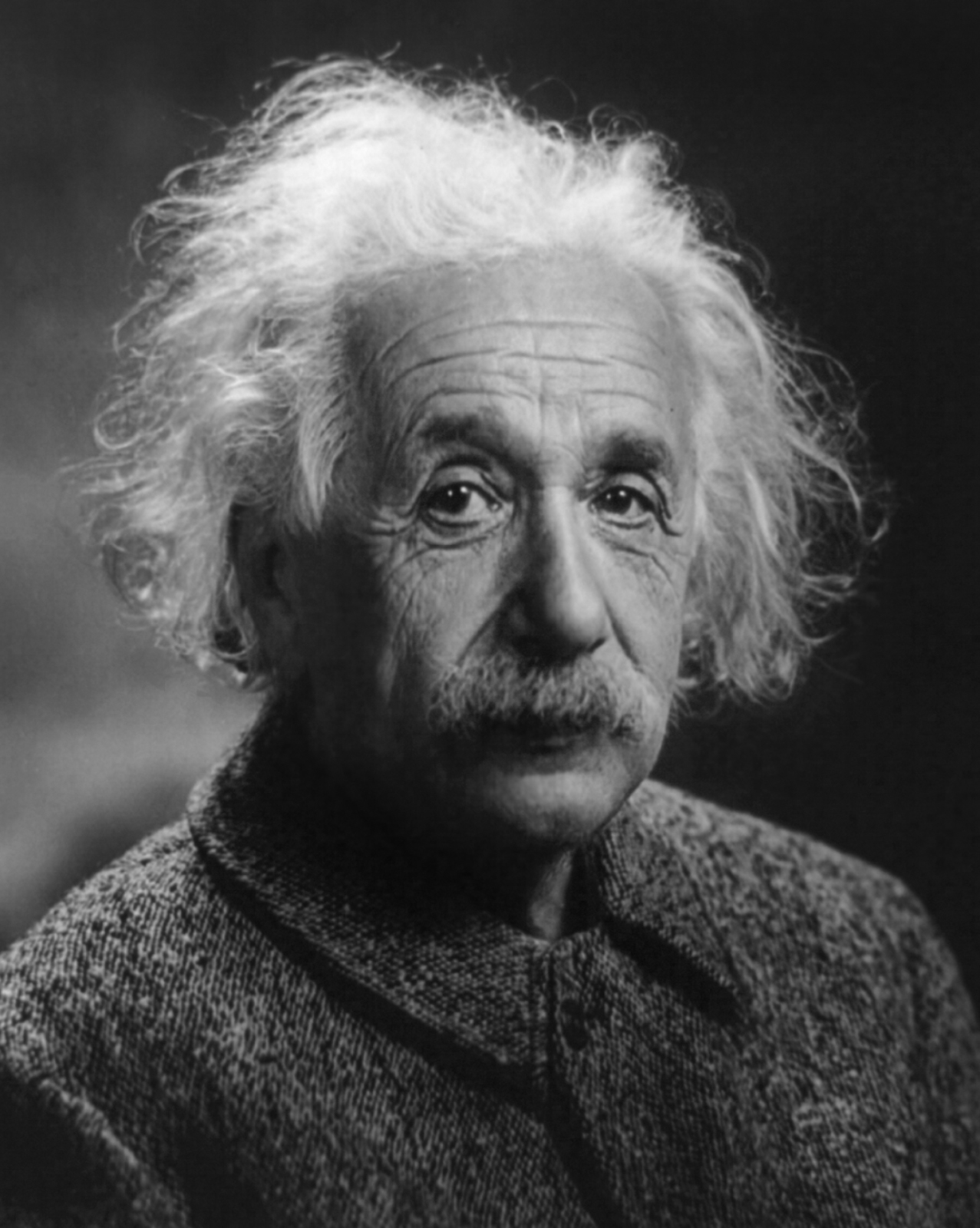
Our gigantic economic expansion after World War Two also benefited from a big, free bonus helping of educated workers, educated on other countries' dimes. Our classic Hollywood movies are filled with refugee actors, written by refugee screenwriters, and directed by refugee directors. And refugee scientists helped win America win the war, not least the race for the atomic bomb, because we could count on Hitler and Mussolini for regular shipments of world-class physicists. Does the name "Fermi" ring a bell? Or perhaps some of you might remember this fellow:


The European intellectual migration of the 1930s and 1940s was unprecedented and historic, because the upheaval in Europe was unprecedented. But America has been harboring refugees since before it was the United States of America, and those refugees have made enormous contributions to our society and particularly to our economy. All those people who didn't want to accept European refugees in 1938, those people who looked at all those Jewish doctors, scientists, filmmakers, and engineers and just saw some stereotypical rabble of ghetto urchins without shoes, were not just being un-American bigots, which they were, but also (like most bigots) they were being suckers. They were being given an enormous gift, a migrating flock of golden geese, and they could only see their own racist fantasies.

Refugee populations, now as then, include large numbers of people whom you could ordinarily never induce to leave their own countries for yours, including people who under ordinary circumstances would stay put because they were so successful in the old country. People with high degrees of skill and education, whom you could never manage to recruit otherwise, are forced to start over. Immigrants are a huge boost to the economy, period, but refugee groups include a heavy share of super-immigrants whom you're only getting because of historical disruptions. Their hard luck becomes our good luck. We should grab as many of those people as we can.

The Syrian refugees are also people who would not be going anywhere in the normal course of things. They are disproportionately educated, middle-class types who were comfortable and successful before the civil war tore their country apart. (And they are also typically more secular or cosmopolitan; these are the people "ISIS"/Daesh hates.) They are, in short, super-immigrants, with a much higher percentage of doctors, scientists and engineers than you see in standard immigrant populations. We should grab them. We should grab them now. These are people who could make our country grow. We would be stupid not to grab this chance when we can. And I never want to hear Americans kvetching about a shortage of math teachers again, ever.

I can accept that many of our politicians and our talking heads don't want to do the right thing. I've gotten used to that. I also accept, with my routine disappointment, that those people don't want to do the American thing. (But I will note how many Bible-thumping politicians are hellbent against doing the Christian thing.) But could we at least not do the stupid thing? Could we not be enormous suckers? Only a sucker would let a chance like this through our fingers. We have made it more than obvious over the past few days that we don't deserve good luck like this, but we should at least have the good sense to take it.

Is there a short-term cost to taking in refugees who need to start over? Sure. But that short-term cost has enormous long-term benefits, and will reach the break-even point pretty soon. Taking on short-term costs for long-term gain, or what people call "investing," is what capitalism is. And the United States is uniquely situated to make that small investment. Last time I checked, the US had the largest economy in the world, and next time I check that will still be true. Do you know how we got to have the largest economy in the world? Taking in refugees. It is our national business. It is our edge. It is what got us where we are, and we should stick to it. We would be idiots not to.

We have been building our country on refugees' industry, ingenuity, and prior education since before we called ourselves a country. I have particularly warm feelings for one group of refugees, fleeing religious persecution and political turmoil, who settled in my own native Massachusetts. Perhaps you might have heard of them yourself:


And with that, let me be the first to wish you a Happy Thanksgiving.

cross-posted from, and all comments welcome at, Dagblog
Friday, June 19, 2015

Why Not Say It's Racism? The Charleston Massacre

The murder of nine people in Mother Emanuel Church in Charleston has left me sick and stunned, as it has left many of you. And what I needed badly, over the last two days, was national unity. But I didn't get it. Apparently, we're too divided as a nation to band together after a terrorist attack. We're so divided that some of us won't admit that the terrorist had the motives that he clearly proclaimed. Apparently, there are sides to take in everything, even this.

Some people - not just twits and trolls on the Internet but prominent public figures - refuse to admit that the Charleston murder was motivated by race. Or they admit it only reluctantly, after previous evasions. That includes people running for President of the United States. I find that outrageous. And I find it menacing. Why give a terrorist political cover?

The Charleston killer isn't some garden-variety, sends-around-racist-e-mail racist. He's a full-on white supremacist. He publicly displayed a photo of himself wearing the flags of two white-supremacist governments, Rhodesia and apartheid South Africa, suggesting he's so racist that he resents blacks being allowed to vote in Africa. He told his roommate he believed in "segregation." He selected a historic black church that had been a center of both the anti-slavery and civil rights movements, and he attacked it on the anniversary of a failed slave uprising led by one of the church's founders. Apparently he wasn't forgiven Mother Emanuel AME for the abolition of slavery. He stood up and made a racist rant before he started shooting. But today, Jeb Bush -- Jeb Bush! -- says that he doesn't know if the killer was racially motivated.

Yes, you do, Jeb. You know. Just like everyone on Fox News knows. Just like Nikki Haley and Lindsay Graham knew yesterday, before they could bring themselves to say the words "hate crime" today, when Haley was talking about how we would "never know" the killer's motivations. You know. Why can't you say it?

Do you need hard-core racists' votes (or hard-core racist viewers) so badly that you're afraid of speaking out any racism, no matter how extreme?

Do you see race in America as an us-vs-them game, in which any acknowledgement of black suffering somehow takes something away from whites?

Do you actually think this murderer is so close to you ideologically that his crimes discredit you? How ideologically close to him ARE you?

Are you actually afraid that taking action against racist violence will mean losing something you want to keep, or that your supporters want to keep?

Are there steps law enforcement could take against this kind of violence that you don't want them to take? Why the hell not?

If those questions seem tough, well, you had a simple question with an obvious answer and you blew it.  When you couldn't or wouldn't admit what was in front of your face, it made me wonder why not. When an extremist commits a crime for obvious racist reasons, refusing to admit that racism was the motive means letting racism itself off the hook. And excusing the ideology means leaving the door open for the next act of ideological terrorism. What I hear you saying is that this crime was awful but that you don't want to prevent the next one. And that scares the bejesus out of me.

cross-posted from and comments welcome at dagblog


Wednesday, May 27, 2015

Do We Have a Constitution, Officer?

A country is only as democratic as its police, and Constitutional rights are only as real as its police treat them. The fight over police work in America is ultimately a fight over whether or not the United States Constitution is real.

The Constitution plainly states that no person "shall be deprived of life, liberty, or property, without due process of law." It could not be clearer. It could not be more essential. But in 2015 we hear apologists for police misconduct, across our country, loudly advocating a civil order where the police can punish any citizen who does not comply swiftly enough to please the police officer, where police can arrest citizens without cause, where police officers can kill unarmed citizens with impunity to guard against hypothetical and thoroughly imaginary dangers. There is no due process of law. You have no rights.

Officer Michael Brelo, recently acquitted of manslaughter in Cleveland, stood on the hood of two unarmed citizens' car and shot fifteen bullets into their windshield. Brelo had already shot 32 other bullets at that car. In fact, Brelo and his fellow officers, who shot 137 bullets at those two unarmed citizens, were also shooting at each other, because they had surrounded the car and were shooting into a circle. Brelo, the only one prosecuted for shooting, was standing on the hood of the victims' car because, even if they had had a gun, Brelo knew they were no longer in condition to return fire.

Timothy Russell and Malissa Williams's lives were taken, by paid agents of the state, without due process. There was no trial. There was no judicial process, and there are no consequences. Nor was there ever any danger to any police officer except from other police officers. The chase (which involved more than a hundred cops) began because Russell and Williams's car had backfired and a jumpy police officer, hearing an engine backfire, decided that he was being shot at.

The police can take two citizens' life in response to their own fantasies. They go free after doing it. The Constitution is not in force. We do not live in the country we say we do.

In Baltimore, Freddie Gray was arrested for no reason that the police themselves can explain. He was arrested without committing a crime; he had looked at a police officer, and then he had run. Baltimore police officers punished these non-crimes by arresting Gray, and by beating him; he was limping on his way into the police van. He was dead when he came out. But other citizens put into Baltimore police vans have come out with broken bones, concussions, and spinal damage: the Baltimore cops' way of dispensing "justice" without any judge, without any chance for the citizen to defend or explain himself, without any law needing to be broken at all.

Did they mean to kill Freddie Gray? Or did they just mean to punish him by doing him bodily harm, without due process of law? Either way, there is no Constitution in Baltimore. This is not the America we talk about.

Police officers in Cleveland, in Baltimore, and across the country, consider themselves entitled to beat citizens who don't cooperate as the police officers see fit, to beat citizens who say something a police officer doesn't like, to beat citizens who make the police officers run. They see this as their right and their privilege. They don't ask a judge. They don't bother with the law. Your rights in the Constitution are not your rights, because the police don't bother with them.

People who excuse or encourage this behavior, who say that you're in no danger if you obey a police officer, should be up front about what they believe. They believe in abolishing the Constitution. They trust the police, any specific police officer on any given day, more than they trust the Founders. If your Constitutional rights can be voided whenever a cop, any cop, in any mood, decides to give you an order, then you have no Constitutional rights. The Founders deliberately decided that no one in our system, not even George Washington himself, could be trusted with unchecked power. Allowing police to dole out any punishment they see fit to anyone who disobeys any order, even unlawful orders, is a mockery and misunderstanding of everything our system was meant to be.

I am from a family of police officers. I grew up around police officers, including many, many officers I love and admire. I know lots of good cops. But I have never known a cop who was not a human being, with human failings. I have never met a police officer who should be allowed to do anything he or she wants without accountability. Thomas Jefferson mocked the idea of "angels sent as kings," by divine right; certainly, a system that requires all police to be angels, because they are empowered to do whatever they want, is even worse.

Yesterday Cleveland agreed to Justice Department oversight for the Cleveland Police. That oversight includes things like not beating suspects who are already in custody and in handcuffs. But that is not a new rule. That was always the rule. The Cleveland police knew that rule and disobeyed it. That Cleveland police officers did that, time and again, shows that they have routinely ignored the law, that they consider themselves above the law and can not be held accountable. The New York Police Department forbids its officers to use chokeholds on suspects, and has forbidden that for years, but for years its officers routinely did it anyway. The six Baltimore police officers who took Freddie Gray on his fatal ride all told their superiors the same story, a story that did not match video evidence. Lying and falsifying reports has become routine. Standing orders are routinely ignored. It is clear that in many police departments, the rules that are written down are not actually obeyed, and the focus is on protecting one's fellow officers from oversight.

Every cop is not bad. But when police are not properly supervised and held accountable, then the bad cops are put in charge and the good ones have to follow their lead. When the police avoid the authority of the laws, then there are no laws but the police.

If the police are not answerable for what they do, then nothing else matters. If they are beyond the law, then none of us are safe from them. If the police need not answer for what they do to us, then the police become, in the most literal way, irresponsible. And then the Constitution is just some words on paper, no more real or meaningful than the beautiful and high-minded constitutions of every other police state.

Michael Brelo was acquitted because the judge said no one could prove that Michael Brelo's shots killed the two unarmed people who had committed no crime. After all, by the time Brelo was standing on the hood of the car, both of those victims were probably already dead. But that means Brelo was standing there, pouring fifteen more bullets into two defenseless human bodies, to make sure that neither of them survived. Think about that when you go to sleep tonight, and try to pretend that you have any rights.

cross-posted from Dagblog

Tuesday, November 25, 2014

The Fire This Time

There is one truth that we need to face today, after the grand jury's decision in Ferguson. And that truth is simple. No one can live like this.

No one can live with an arrangement where their sons can be killed with impunity. No one can make their peace with that. No one can accept that. No one can live like this.

You cannot tell someone, "Look, some things are better for you than they have been. And other things are not so bad. Your son may go out for a walk one day and never come home, because he has been shot in the street: even if he is unarmed, even if he is no danger. But other than that one thing life is good." You cannot say that. And that is why people try to say it without putting it in exactly those words. But that is not something you can ask of anyone.

Calling for peace in the aftermath is an insult. There is no peace. If some people are allowed to be shot dead and others are allowed to get away with that, then there is no peace. There is no public safety, because not all of the public are safe. The old saying "No justice, no peace," is relevant here, but it's even starker than that. No peace, no peace.

Pretending that this is not about race does not help. No one would defend a Darren Wilson if they did not think it was about race, because no one would defend Darren Wilson if they really thought he was equally likely to kill their own son or grandson or nephew. If it weren't about race, Darren Wilson would already be under the jail. I do not want to live in a country where the police shoot unarmed teenagers dead. That they only kill unarmed teenagers from a specific ethnic group does not make it better. No one can live like this.

Rationalizing every crime, blaming the victim, does not help. It adds insult to injury. Unarmed teenagers can be shot dead in the street, and the killer will get away with it. Then, to comfort themselves, many people will defame the murdered boy. That is an act of aggression. Killing someone and then claiming it was their own fault does not make it better. It makes it worse. No one can live with that.

Forget the fire next time. Think about the fire this time. No one can live with a system that murders their sons without bothering much for a reason. No one can accept a system that allows that. There can be no peace, no justice, in our country unless that peace and justice extends to all alike. Economic inequality is cruel. Racial inequality is unjust. But inequality in matters of life and death is unbearable. No one will bear it, because no one can. Darren Wilson didn't just kill one unarmed man. He put yet another bullet in the body of the American Way.

cross-posted (and comments welcome) at Dagblog

Thursday, July 03, 2014

Religious Freedom vs. Religious Privilege (or, Franklin vs. Penn)

The version of "religious liberty" currently promoted by the American right, best exemplified by the Hobby Lobby decision and the "Religious Freedom Restoration Act," is not only a recipe for future religious disputes and persecution. It represents an approach to religious freedom that has already created trouble. It was tried and abandoned so early in the American Experiment that most of us don't learn it in school. That's because the policy of providing religious groups extensive privileges or exemptions, rather than maintaining a neutral public square for all, failed before the Revolution.

Many of today's religious conservatives object to a religiously-neutral public square (where, for example, everyone has to follow the same laws). This, they say, restricts their free exercise of religion. They feel entitled to exercise their "sincerely held" religious beliefs in full. The problem with this is that when everyone enjoys maximal rights of free exercise, parties inevitably infringe on other parties' rights to free exercise. People of other faiths are not allowed to practice, or people are forced to abide by some religious precept which they do not believe. (For example, non-Catholics might not be denied certain health coverage benefits because of a Papal encyclical from 1968, forcing those non-Catholics to abide by the tenets of someone else's faith.) The approach that Justice Kennedy et al. have so improvidently revived grants certain parties (especially powerful parties) particular carve-outs or concessions, allowing them spheres of influence where they are exempted from the ordinary rules.

Some of the original Thirteen Colonies, of course, began as religious concessions on a grand scale, with particular religious minorities (in the 17th-century English context) granted their own domains to settle and govern. The most obvious of these are Puritan New England (settled by radical Congregationalists and Presbyterians), Maryland (granted to the Roman Catholic Lord Baltimore as a personal fiefdom), and Pennsylvania (granted to the Quaker William Penn as his personal property). This idea of colony-as-denominational-ghetto is, of course, an outgrowth of 17th- and 18th-century England's own sorry resistance to religious toleration, and its bias toward its own official Church; better to give the Quakers huge swaths of territory in the New World than to accept an England where all faiths were welcome.

But in all of these colonies, albeit in different ways, there was serious conflict between the locally privileged religion and people of other faiths. Maryland never quite got off the ground as planned, because so many of the colonists were resistant to the idea that Catholicism would be specially privileged; the colonists had to struggle with a superior civil authority in order to achieve a more level and neutral public square, with the same rules for all.

Puritan New England became a site of significant religious persecution, as the Puritans battled non-Puritan groups and one another. That Massachusetts, Connecticut, and Rhode Island are three different states is testimony to the Massachusetts Bay Puritans' gift for squabbling and schism. Connecticut and Rhode Island were founded by Puritan religious dissenters from Massachusetts. The struggle between the Congregationalists and Presbyterians was more peaceful, but bitter and socially divisive. And other religious groups had no rights at all. Baptists and Quakers were not only expelled from Massachusetts, but whipped for good measure; the Massachusetts Puritans insisted on their religious freedom not to intermingle with other faiths. The final extreme was the execution of some Quakers for being Quakers, at which point the royal government had to step in. A superior civic authority had to restrain the majority of the colonists from oppressing and persecuting their neighbors.

(One of the ironies that I've blogged about before is that Mitt Romney has enjoyed far more religious liberty in modern secular Massachusetts than he would have in colonial religion-in-the-public-square version. Secular Massachusetts elected him Governor; theocratic Massachusetts might well have hanged him. When modern religious conservatives complain that the "secular culture" oppresses them and limits their freedom, they have NO idea what they're talking about.)

In Pennsylvania, the case was most complicated, with the colony owned by a family of Quaker proprietors and the colonists divided between a Quaker-led political faction and a non-Quaker faction. But the special privileges accorded to the Quaker faith did, inevitably, burden the rest of the Commonwealth. The most startling example was the reluctance by the pacifist Quakers to countenance a colonial militia despite recurring armed conflicts with the French and the Native Americans. That left their fellow-colonists with the choice of going undefended, and thus dying for beliefs they did not share, or of shouldering the entire risk and expense of colonial defense themselves, without any contribution from the Quakers. In the 1740s Benjamin Franklin (nobody's military man) had to organize an all-volunteer militia without legislative sanction; essentially a self-funded private club to defend the colony. The Pennsylvania legislature wouldn't actually fund a state militia until 1756, two years after the French and Indian War had begun in Pennsylvania, and a year after the colonial commander of the British Army had been killed in action there.

The Quakers' special prerogatives could only be sustained by limiting the political freedoms of others. "Religious liberty" conceived as special privileges or exemptions for believers has repeatedly, inevitably, become an infringement on others' liberty.

Franklin stands as an exemplar of the other, more successful approach to religious freedom. Franklin advocated a public square open to all, with no special advantage or favor to any sect. This often put him at odds with the Quaker party in colonial politics. But, since it is the eve of the Fourth of July, let me be bold on the great Franklin's behalf: he was right, and his political opponents were wrong.

Franklin, who belonged to no organized church and swore to no particular creed, advocated a "secular" public sphere, the true religious equality where all believers (and unbelievers) are accepted by the commonwealth and all accept the same obligations to the commonwealth. Franklin remained on friendly terms, by his own account in the Autobiography, with every religious denomination in Philadelphia by donating money whenever someone was trying to build a church. He believed in a Philadelphia where faith was a choice and every citizen had the same freedoms, where every conscience was free and where no one had to bear the burden of a stranger's beliefs.

The William Penn model has failed, more than once. Now that the RFRA and five short-sighted Supreme Court justices have revived that long-discarded model, it will fail again, but only at the cost of burdening Americans' liberty. Under the Penn model, some people have more religious freedom than others; the rest of us are free to exercise someone else's religion. And that tends, always, to mean extra religious freedom for  the rich and powerful at the expense of ordinary citizens' freedom. The rest of us are free to worship as my Lord Baltimore pleases, free to sacrifice to William Penn's lofty principles, free to have the chief shareholder of the corporation that employs us make moral decisions about our wombs. The model of "religious liberty" as special privilege always ends up giving all the liberty to the privileged.

That was not the America Benjamin Franklin wanted. And I say, this Glorious Fourth, that Benjamin Franklin was right in 1776, and right in 1787, and Benjamin Franklin is right today. Freedom of conscience is not about exemptions or concessions. Every conscience is, and can only be, equally free. And only a neutral public square, where all have equal standing, allows religious equality. Franklin was right, and history will continue to prove it.

Happy Independence Day.

cross-posted from Dagblog