Showing posts with label Afghanistan. Show all posts

Monday, July 19, 2010

How to Lose a Counterinsurgency: Part III


(Or, What the British Army Taught Us About Afghanistan)

Part III: Back Unpopular Locals


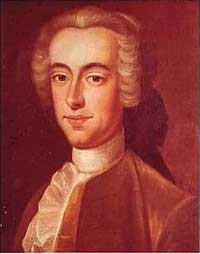
This dapper gent is Thomas Hutchinson, the second-to-last Loyalist governor of the Massachusetts Bay Colony. Hutchinson also has the special distinction of being the last civilian Loyalist governor of Massachusetts. His replacement was a military commander, General Thomas Gage, sent to impose martial law. The governor of Massachusetts after Gage was named John Hancock. So the sequence is: local politician appointed to get control of the colony, followed by a military governor sent from the home country, followed by a local revolutionary. You can see how well getting tough on the colonists worked.

Hutchinson became acting governor in 1769 (he'd been lieutenant governor for 11 years before that), was officially commissioned in 1771, and got replaced in 1774. (Actually, Hutchinson's governorship was only "suspended" during martial law, so technically the man is still the royal governor of the Massachusetts Bay Colony.) That means Hutchinson was governor, acting or official, during the Boston Massacre and the Boston Tea Party.(The classic study is Bernard Bailyn's biography The Ordeal of Thomas Hutchinson. It is, among its many virtues, highly readable.) Hutchinson was George III's man on the ground while Massachusetts hurtled toward Revolution.

Here's the thing. By the time Hutchinson was appointed to run the colony, the Massachusetts "Patriots," the future revolutionaries, already hated him. Back in 1765, when he was Lieutenant Governor, he came to be viewed both as a defender of the hated Stamp Act (which taxed every contract, newspaper, almanac, will, property deed and nine of spades in the colonies) and of elitist privilege generally. So an angry mob went to Hutchinson's house and tore it down.

Four years after Hutchinson watched his fellow Bostonians rip apart his home, he was put in charge of the whole colony. What better guy to make Massachusetts accept unpopular measures than a deeply unpopular governor whom people already found unacceptable?

The British had lost the colonies (or at least Massachusetts) before the Revolution started. By the time they needed the army to impose political order, it was over, because they were fighting to restore a local governor who had already failed. If you need to call in the army because Governor Hutchinson can't control the province, your strategy can't be about returning Governor Hutchinson to power. Fighting a counterinsurgency does mean that you eventually turn the area you're fighting for over to local political control. The point of the counterinsurgency is to build support for that local government. But the strategy is only as viable as the proposed government is. If that government can't build or sustain support on its own, then there is no end, and no possibility of victory.

Similarly, our own counterinsurgency in Afghanistan and our involvement in Iraq depend upon the viability of the local governments that we back there, and those government's abilities to garner sufficient support on the ground. In Afghanistan's case, we began with a local partner, Hamid Karzai, who as far as I can tell was initially quite plausible. Hamid Karzai putting together an Afghan government was not a crazy plan. He was a known quantity, with genuine connections, and he could likely have built the support he needed. At this point, it should be clear that he has not. No mob has arrived to demolish his home, but the last election made it obvious that he is no longer remains entirely viable or entirely legitimate. We can't win in Afghanistan until Karzai (or some other leader) can build a central government with sufficient popular support. That hasn't happened, and Karzai is no longer capable of making it happen.

But what alternative? Karzai seems to some American policy-makers like the only person we could work with, so he has to win. But it doesn't work like that. A local leader doesn't become viable simply because we can't accept the alternatives. Consider Thomas Hutchinson: he may have been hated by his fellow colonists, but the British needed somebody who would follow their policies. The leaders who were popular in the colony, the ones who could garner widespread support, were popular exactly because they opposed the Stamp Act, quartering British soldiers, the East India Company's monopoly on tea, and so forth. The British couldn't work with them. And they certainly couldn't deal with someone like Massachusetts' representative in London, Benjamin Franklin, who was always talking about conciliation with the colonists. Eventually, Franklin leaked some of Hutchinson's letters (which sneered at the idea of Englishmen being entitled to rights), and was humiliatingly dressed-down and punished by the Privy Council. Franklin clearly had no character, and was clearly not a real Loyalist. They told Franklin that last part, and eventually convinced him they were right. In the meantime, there was no one else the King and Parliament could trust. So they stuck with Hutchinson and sent more troops.

It's not a plan. It never was.

Tuesday, July 06, 2010

How to Lose a Counter-Insurgency: Part II


(Or, Lessons the British Army Taught Us)

Part II: Let the War Drag On and On

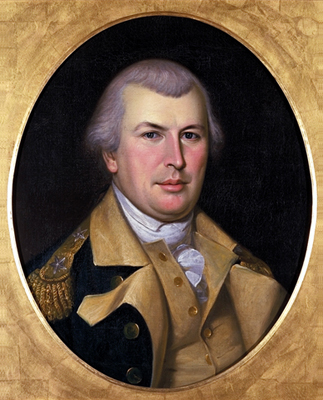
This is General Nathanael Greene, George Washington's most trusted and innovative lieutenant. Greene is the person Washington turned to when it got ugly. He assigned Greene to cover the Continental Army's retreat from New York when the British had all but finished the American army off; he assigned Greene to solve the supply problem at Valley Forge; and he sent Greene to lead the campaign in the South after the British had positively crushed Horatio Gates and destroyed the Americans' southern army. The British were winning the South, and Nathanael Greene is the reason they didn't.

The British had begun to win in the Carolinas because they had belatedly begun a strategy that emphasized political support on the ground. The Southern colonies (or at least their coastal areas) tended to be fairly rich in British loyalists for cultural and sectarian reasons. The Southerners along the coast tended to be Church of England, unlike the various dissenting Protestants who abounded in the North. So after some military setbacks the British sent Cornwallis to take Charleston and then organize and rally the local Loyalists into militia units that could pacify the countryside and squelch the rebel militias. The early stages of the plan worked well. Then Greene, with a little help from officers like Daniel Morgan and Light-Horse Harry Lee, ruined the strategy and wrecked Cornwallis's nerves.

It's not that Greene defeated Cornwallis. He never had the troops to win a direct assault, and he lost every pitched battle he tried. Part of the rebels' success involved upsets over smaller detachments of Cornwallis's army, which kept getting smaller. But mostly Greene won by not losing. He kept his "fugitive army" in the field. He kept living to fight another day. When he was in trouble, he made brilliant and even daring retreats. (Yes, there is such a thing as a daring retreat. Greene could choose the path that led to safety through danger and pull it off.) He floated like a butterfly. He stung like a bee.

The result is that even when Cornwallis won his objectives, his forces got weaker and weaker. But worse for Cornwallis, the Revolutionary militias kept rallying, and the Loyalists volunteers dribbled away. (Although one large and misguided group did attempt to join Light-Horse Harry Lee, under the impression that he was someone else.) As long as Greene stayed in the fight, his local sympathizers stayed in the fight, too. All Greene needed was to force a series of stalemates. Cornwallis needed a decisive checkmate, which every month got harder to achieve. As long as Greene hadn't lost, he was winning. As long as Cornwallis hadn't won, he was losing.

The lesson for counterinsurgencies, including the ones that we're fighting now is that ties go to the home team. The occupying army, like Cornwallis, has to win by destroying the opposition outright. The insurgency gains strength and support just by keeping the fight going. The longer the occupying force goes without defeating the insurgents the less likely the locals are to believe that they ever will. And once you decide the occupier can't win, you start planning for the next chapter.

We began fighting in Afghanistan in October 2001, and started occupying bases there in November of that year. (If you're wondering, the Soviets spent nine years and two months fighting in Afghanistan; we are six months from breaking their record.) We are still fighting the Taliban. Can the Taliban forcibly drive us from Kabul? Hardly. Could they directly assault the main body of our forces? Of course not. They can't afford to do that. But they don't need to.

Nathanael Greene couldn't drive Cornwallis out of Charleston. He never bothered to try. And for that matter, Washington couldn't drive the British out of New York, which they took from him in late 1776 and kept for the whole war. They took Philadelphia, too, chasing out the Continental Congress and Washington couldn't do much about it. But the British couldn't win that way, and neither can we. If we can't destroy the Taliban as an effective force, they can wait us out forever. They have nowhere else to go. Charles Cornwallis wanted to go back to England someday; Nathanael Greene was already home. The visiting team needs to end the contest.

Many people complain that setting any specific date for a draw-down or withdrawal simply encourages our military enemies (whether in Afghanistan or Iraq) to wait us out. This is logical enough, but it ignores one basic fact. Our opponents in Afghanistan and Iraq have always been waiting us out. They're not going to decide to wait us out because they have a specific date to look forward to. Their original schedule was to wait us out forever. (Washington, bidding farewell to his troops in 1783, talks about gaining the victory "so much sooner than we could have expected.") Giving them a date to circle on the calendar doesn't change their plans. They will resist as long as they can. The only way to stop them is to destroy their means of resistance.

There are really only two choices for an occupying force: win or go home.

cross-posted at Dagblog

Wednesday, June 30, 2010

How to Lose a Counter-Insurgency: Part I


PART I: Kill Civilians


The Senate Armed Services Committee is apparently very concerned about our rules of engagement in Afghanistan. Before they confirm General David Petraeus to the Afghanistan command, they want to make sure that he will loosen up those rules of engagement to allow more airstrikes and more artillery strikes. He has made soothing voices to the effect that he will be sure not to hold back the heavy firepower too strictly.

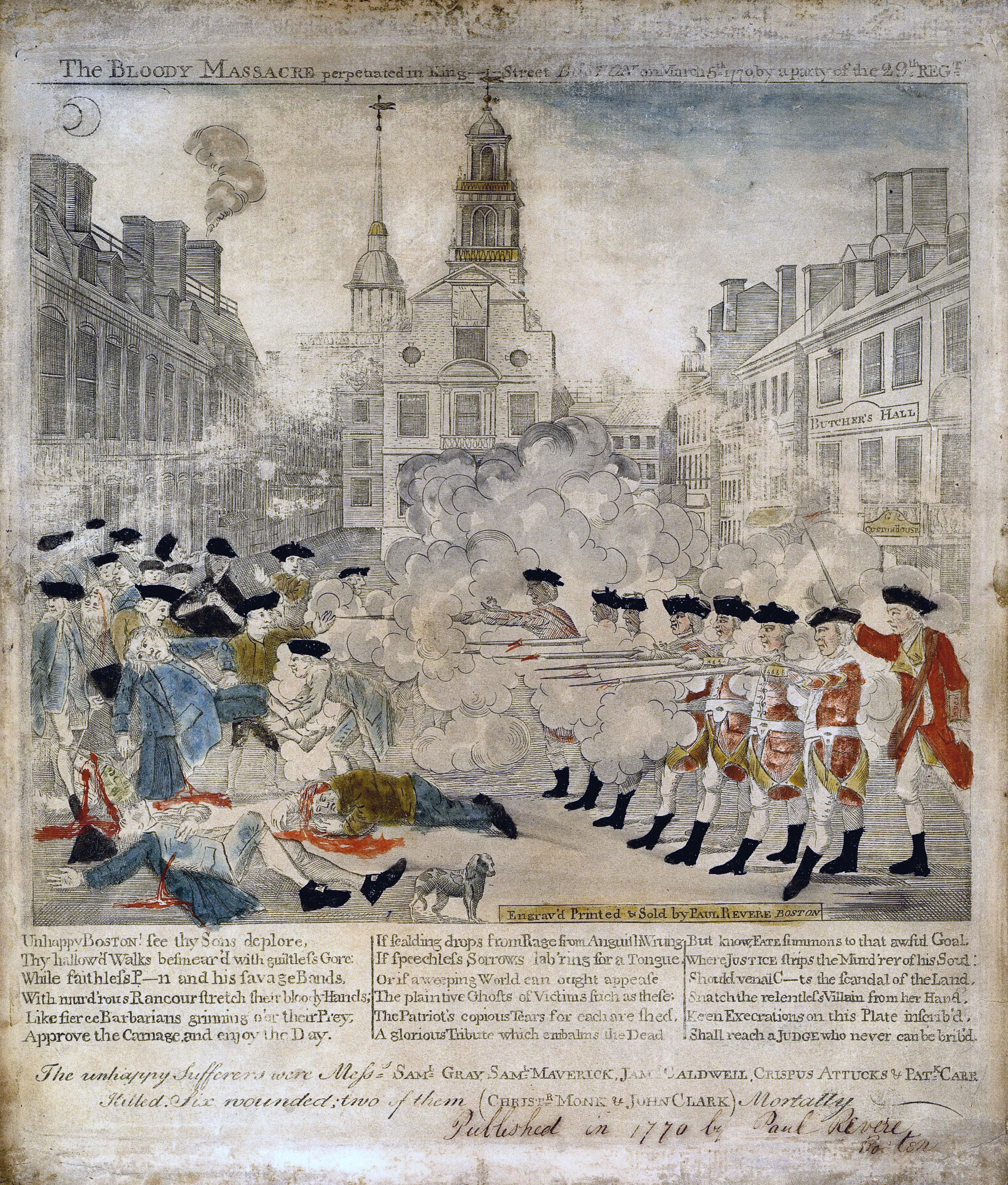
As soon as you're worried that your counterinsurgency troops aren't using heavy enough firepower, the counterinsurgency strategy is all but dead. I could easily write a thousand tedious words explaining why, but I would like to offer this image instead.

The Senators' concerns seem to have been specifically prompted by the Rolling Stone article that brought down General Stanley McChrystal. In addition to featuring a number of shockingly undisciplined and insubordinate remarks by McChrystal and his aides, that article includes a number of complaints of the strictness of McChrystal's rules of engagement from frustrated rank and file soldiers who'd prefer to "get [their] gun on." While I've criticized McChrystal's strategy and believe (based mostly on the results in Marja) that it's failing, the problem isn't that McChrystal is too squeamish about accidentally blowing away civilians. "Too careful about killing civilians" can really never be the problem with executing a counterinsurgency. But a reflexive desire to do more shooting, whether that reflex is expressed by grumbling soldiers on the front lines or anxious lawmakers in the capital, is a sign that the counterinsurgency strategy hasn't been fully accepted or understood. The goal of a counterinsurgency is to protect the civilian population and build up political support on the ground. Killing Afghan civilians achieves all of the key counterinsurgency goals, but it achieves them for the Taliban.

Our British cousins have generously provided us with a clinic on how to lose a counterinsurgency. In fact, they demonstrated those lessons for us in person, at great sacrifice, over two hundred years ago. Consider that knowledge base part of the United States' national starter kit. Since we seem to have lost touch with those lessons, I'd like to celebrate the Glorious Fourth (in part) with a short series of posts reviewing a few of the military tutorials left by Generals Gage, Howe, Clinton, Burgoyne, and Cornwallis, with generous underwriting by George III.

Am I really comparing George Washington to the Taliban on Fourth of July weekend? The political, philosophical, and moral answer is to that question is No, No, and Hell No. I take proud, patriotic delight in the Revolution's success, and I want to see the Taliban utterly destroyed. But the military history answer to that question is: Sadly, Yes. I wish to God that the situations didn't look so much alike. But in each case you have a highly trained, superbly equipped and deeply professional force of soldiers facing an ideologically-driven local opponent, largely composed of irregulars, across a large land area full of rugged terrain. The analogy isn't perfect; no analogies are. But in some ways, we have it harder than Gage, Howe et al. had it. Washington's army was much more conventional than the enemies we're fighting, and thus easier to defeat by conventional means, and the cultural gap between the British occupiers and British-American rebels was almost nothing. Howe and Washington had thousands of times more in common than we have with our Afghan allies, let alone with our enemies.

It's tempting of course, to view the situations as different because the Continental army fought for noble principles that we admire, and the Taliban fight for a fanatical ideology that we despise. But if we're thinking about how to win a war, we can't yield to that temptation. On the ground, the difference between soldiers fighting from deep commitment to a good idea and soldiers fighting from deep commitment to a bad idea is nothing at all. It doesn't matter that the Taliban only think that they're right. What matters is that they do think they're right, and they act on that. The British didn't think the American rebels were right; most didn't even think that the rebels were acting from sincere principle. And that mindset was part of the British problem.

Let's consider the illustration of the Boston Massacre again, and try to see it from the British point of view. Most Americans learn about this in grade school as a piece of outrageous, unmotivated bloodthirst, which is certainly how it looked to people in Boston. But the British soldiers viewed themselves as protecting themselves from a dangerous mob, and their position was reasonable enough to get the soldiers acquitted. They were in fact, surrounded by an angry crowd, and it was impossible to know how serious a danger that crowd posed. If Crispus Attucks looked aggressive to them, it's because Crispus Attucks actually did look aggressive, and he was angry as hell. There had been daily brawls between soldiers and Boston crowds for the previous three days, and it looked like only a matter of time before a British soldier was badly injured or killed. The soldiers had marched into the crowd on March 5 to rescue a private who was surrounded and under attack by a whole gang of infuriated locals; their mindset going in was about protecting the corps. And eventually their commander, Capt. Thomas Preston decided to err on the side of protecting his troops. He wasn't going to wait for one of his men to get hurt or killed before he decided that the mob was really dangerous. When in doubt, bring your own men home alive. The rest is history.

Captain Preston's logic is exactly what the Senate has been urging on General Petraeus. The soldiers who chafe at McChrystal's strict rules of fire would prefer to serve under a Thomas Preston themselves. And truth be told, there are lots of junior officers in Afghanistan and Iraq right now, charged with leading their own troops through confused and dangerous streets, following the Preston handbook. In their position, charged with their responsibilities, I would probably do the same. Threats are hard to identify until too late, some attacks come from people who seem like civilians, and the American officers want to protect their own men. The duty to their own troops is much too basic, too fundamental, to deny. Better to make a reasonable mistake that kills a civilian than any mistake that kills one of your own, the logic goes. I don't know how I would tell a captain or lieutenant leading a patrol anything different.

The problem is that those mistakes don't seem reasonable to the home team. When civilians from your own city or town or village get killed by soldiers, you don't say, "Well, it was an easy mistake to make, and those soldiers are under a lot of pressure." Nobody sees the heavily-armed foreigners as the ones whose safety is in jeopardy. And nobody ever forgets or forgives.

Of course, from the other side of the Atlantic, what matters is bringing your own troops home safely. Half a dozen civilians killed in Boston didn't make much impression in London, but having a British soldier killed would be a huge problem. It's natural to count your own losses first, and to forgive mistakes made in the name of protecting the boys on the front line. It's hard to feel deeply about a few regrettable accidental deaths on the other side of the world. But a few civilian deaths in your neighborhood is just flat-out murder, a bloody massacre, and there's no dealing with the people who ordered it. Captain Preston and his men got acquitted in Boston, but even their lawyer didn't have any sympathy for them. His letters always refer to their actions as simply "the massacre," and he became one of the loudest, most radical voices for independence. His name was John Adams.

One last lesson from the bloody events of March 5, 1770: it was only March 5, 1770. It was three years before the Boston Tea Party, five before Lexington and Concord, six before Washington forced the British out of Boston. But the Massacre was firmly on New Englanders' mind the whole time. Washington just had to say "March 5" to get his troops fired up. They never got over it. They never moved on. And that's the sobering lesson for us, seven years into Iraq and almost nine into Afghanistan: what happens early matters. Events from early in an occupation can change the direction course of events in powerful ways, and those events can't be reversed easily. The strategy that you should have used in 2002 isn't necessarily available in 2010. There's no do-over button. Things happen, they have consequences, and you have to deal with them.

Tuesday, June 22, 2010

McChrystal's Failures

cross-posted at Dagblog

If you tune out the upcoming storm of spin, distraction and hype, what just happened is very simple: a general whose strategy has failed has tried to tie the Commander-in-Chief's hands by running to the press. McChrystal's goal was to create a political situation inside the Beltway in which the President would face problematic amounts of criticism if he changed either the unsuccessful strategy or the unsuccessful commander.

It's insubordination in an attempt to conceal failure, the full McClellan. It is a threat both to our Constitutional traditions and to the proper military defense of our nation.

When President Obama took office, he made a decision to commit further resources to gaining some credible form of victory in Afghanistan. It would have been easier in some ways for him to plan a simple phased withdrawal from both Afghanistan and Iraq. Most of Obama's political base was against any extension of the war. At that time, McChrystal promised that his own strategy, backed by a certain number of additional troops, would achieve certain results in a certain time frame. Based on those promises, Obama approved McChrystal's strategy instead of others (including strategies based on troop drawdowns), committed more troops, and gave McChrystal the Afghanistan command.

McChrystal has not delivered the promised results. The recent American offensives have not achieved their goals, and it's increasingly apparent that McChrystal's plan isn't going to work. So, having let the President down, McChrystal has attempted to cover his backside by letting the President down. He has permitted his aides to commit insubordination by slagging the civilian authorities around Obama to the press, and to relay McChrystal's own personal contempt for the Commander-in-Chief. Of course, McChrystal delegated aides to do this, not being man enough to take responsibility for his own insubordination.

Some right-wingers are going to take up McChrystal's cause and depict Obama as a soft, decadent civilian and McChrystal as a tough, upright, honorable soldier. But nothing about McChrystal's behavior is remotely tough, honorable or upright. He is treacherously backstabbing the leader who promoted him. McChrystal's ability to work back-biting and ass-covering into the same motion just shows how very supple and flexible his character is, and how little he's burdened by any spine. McChrystal is willfully violating the military's code of ethics and conduct. He is trying to duck his own command responsibilities by whining and slinging mud. And he's sent his deputies to do it for him. I'm having a hard time seeing any soldierly virtue here.

But more importantly, there's a question of our Constitution at sake. As I've pointed out before, civilian authority over the military is one of the central principles for which the American Revolution was fought. The Massachusetts Minutemen were fighting to end a military governorship of their colony. George Washington went to enormous pains to make clear that the Presidency was a civilian and not a military office, and that every military officer served the civil political authority, the power delegated by the people. The Constitution designates the President as Commander-in-Chief of the armed forces for exactly this reason.

Over the last few decades, parts of the right wing in this country have tried to use the phrase "Commander-in-Chief" to mean exactly the opposite of what it means, to imply that the President is somehow a military officer and thus answerable to the military's norms or the military's approval. This is completely backwards. The intent of the Constitution and its Framers is that the military exists to serve the people, not the other way around, and so the military must be absolutely subordinate to the country's elected leader. George Washington wrote that chain of command. It's not for Stanley McChrystal to go outside it.

Civilian authority over the military is necessary for any real democracy; you can't have a democracy if a bunch of people with guns refuse to honor the elected leaders. But it's also a smart principle for national defense. A military that isn't accountable to any higher power is a military that allows itself to stick by strategies after they stop working. Giving the generals and admirals freedom to make all the decisions can actually make the military less effective and the nation less safe. Someone has to have a veto when a field commander is too stubborn or proud to admit that things aren't working, or when the military brass refuses to accept changing times. Sometimes you need a politician like FDR to tell the Army that cavalry has become obsolete. Sometimes you need a civilian like Lincoln to replace a West Point thoroughbred like McClellan. What gave Lincoln the right? The Constitution. What made some Illinois lawyer think that he understood strategy and tactics better than General George McClellan? The facts on the battlefield. That McClellan went whining to the newspapers and the opposition party only confirms the man's unfitness.

The same old truths are true today. If McChrystal can't win the war in Afghanistan, he shouldn't try fighting one in the media. And if we start letting the paper battles of the news cycle decide how we fight our actual wars, our country will lose over and over again.