Showing posts with label economy. Show all posts

Tuesday, November 17, 2015

America Needs More Refugees

The cheap fear-mongering about Syrian refugees loses sight of some basic facts. The United States has taken in refugees before, and that decision has worked out really, really well for us. In fact, taking in refugees has been great for America, and we should take in more whenever we get a chance.

More than two-thirds of Americans were opposed to allowing refugees fleeing Hitler into the United States. But we eventually, grudgingly, mostly, did the right thing, and the influx of refugees into our country was wonderful for us. The United States got a huge infusion of European scientists, artists, and intellectuals, and an even larger group of bright, skilled professionals, tradesmen, business people, students, and workers. Those refugees helped us win the war, and they helped build America's postwar boom. They enriched America culturally and intellectually. They enriched America scientifically, in our universities and labs. And they straight-up enriched America, beginning new businesses and starting new careers.

Our gigantic economic expansion after World War Two also benefited from a big, free bonus helping of educated workers, educated on other countries' dimes. Our classic Hollywood movies are filled with refugee actors, written by refugee screenwriters, and directed by refugee directors. And refugee scientists helped win America win the war, not least the race for the atomic bomb, because we could count on Hitler and Mussolini for regular shipments of world-class physicists. Does the name "Fermi" ring a bell? Or perhaps some of you might remember this fellow:
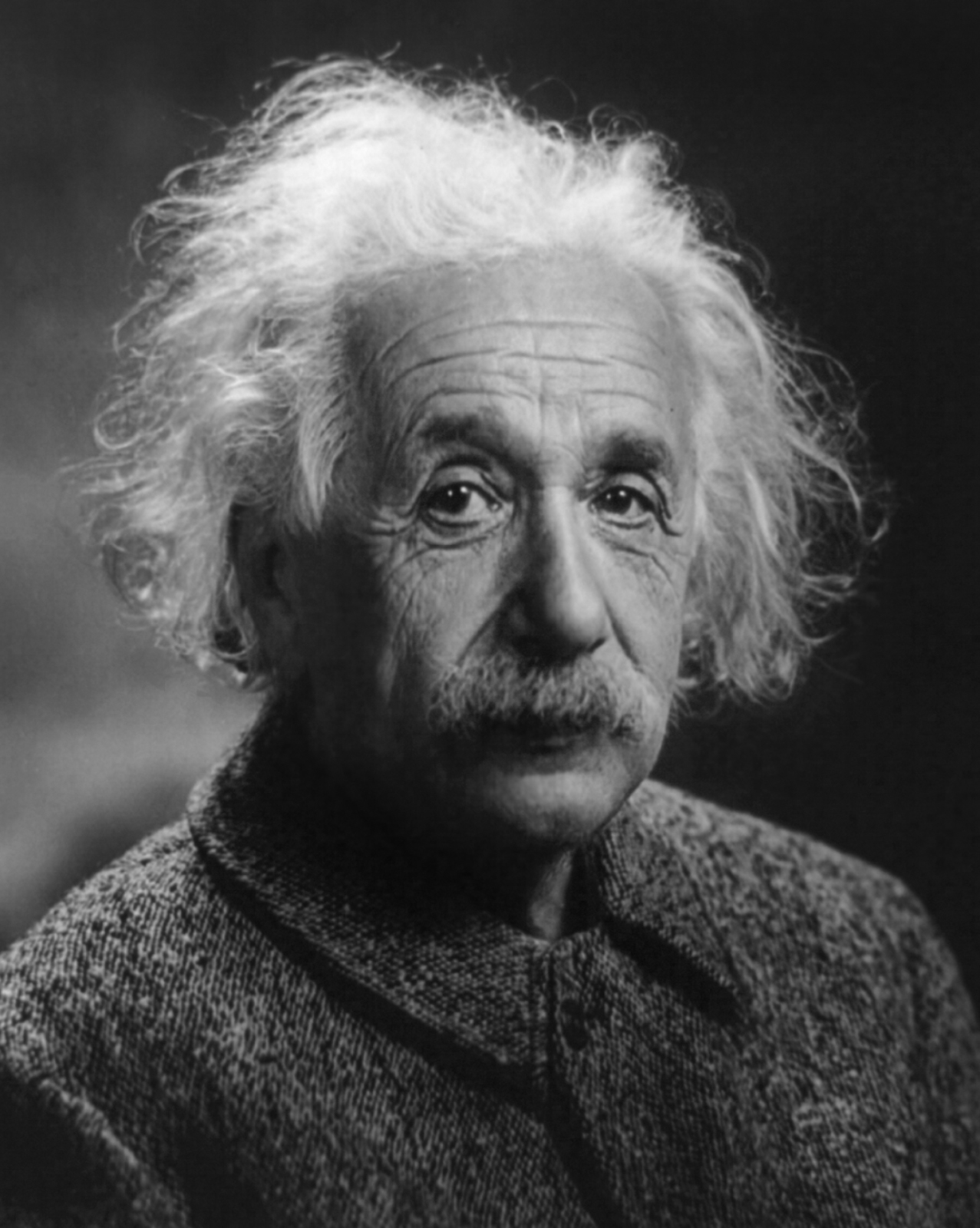

The European intellectual migration of the 1930s and 1940s was unprecedented and historic, because the upheaval in Europe was unprecedented. But America has been harboring refugees since before it was the United States of America, and those refugees have made enormous contributions to our society and particularly to our economy. All those people who didn't want to accept European refugees in 1938, those people who looked at all those Jewish doctors, scientists, filmmakers, and engineers and just saw some stereotypical rabble of ghetto urchins without shoes, were not just being un-American bigots, which they were, but also (like most bigots) they were being suckers. They were being given an enormous gift, a migrating flock of golden geese, and they could only see their own racist fantasies.

Refugee populations, now as then, include large numbers of people whom you could ordinarily never induce to leave their own countries for yours, including people who under ordinary circumstances would stay put because they were so successful in the old country. People with high degrees of skill and education, whom you could never manage to recruit otherwise, are forced to start over. Immigrants are a huge boost to the economy, period, but refugee groups include a heavy share of super-immigrants whom you're only getting because of historical disruptions. Their hard luck becomes our good luck. We should grab as many of those people as we can.

The Syrian refugees are also people who would not be going anywhere in the normal course of things. They are disproportionately educated, middle-class types who were comfortable and successful before the civil war tore their country apart. (And they are also typically more secular or cosmopolitan; these are the people "ISIS"/Daesh hates.) They are, in short, super-immigrants, with a much higher percentage of doctors, scientists and engineers than you see in standard immigrant populations. We should grab them. We should grab them now. These are people who could make our country grow. We would be stupid not to grab this chance when we can. And I never want to hear Americans kvetching about a shortage of math teachers again, ever.

I can accept that many of our politicians and our talking heads don't want to do the right thing. I've gotten used to that. I also accept, with my routine disappointment, that those people don't want to do the American thing. (But I will note how many Bible-thumping politicians are hellbent against doing the Christian thing.) But could we at least not do the stupid thing? Could we not be enormous suckers? Only a sucker would let a chance like this through our fingers. We have made it more than obvious over the past few days that we don't deserve good luck like this, but we should at least have the good sense to take it.

Is there a short-term cost to taking in refugees who need to start over? Sure. But that short-term cost has enormous long-term benefits, and will reach the break-even point pretty soon. Taking on short-term costs for long-term gain, or what people call "investing," is what capitalism is. And the United States is uniquely situated to make that small investment. Last time I checked, the US had the largest economy in the world, and next time I check that will still be true. Do you know how we got to have the largest economy in the world? Taking in refugees. It is our national business. It is our edge. It is what got us where we are, and we should stick to it. We would be idiots not to.

We have been building our country on refugees' industry, ingenuity, and prior education since before we called ourselves a country. I have particularly warm feelings for one group of refugees, fleeing religious persecution and political turmoil, who settled in my own native Massachusetts. Perhaps you might have heard of them yourself:


And with that, let me be the first to wish you a Happy Thanksgiving.

cross-posted from, and all comments welcome at, Dagblog

Wednesday, July 09, 2014

Jaws and Climate Denial

There is no better Fourth of July movie for my money than Jaws. I would watch it at least twice every Independence Day weekend if that wouldn't bore and annoy my spouse. It was designed and filmed so carefully that time has transformed it into a beautifully accurate period piece, capturing the New England beaches of my 1970s childhood in loving detail. Time has also turned it into something else it was not originally meant to be: a parable about the dangers of denying climate change.

Jaws is the story of a community whose economy depends on its natural resources. That's true of every community and every economy, but in this story it's simple and obvious. The town has a beach. Its entire economy depends upon tourists coming to that beach during the summer. If the summer people don't come, everyone will go hungry. Clear enough.

Then the natural world throws up a problem; there's a shark in the water, and that shark kills a swimmer. The local police chief wants to close the beaches, but doing that at the height of the tourist season means financial ruin for the townsfolk, the danger that they will, as one character puts it "be on welfare all winter."

Watching the movie, the right thing to do is obvious. But that doesn't mean it's easy. Closing the beaches would cause real pain for many people. It isn't a cheap or easy solution.

The town authorities cave and do the wrong thing, trying to wish the shark away. They change the first victim's cause of death to "boating accident." When a second person is killed, they balk at the price of commissioning a serious shark hunt by a professional and instead countenance an amateurish bounty hunt that brings in "a shark, but not the shark." That gives them just enough apparent evidence to dismiss scientific advice and open the beach for Fourth of July weekend.

Then, as one of my friends likes to say during the shark sequences: nom nom nom nom nom.

The last act of the movie leaves the island behind to focus on the daring shark-hunters' interpersonal struggles and their fight with the monstrous fish. But the ending of the town's story is clear: they have destroyed their economy, not simply for a few crucial weeks but for the entire summer and probably for years to come. No summer people are coming to an island where three people have been killed. And tourists aren't going to magically forget the shark attacks next summer either. Trying to deny the problem in order to protect the beach economy leaves the beach economy in ruins.

So it is with us. Our economy depends on exploiting fossil fuels. And burning those fuels has begun to create major problems. Reducing emissions will not be cheap or easy. It will have painful costs, and there is no point in underestimating those costs. Nor is it helpful to expect that people who will bear heavier losses than the rest of us should simply take those losses. It's dysfunctional to let individual create massive social expenses, but it's also dysfunctional to make individuals shoulder massive social expenses themselves.

But here's the thing: avoiding the necessary economic sacrifice in the short term only makes the price of the eventual economic sacrifice higher. If we don't take the emissions-reduction hit now, we will incur all the costs of a changed climate AND eventually have to reduce our emissions even further. We will hold on to Fourth of July weekend and lose all of our summers. The character talking about "being on welfare all winter" isn't talking about closing the beaches for two weeks. He's talking about the cost of cheaping out and not killing the shark.

The Jaws parable is playing out in North Carolina right now, where the State Legislature has ordered experts to change a report on how rising sea levels will affect the Outer Banks. (At the same time, Virginia is taking steps to protect its endangered coastline.) North Carolina is afraid that the news of rising sea levels will be bad for the Outer Banks's beach-tourist industry, so (like the Mayor and medical examiner in Jaws), they have had the alarming report amended. The problem for the Outer Banks is that, as they say, This was no boating accident. And waiting until the sea level has already risen too high to ignore means waiting until it may be too late for the Outer Banks to be saved.

Denying climate risk is like ignoring a debt; it simply gets harder to pay off. I understand why people on the Outer Banks are afraid that their property will lose value if the state projects a thirty-nine-inch rise in the sea level by 2100. But if no steps are taken to deal with the rising sea, property on the Outer Banks will someday lose all its value. You can't sell a hotel to the fish.

And sooner or later, every climate denialist will have to hear the hardest news of all: "Summer is over. You're the Mayor of Shark City."

P.S. It has come to my attention since I started this post that the admired Historiann has also recently posted about Jaws, and that she has only recently seen the movie for the first time. Welcome to Amity Island, Historiann. Amity, as you know, means friendship.

cross-posted from Dagblog

Tuesday, January 28, 2014

Economy, Ecology, Efficiency, Catastrophe

Flying during the winter months has become an increasingly dicey proposition in 21st-century America. I make a handful of work-related plane trips a year, but the ones I do make tend to be for things that can't be rescheduled easily and often can't be rescheduled at all. I'm sure this is true for travelers in other kinds of business, but it's certainly true for academics: if you don't get there on the right day, the thing you were traveling to do may simply never happen. And American airlines can't quite promise to get you where you need to go any more, for reasons that have both to do with changing weather patterns and with a set of catastrophically-shortsighted business strategies that have become accepted as normal.

I'm not talking about the occasional weather-related delays. Sometimes, Mother Nature doesn't want you flying any planes for a while, and that will always be true. What I'm talking about is the cascading delays that turn bad weather in one place into system-wide disruption and strand travelers for two or three days, and sometimes even longer, after the weather has returned to normal. And we now have such system-wide delays just about every winter.

The annual MLA conference was held in Chicago this year just after the end of the first "polar vortex" event in January, which closed the Chicago airports and tied up airline travel across the country. The MLA is a massive academic conference for literature and foreign-language teachers. More importantly, the convention is key place for job interviews; young lit scholars looking for a job need to go to MLA as part of their job search. And of course, nobody trying to find a first job in the terrible academic job market wants to miss a job interview; even the interviews are hard to come by.

But of course, some people didn't make it to MLA this year, because the airlines couldn't or wouldn't get them there. The extreme cold was the official reason. But in fact the cold had begun to relent, and flights had started again BEFORE the conference began. The problem was the airlines could not move the passengers who had  been scheduled to fly over the previous two days.

I flew to Chicago the day before I needed to be there, building in extra time to my travel schedule because, hey: Chicago in January. And I got there without trouble. But if I had left earlier, I would have arrived later, or not at all. I flew after the airports had reopened; people who were scheduled to fly before that had to wait for open seats on later flights, but the airlines are intensely focused on not having any empty seats, so those waits stretched for days. Someone I was supposed to meet in Chicago never arrived; that person had scheduled a flight a couple days ahead of the conference, couldn't get rebooked until two days after the conference started, and decided that there was no longer any point in going. All of this person's crucial appointments were going to be broken anyway. Why fly someplace for business if you can't get there on time to do your business?

There are two important lessons here. The first is that the words ecology and economy share the same root for a reason. The ecology is the foundation that any economy is built on, and if you disrupt one you disrupt the other. If you're having extreme weather events every year, they will damage your economy. Crops get damaged. Supply lines break. Basic economic activity, like shipping, gets interrupted. You can't neglect the Earth for the sake of business. It's the only place business can happen.

The second lesson is that our basic American business model is ill-suited for an environment that has to cope with so many challenges. Our current business doctrine is obsessed with efficiency, which means low operating costs. Efficiency sounds great, in itself, but in effect it means a focus on doing away with "excess" capacity. An "efficient" business is one set up to operate smoothly on a normal day, but to completely fall apart in the face of unforeseen demand.

The goal of "efficiency" is not to have any more capacity than you need. Businesspeople are taught not to have any more inventory, equipment, or employees than they need to meet immediate demand. They are taught to employ the absolute minimum number of people they can get away with, and view the damage caused by being shorthanded when things are busy as less than the economic "loss" caused by employing a slightly larger staff. And businesspeople are taught the just-in-time inventory approach, pioneered by Toyota, which teaches that stocking inventory in advance is financially wasteful because it ties up money that could be used for something else in the meantime. Never have three spare parts in the back room when you could have just one, or better still have none and have it delivered the day you need it. If you're selling hamburgers, you should have enough burgers in the freezer to get you to the next delivery; stockpiling an extra week of frozen burgers is seen as an unnecessary cost.

One of the problems with this model is that minimizing spending minimizes the business's stimulus on the rest of the economy. Fewer employees get paid. Vendors make money later, which slows down their own purchasing. (The financial return you go by holding onto cash for a few extra weeks is exactly the return that your vendors would have gotten from getting the cash a few weeks earlier.)  So when everybody follows this strategy, it creates recessionary pressure.

The other problem is that this approach is fragile. Just-in-time inventory demands that the delivery network always work seamlessly. If the part you ordered doesn't come, you're stuck. If the delivery truck doesn't show up with the next load of burgers, you're closed until it does. The more "efficient" the business, the less it can cope with disruptions.

The airlines have been pursuing the just-enough, just-in-time approach hard for years now. Their ideal goal would be to fill every plane, every time. That's efficient, in that it gets the most out of their planes and their people. Extra planes and extra pilots are, from the airline's point of view, just a drain on the bottom line.

The problem is that when, all-too-predictably, operations get disrupted, there is no slack in the system to deal with the problem. This is because the airlines have worked hard to take all the slack out of the system. Air travel in this country is designed to make the airlines maximum profit on a good-to-normal day. But this means not being to cope at all on the bad days. When your flight gets cancelled, the airline doesn't have seats on the next flight or the one after because they deliberately set out not to have open seats on any flights. When your flight can't take off because of a malfunctioning part, there isn't always a spare part handy, because stocking spare parts is considered thriftless. There certainly isn't an extra plane that can replace yours. And, once the delays start piling up, there aren't any extra pilots, because the airlines employ as few pilots as possible and schedule them for nearly as many hours as they're legally allowed to fly. Once the delays start piling up, the pilots start to hit their maximum hours and there's no one to fly your plane. This is "efficiency" in action."Just in time" means everyone is delayed.

The economy in the 1950s and 1960s operated differently; thinking was still shaped by the Depression, where people got too much experience of scarcity, and World War II, where there was no such thing as too much material at the front. The idea of having backups and reserves was not seen as inefficient, but as prudent. The point was to be ready for an emergencies. Our current business wisdom is NOT to be ready for unforeseen emergencies, because it's too expensive. So we just have to wait out each catastrophe, long after we they have stopped being unexpected.

cross-posted from Dagblog

Monday, December 30, 2013

Inflation and the Dragon

One of the hardest things for many people to grasp during the Great Recession has been the idea that inflation is too low. We generally talk about inflation as pure economic evil, something that could never possibly be too low. But it is.

If you say inflation is too low, some people will bring up the high inflation of the 1970s or, more hysterically, the hyper-inflation in Weimar Germany during the rise of the Nazis as proof that Inflation Is Bad. But that doesn't really make sense. Inflation is bad when it gets too high, but that doesn't make a modest amount of inflation bad. The sun is bad in Death Valley when it's 130 degrees, but that doesn't make sunshine a universal menace. 15% inflation would be a very bad thing, but that doesn't mean 1.5% inflation is a good thing. 130 degrees Fahrenheit is murderous, but so 13 degrees is also a killer. A lot of our public debate about inflation is like trying to treat a case of frostbite while people keep shouting that heat is a terrible thing and then angrily tell you a long story about forest fires.

Some of the people warning against any inflation under any circumstances either should know better or actually do. They have various political or ideological motives. Some are under the spell of fringe economic theories, like Hayek's. Some are simply seeking short-term advantages for particular business interests, such as the banking sector, that benefit directly from low inflation although the wider economy might suffer. Some, including a healthy slice of libertarians, take their economic thinking from science-fiction or fantasy media and games. The enthusiasm in some quarters for the fictional virtual currency BitCoin is partly driven by genre-fiction economics. Bitcoin imitates gold to the degree that the processing of making it is called "mining"and there is a fixed maximum that can be generated, in imitation of the old gold standard, so that eventually the BitCoin money supply will become inflexible and incapable of expansion. This will make BitCoin immune to inflation (assuming anyone accepts it at face value), and in fact make the currency deflationary. Inflation and deflation are about how much money there is compared to how much stuff there is to buy with the money; when the money supply grows too fast, prices grow too fast. If the amount of goods and services money could buy kept growing, but the money supply didn't because all the money had already been created, as in the BitCoin plan, then the existing money would become more and more valuable as prices kept dropping, as in the Great Depression. BitCoin enthusiasts think this a good idea, partly because they read books like Neal Stephenson's Cryptonomicon and partly because World of Warcraft has been on the gold standard for years.

So I'm going to stoop to the fantasy-example level. Let me use The Hobbit to illustrate the dangers of an inflation-free world.

Tolkien's world, like most fantasy worlds, seems to feature virtually no inflation. A piece of gold is a piece of gold, with value that never ebbs. (This kind of tidiness and solidity is part of the appeal to many digital goldbugs, who like fixed numbers and find the arbitrary and negotiable nature of money 
unsettling.) In fact, Tolkien's world is probably deflationary, in that ancient treasures seem only to appreciate in value. Treasure just gets more precious with time because, as in most heroic fantasy set in an idealized pre-industrial world, there is virtually no economic progress.

The Hobbit of course features a dragon, Smaug, who is sitting on a vast hoard of gold and jewels which represents basically the entire money supply for several hundred square miles. Smaug is quite literally wallowing in his wealth. He has made a big pile of it and is sleeping with his belly on it, while everything else around him for miles and miles is a wasteland. This is all sensible enough draconian behavior because there is no inflation, and therefore Smaug has nothing to lose.

In fact, a deflationary world is excellent for Smaug. The money underneath his scaly belly only gains in value as he naps. If prices in the rest of the economy keep falling, then Smaug's gold will actually buy more this year than it would have last year, and buy more next year than it would this year. He doesn't have to worry about investing his money, or making more, because the money he has keeps gaining in value. The rich get richer by doing nothing.

But this is the problem. Deflation creates an incentive not to invest money, and not to spend it. So that money and the economic value it creates get sucked out of the economy. In deflation, you should never buy anything before you have to, because it will get cheaper the longer you wait. And you don't need to bother investing, because money just gains value by sitting there on the floor. Deflation rewards you for becoming, in the most literal sense, a hoarder. Maybe all that saving sounds virtuous. But if no one ever buys anything, then no one makes any money either. And if no one invests their money, no new businesses can grow. In fact, there is no new money; there's just the old money that gets more and more valuable while everyone else becomes poorer and poorer.

And so the area around Smaug is a wasteland, not simply because he's set it on fire at one point but because no one else can make any money or do any business. Nobody mines any more gold, or works gold into objects. Nobody grows any food. Respectable hobbits turn to lives of crime. No business can take place, because there is no capital. Capital is an accumulation of resources set aside for further investment; money that just gets piled up in a cave for years is not capital. And in fact, Smaug could only burn the area down because he had no further economic need for it. He'd grabbed all of the existing wealth and had no interest in anyone creating more, because his wealth would grow in value by itself. The Desolation of Smaug is actually the Depression of Smaug. And it's the platonic ideal of a deflationary economy: an enormous hoard of money with virtually no goods or services worth buying.

But let's imagine the basic economic conditions changing just a little. Let's say that Mirkwood, Long Lake, and the areas to their east actually have an annual rate of, say, 5% inflation. Now Smaug is still enormously wealthy with his ill-gotten gold, but he's not actually getting richer. In fact. he's getting a little poorer every year he holds onto that gold without doing anything with it. Its value is slowly leaking away. This sounds terrible and unfair to some people, who respond by inventing dumb things like BitCoin, but in fact this leakage moves people to more economically virtuous behavior.

What is a dragon to do? He could just be satisfied with his diminishing net worth, but let's face it: he got where he is because of his overpowering greed. So he has to do something. The only thing to do is to make more money. And the quickest way to do that is to leverage the money he has. If inflation is slowly eroding the value of Smaug's gold, Smaug needs to invest his gold for a rate of return higher than inflation. 

So Smaug, with 5% inflation nibbling at his tail, wants to make a 7% to 10% annual return on his gold. So let's say he hires some dwarves, Thorin and Company, to reopen the mining shafts in the Lonely Mountain and to work new gold into new, value-added cups, rings, and whatnot. He tries to sell off some of existing inventory of goldsmithery to the local Elvenking, or to the men of Long Lake, in exchange for other investments. Naturally, the dwarves don't work for free, and neither men nor elves willingly make deals that lose them money. Smaug has to work out arrangements that are profitable for everybody, so that Thorin et al. make enough to keep them motivated while Smaug nets the 7%-10% he's looking for. And suddenly, we have capitalism. The gold is no longer piled up doing nothing, but actively fueling more enterprise; it has become capital. (The "saving" Smaug indulged in in the other scenario may sound virtuous to those who equate saving and virtue, but it is literally the least capitalist behavior possible.)

Now, Smaug's various partners, employees, and trading partners are also facing 5% inflation, so they are also going to want to build their money into more money by investing in new things. And they also have to eat, so some of their wages and profits are going to be consumed. But money someone spends is money someone else earns. The area around the Lonely Mountain will have to become less lonely, because all of those people are going to need places to eat, sleep, buy new shoes, and so on. Bilbo Baggins moves to town and starts selling everyone second breakfast. And Smaug needs all that to happen, because his business can't survive without those things around. He's not going to burn it down again. Instead, his gold is going to circulate out into the community, through many hands, and fuel growth. Pretty soon, you have a bustling Lonely Mountain Economic Zone.
And in fact, this is pretty much the happy ending in Tolkien; once the hoard gets broken up and distributed into many different hands, rather than re-hoarded by Thorin, peace, love, and commercial industry abound.
Of course, if inflation gets too high, the economy suffers. If inflation is devaluing your money faster than you can make it, the economic incentives break down pretty seriously. But deflation also wrecks the incentives and ruins the economic system. A little inflation, in moderate doses, provides a compelling reason to make more money from your money, and money making more money is what makes the economic world go round. Moderate inflation is good for nearly everyone. Deflation is strictly for dragons.

cross-posted from Dagblog

Wednesday, September 18, 2013

Larry Summers Is Not the Main Problem

I'm as pleased as anyone that Larry Summers has withdrawn from consideration as the next Chair of the Fed. I thought he would do a terrible job. But Summers himself was never the real problem. His candidacy was only a symptom. The real problem is that we have a President who wanted to nominate Summers in the first place. Obama does not understand what's wrong with the American economy, and five years into his term, he persists in some basic misunderstandings.

There are two basic Democratic narratives to explain the 2008 financial meltdown, and they contradict each other. When Obama took office, he had to choose which story to believe. The first story is that the economy thrived under Clinton, and Bush's people screwed it up. I'll call that the Democrat vs. Republican story. It's partisan, but not ideological.

The other story is that Clinton's economic policies led to a short-term boom, but set us up for the long-term bust that started in 2008. The toxic securities that crashed the system in 2008 were deregulated under Clinton. Deregulation of banks started under Clinton. Clinton thought Alan Greenspan was a genius. The list goes on. The Bush people, at worst, only exaggerated what Clinton's people had already been doing. Their basic emphases (favoring investors over workers, worrying more about inflation than unemployment, etc.) were the same. Call this the Left-vs.-Right story. It's ideological, but not partisan.

You can't believe both of these stories if you're going to actually come up with a plan to improve the economy. You have to pick one. If the Democrat-vs.-Republican story is the right one, the best thing to do is to put Clinton's old academic advisers back in charge. But if the Left-vs.-Right story is true, then putting the old Clinton guys back in charge is the LAST thing you should do. Clinton's economic policies, devised by Robert Rubin and the so-called "Rubinites" associated with him, are either the way out of our country's economic mess or a way further into that mess. It can't be both.

Obama clearly chose the "Clinton knew how to run the economy" story at the outset of his first term. That makes sense. Obama had never had a strong personal vision for economic policy. (Read the economy chapter in The Audacity of Hope and you'll see what I mean.) He was immediately forced to take responsibility for a national economic crisis that had hit late in his election campaign, giving him almost no time to think our economic problems through or develop new policy ideas. And he had to stop the bleeding somehow. Going with the Democrat-vs.-Republican story gave Obama a ready-made team to put in charge and a set of basic policies to follow. (Larry Summers, Clinton's old Treasury Secretary, is one of the main Rubinites.) Going with the Left-vs.-Right narrative would have meant coming up with a completely new team and a completely new set of ideas. But who would he have picked? How would he distinguish good policy advice from bad? Accepting the Left-vs.-Right narrative meant moving into uncharted territory during a national emergency. Throwing out the old playbook and starting over is a much riskier move, and Obama hates unnecessary risks. Electing Hillary Clinton instead of Obama would not have avoided this problem. Hillary would have relied on Bill's old economic advisers, too.

While Obama's original choice might have been reasonable at the time, it has also turned out to be wrong. Five years later, growth is still sluggish, unemployment still high, and income inequality more rampant than ever. We've had five years of the Rich Man's Recovery, where the tiny fraction at the top have started growing even richer than they were in the Bush II years, but the rest of the country is still nowhere close to getting back to economic health. Not only is that not success, it's potentially a recipe for much bigger failure. The high levels of inequality make the whole system less stable and more prone to catastrophe.

Sure, we are almost certainly better off than we would have been if McCain, rather than Obama, had been calling the shots, and better off than we would be under President Romney. A move to the kind of Austrian economics that people like Rand Paul favor would have been a disaster. Obama understandably wants credit for keeping the economy from going off the rails completely and for whatever recovery has taken place over the last five years. He's committed on some level to defending his earlier decisions, and doesn't feel he has any room to maneuver on his left. He's right as far as that goes: his centrist policies are surely healthier than hard-right economic ideology would be. But "better than crazy" is not good enough. And while Obama's policies fit reality better than the right wing's do, the actual economic reality is still far to Obama's left.

Centrism is almost never the long-range solution to a fundamental crisis. A major crisis is usually a sign that a set of policies have major underlying problems. Sticking to the middle of the road makes sense in the good times, but disasters as big as 2008 are reality's way of telling you that you are on the wrong road. Proceeding cautiously down the wrong road and obeying a reasonable speed limit only changes how fast you get lost. To actually get out of trouble, you have to turn around and go in a different direction. That Obama wanted to put Larry Summers, the chief advocate of deregulating the exotic securities that caused the 2008 crisis, in charge of the Federal Reserve, shows that Obama still thinks that he can keep going down the Clinton/Bush economic road and it will all be okay if he just drives carefully enough. That he wanted to have Larry Summers riding shotgun with him is bad. But even if Summers isn't officially navigating, Obama is still following the wrong directions.

cross-posted from Dagblog

Wednesday, June 26, 2013

Red States and Blue States After DOMA

cross-posted from Dagblog

I'm delighted about the Supreme Court's decision striking down the Defense of Marriage Act in United States v. Windsor. It's a triumph for human dignity, and also a triumph for federalism. The federal government should not be in the business of restricting the rights that individual states extend to citizens. If thirteen states see fit to recognize same-sex marriage, Washington should not interfere.

One result, however, is that the divide between the red states and the blue states will be wider tomorrow. Millions of Americans will only be able to be married in some states and not others, and  may only have their existing marriages recognized in certain states. If you drive from Boston to Chicago you'll be married as you drive through Massachusetts and New York, just dating as you go through Pennsylvania, Ohio, and Indiana, and only in a civil union when you reach Illinois. That's silly, but it has real personal consequences, and it will have real economic consequences for different states. The end of DOMA opens a whole new front of inter-state business competition, and it's the red states that are most likely to sing the blues.

The divide between the universal-marriage states and limited-marriage states is likely to have very serious effects on business's ability to attract and retain certain kinds of workers. Would you take a job if it meant that your marriage would not be legally recognized any more? And how would you turn down a job that meant having your marriage recognized, for the first time, in the place where you lived? But on the other hand, would you accept a transfer to the Detroit office if it meant giving up being married? We're not just talking about fringe benefits here.

This eventually means that some businesses are going to have good reasons to work in the states where all their workers can get married if they want; it's a lot easier. It's going to get harder to attract businesses from pro-marriage states to limited-marriage states. And it will be hardest of all in businesses that rely heavily on educated and generally mobile knowledge workers: exactly the workers that are most important in a post-industrial economy.

Smart employers are going to start thinking about prize workers they can poach from competitors in the wrong states. Smart politicians are going to start talking to businesses they want to lure across state lines. And people beginning start-ups are going to find them a little bit easier to start up in Seattle and Boston than they will be in Austin and Durham. That's just economic reality.

We'll see how long it takes for business-oriented politicians in some of those limited-marriage states to see the light on marriage equality. Longer than I'd like, of course. But probably not that long.

Tuesday, January 29, 2013

The War on Work

cross-posted from Dagblog

When I worry about the future of my chosen profession, which I do too often these days, I take bleak consolation from the fact that every other profession I considered during my early years is also in crisis. Was it a mistake to become a university professor just as the job market for professors collapsed? Maybe. But if the original question was, "Should I become a professor, a lawyer, or a newspaper journalist?" then maybe not. Lawyers are having a hard time finding jobs; newspapers are laying off. And I can't say I would have been better off staying a high school teacher, as wave after wave of "reforms" make that job harder and worse.

So I can console myself that I didn't make an unwise choice of career, because there was no wise choice to make. It's not that I chose the wrong profession, but that it's a bad time to be a professional. The professions are no longer the path to security, let alone to upward mobility, that they were during the long post-war boom. That doesn't actually make me feel any better.

The last three decades of our public life have been dedicated to the proposition that people should be paid less for their work. Naturally, nobody means that they, personally, should be paid less for their work. But the idea that other people are being paid too much for their work has come to be seen as simple, virtuous common sense. Our decision-making classes believe, with a profound and unshakeable conviction, that workers make too much and that investors do not make enough.

 This core belief is expressed in many ways. There is the Federal Reserve, which has become obsessed with preventing even non-existent inflation (which cuts into investment profits, and is connected to rising wages) and nearly abandoned its mission of combating unemployment (which depresses wages and, of course, puts people out of work). There is a dominant school of business-management dedicated to reducing labor costs in the name of increasing bottom-line profits, meaning round after round of layoffs and pay cuts. There is a steady attack on labor unions. There is the obsession with "reforming" Social Security by cutting retired workers' pensions. There is the rage for "reforming" education by making public-school teaching a less attractive job, with no other measure deemed necessary. And there have been changes in the tax code, which now tax money made from investments at a lower rate than money made by working at a job, something our recent struggles over tax rates did not change. (This is allegedly necessary for economic growth, but during the post-WWII boom investment income was taxed at a higher rate than salaries or wages.) Many of these specific measures are explained as inevitable consequences of technology or globalization or "economic conditions," but together they form a pattern larger than any of those proposed explanations can successfully explain. Globalization did not cut the capital-gains tax. Soaring profits and stagnant wages is not an inevitable result of technological change. It reflects a choice about what to do with new technology. All of the things I have listed grow ultimately from a set of clear policy preferences, with investors favored over workers at every turn.

These things have been done even at the cost of wrecking the economy. These things are more important to our decision-makers than the country's broader economic health. Both Democrats and Republicans do them, although the Democrats generally moderate things a little and the Republicans often double down. The very fact that Clinton-era Democrats could say "jobless recovery" revealed that they'd bought into the basic worldview, which imagines a "good economy" as a good economy for investors and views salaries, wages, and pensions the way investors do, as costs that need to be contained. The result Ramona blogs about, with workers pulling eighty-hour weeks but afraid to ask for the overtime that the law mandates, is not a side effect of these policies. It is an expression of their central goal.

If you think about this as "the rich vs. the poor," or even "the rich vs. the middle class," it doesn't always make sense. This is not primarily about how much money you have, but about where your money comes from. Small business owners are a favored class under these policies (although not nearly as favored as they are in public rhetoric). The point is that the rules have been repeatedly changed to favor people who make money from things they own (whether that's a business or shares of stock or simply money they have lent out) at the expense of people who make their living by selling their work to employers or clients (whether that work is driving a bus or practicing the law). Favoring one group means hurting the other; stockholders and business-owners and commercial lenders increase their profits by reducing how much workers take home at the end of the week. This works great for the business owners and investors until it doesn't; our current economic crisis results from things getting so out of balance that workers, as a group, no longer have the money to buy much. But most of the proposals for fixing our economic problems aim at increasing the imbalance even more.

The problem for white-collar professionals is that they did not see this coming. Many of us are used to viewing the world as upper, middle, and lower, white collar and blue, thinking about how much money a person makes rather than how that person makes the money. People who work in offices in business clothes tend to view themselves as in the same class as the people, say, who manage a car company rather than the people in the automakers' union. But this is a mistake. The preference is not for investors over blue-collar workers. The preference is for investors over workers, period.

There have always been two basic paths to increased prosperity for workers. One is unionization, so that a group of workers can negotiate as a group for a better deal. The other is professionalization, investing in education and training that makes your labor more valuable to employers. During the decades when our economy grew, both the unions and the professions were strong. But most people who followed one path understood themselves as belonging to a different group than the other, with different interests. Lawyers and journalists and so forth did not see the crisis of the factory worker, or the terrible treatment of workers at places like Wal-Mart, as anything to do with them. But investors want to cut money everywhere. They view all salaries, and perhaps especially professional middle-class salaries, as liabilities that need to be reduced. And suddenly, surprise: it's tough to be an architect. Even if you have invested time, education and training into increasing the market value of your labor, you're facing an employment market that is constantly trying to decrease labor's value.

The final result is that it becomes harder and harder to work your way up, no matter how hard you work, because work itself is held increasingly cheap. That is not what we say we believe about America. But that is how America has started to run.

Tuesday, May 31, 2011

Revisiting LeBron (and Retaining Employees)

cross-posted from Dagblog

So, last summer LeBron James decided to leave Cleveland, leading to a massive outburst of Clevesentment and a widespread belief that Cleveland had burned down among my friends and family who don't live there (and not just among them, judging from the search terms that old post collected). A year later, he's gotten himself to the NBA Finals for the first time in his career. So, I would say his career decision is going much the way he planned.

I won't defend the gross narcissism that LeBron displayed while announcing his decision, or while taking his arrival victory lap around Miami. But the decision itself was perfectly legitimate and reasonable. It's America; you're allowed to change jobs when your contract is up. And let's review what LeBron did:

He gave up millions of dollars (that only his old team was allowed to pay him) in order to be on a team that had a better chance of success, and where some of his teammates were paid as well as he was. (And yes, LeBron makes an obscene amount of money with the Miami Heat. But that obscene amount is exactly what Miami pays Chris Bosh, and not quite 4 percent more money than the Cavs currently pay Baron Davis.)

This goes against the teachings of modern American business, which says that the most important thing is to pay the best (or "best") employees as much as possible, and to keep other salaries low. Think about corporate CEOs, who are now paid ludicrous sums on the grounds that you need to pay for the vision and leadership, while the wages of ordinary workers in those companies stagnate. The current handbook of American business is to pay the "stars" lavishly and make the gap between those "stars" and their peers as great as possible. Part of this is penny-pinching, because it is cheaper to give one person a $20,000 dollar raise than it is to give ten people $2500 apiece. But another part is the ideology of our post-capitalist business class, which believes in income inequality as a good in itself. If they have $20,0000 to spend on raises, they would rather give it all to one person rather than split it up four or five ways, because by paying someone a lot of money they convince themselves that they have created "excellence."

LeBron's definition of "excellence" is apparently different. Rather than making $3 million a year (or $8 million a year) more than any of his teammates and losing to the Celtics every year, he preferred to be on a team where other, comparably-paid stars would help him beat the Celtics and the Bulls and go to the Finals. The man's motivated by money, but not just by money. He wants to succeed.

The same day LeBron played his first game in the Finals, Inside Higher Ed ran a piece about public universities losing star faculty during the current recession. Private universities have always poached public university professors, and increasingly so over the last twenty or thirty years. In the current downturn, it's gotten manic.

The IHE piece starts with the basic presumption that it all comes down to money, which is certainly a factor. A few years of pay freeze will cool employee loyalty right down. Then it shifts to saying that many such decisions are "idiosyncratic." But gradually, as the IHE goes through typical cases, another pattern emerges: top faculty often abandon schools where the quality of their department or college is being undermined, and are more loyal to places where their department seems to be growing and getting stronger. One professor mentioned in the article fled the University of Wisconsin because he was tired of having the university attacked by state politicians, and because year after year of budget cuts made it harder and harder for him to fund his doctoral students. Sometimes, IHE quotes Brian Leiter saying, it's a chain reaction:

Sometimes, he said, one or two stars in a top department at a prestigious institution can move elsewhere and trigger a larger-scale migration of talent. A herd mentality then sets in. "If too many of your good colleagues leave, then people start to think the boat is sinking," he said. "That’s probably the most common reason."


But on the other hand, this can be turned around by hiring more people:
Diehl [the Dean of UT-Austin's College of Liberal Arts] said he knows what it's like to be on the other side of a migration. Not long ago, he said, two top economics professors left for, of all places, Madison. Diehl said that one of them had told him that the then still-emerging issues with the regents played a role in his decision to leave.

Diehl feared the departures signaled that the economics department was at risk of imploding. "A department needs a certain critical mass," he said, not just in numbers but also in quality. "If the feeling is it’s a sinking ship, the talent will go elsewhere, especially in economics where there's a robust job market. We had to act decisively to stanch the bleeding."

He set about persuading Sandra E. Black, who was then a visiting professor from the University of California at Los Angeles, to stay. She agreed and, as a top labor economist, created enough of a buzz, Diehl said, that Austin was able to hire six more junior faculty. It was, he said, a case of a good offense serving as the best defense against a migration.


Now, hiring six new colleagues is fantastically expensive, much more than giving your top two or three economists fat raises. And neo-liberal economics would suggest that it's precisely the wrong approach, since you spend much more money and the people you're trying to keep get none of it. The standard MBA playbook would be to throw five-figure raises at the stars. But it's like LeBron and the extra $3 mil he doesn't really need. Employees who are competitive and attractive on the job market want personal rewards, but also want to be part of a successful enterprise. Econ-1 neoliberalism would tell you that it's much smarter to give one person a $25,000 raise than it is to give that person a $5,000 raise and then spend $250,000 hiring junior colleagues for her and $20,000 increasing her funds to pay grad students. But that is often the better way to go. Many ambitious and talented people would rather be paid handsomely to succeed than be paid obscenely well to be mediocre.

Scientists love a nice raise, but they also want lab budgets and funding for grad students and money to hire post-docs. Humanities professors want to be able to fund good grad students, and want good colleagues to talk with. (The highest-end endowed chairs, the apex of the professor track, often come larded with special funds and other goodies, some of which (like research funds) directly benefit the holder but many of which are designed to keep the holder happy by directing money to other people: money to fund a prize doctoral student, or to give to colleagues for their research.) Everybody wants to be in a department that feels like it's moving forward. It's the same with us as it is with LeBron, although the salary numbers are two or three decimal places off: it's about winning. It's about teammates.

And almost everybody wants to be in a place where they feel that the students are learning successfully, where there are enough resources to fulfill the educational mission. Administrators can save money by crowding classrooms with too many students, and off-loading lots of teaching onto ill-paid part-timers who get little instructional support, and then spend a fraction of those savings on one or two fat raises for "star" professors. But most faculty would rather have a modest raise and thriving students than a massive raise and a huge crowd of struggling students. Of course, there are a few who don't care whether students succeed or fail, and who would rather just take the money. But those aren't the people that you want to keep.

Wednesday, March 30, 2011

Mad Men Economics (or, Why We Have a Depression and the Sixties Didn't)

cross-posted from Dagblog

The New York Times takes a look at the contract disputes that have been delaying production of Mad Men. (Although Deadline Hollywood suggests that the show is now a go, even though the fight with series creator Matt Weiner is not over.)

What's enlightening is the nature of the dispute. The network is ready to make Weiner very, very rich. But they demand that he turn in a slightly shittier product. From the Times:

AMC, which has showcased “Mad Men” for the last four summers and has benefited mightily from it, has offered Mr. Weiner a three-season deal that would be worth $30 million, according to people with knowledge of the negotiations. But Mr. Weiner is bristling at the channel’s proposal to shorten each episode by two minutes (to add commercial time) and to cut the cast budget (to save money). He says the changes would fundamentally make “Mad Men” a “different show.”


Some sources report that the cuts to the cast involve eliminating two regular characters, but it seems the key demand is that the show cut $1.5 million from the acting budget. That might make things more cost-effective, but there is no way that a show that's two minutes shorter and has $1.5 million less to spend paying performers is going to be better because of that. Those cuts will show up in the quality of the product and the enjoyment of the viewers, whether or not they can put their finger on why. (AMC apparently also demands more product placement, which all too many viewers can put their finger on.)

Meanwhile, they're kicking Weiner's already-extravagant $4.5 million a season (his last contract was $9 million for two seasons, rich by any TV standards but totally off the scale for a basic cable show) to a ludicrously lucrative $10 million a season. So the plan is to pay the head writer an extra five and a half million, but stiff the actors for one and a half. Third grade math suggests that this makes the show more expensive for the network while it makes the product shoddier.

This is bizarre and irrational. It's also typical of the way American business now thinks. It seems totally normal to large corporations that a major deal should make a single executive obscenely wealthy but "control costs" by putting out a lower-quality product. This is not how business, or capitalism, or rational self-interest, is supposed to work. The point, unless it is on top of your head, is to make sure the money you actually spend on your product maximizes the product's value. That way, you can sell your product to more people for a higher price. Also you can "build your brand" and "enhance word-of-mouth" and do all the other tertiary things that sound so smart and important in business school, but which are only refinements on the basic sell more product at higher prices game plan. Low cost products should be as high-quality as you can make them. High cost products should really, really be as high-quality as you can make them. There is no point to spending millions of extra dollars to put out things that your customers will like less.

This only makes sense in our current parody of capitalism, where the point of business is to create massive piles of individual capital, rather than to actually run a business well. This is fundamentally irrational behavior, but it can be seen throughout our society. People at the top of large enterprises make much, much more than ever before, even while workers in those enterprises make less and less and customers get crappier and crappier goods and services. To the people making the decisions, who identify with the bazillionaire head honcho, this seems right, just, and natural. Instead of putting the money into the business and building customer loyalty, the goal is to take money out of your business by heaping large piles of it on one or two star upper managers. This is how our huge banks now work. This is how our large corporations work. It makes no sense as business. It only makes sense on the levels of myth, ideology and dream.

But myths, ideologies, and dreams are what's running our economy, which explains why it's so terrible. The people making important decisions imagine the point of capitalism as the accumulation of vast personal fortunes, and so a system that's broken but makes a very few people very, very rich does not seem broken to them. A national economy that's fueled by consumer purchases but also progressively weakens average consumers' buying power sounds like a paradise. Even obviously stupid business decisions look reasonable, as long as they're foolishly enriching a multi-millionaire.

This particular example of American business's consensual folly is especially jarring because it deals with a television program set in the economic boom times of the early 1960s. What created that economic boom? High taxes, high wages, strong unions, and a generally equitable distribution of wealth which allowed the middle classes especially to grow rich as fast as the rich did. In other words, Ayn Rand's dystopian nightmare. It worked great. It is absolutely the opposite of the way economies are supposed to work, according to the Very Serious People who are now in charge. One of the things that interests me about Mad Men is the way that the show portrays a Golden Age (and it is committed to its era's nostalgic glamor) that contradicts our current economic wisdom, and the way the show equivocates between giving Alan Greenspan the lie and pretending that actually, the 1960s was the deregulated market-libertarian paradise of Greenspan's fever dreams.

It's also clear to me that Made Men operates as a fantasy about work ... a fantasy of being able to rise through one's own talents (as Don and Peggy do), in a way that no longer seems easy or even possible. Mad Men focuses on the Eisenhower/Kennedy/Johnson years as the last good years of the creative middle class, who could grow affluent through their own gifts and labor. Sterling Cooper was a place where a talented hustler could come in off the street and become a partner, a place where a secretary with a flair for writing might (might) actually get a chance at the upper-middle class. But AMC does not believe in that world. It believes in a world where one guy gets all the money, and where highly-skilled, highly-paid workers (such as television actors) get shown the door. It's a bad day when the bean-counters' fantasies are less rational and sustainable than the fantasies being put on screen.

Friday, February 25, 2011

Dear Oscar: The Depression Was Not That Pretty

I went to see The King's Speech, because it was nominated for all those awards and because Monday is Five Dollar Night. I like the actors in it a lot, but I'm glad I didn't spend more than five dollars. The King's Speech may well win the Oscar for Best Picture, but that just goes to show that you don't need originality, drama, artistic perception or a compelling story to win an Oscar.

From the opening moments of that film I was forced to think, once again, a thought that's been building up slowly and irresistibly over the past several years of movie-going:

I am really, really tired of the Great Depression looking so goddamned pretty.

You know how the Thirties look in the movies: all those lovingly restored cars, polished to a deep black-mirror gleam, all those beautifully tailored vintage clothes, all those hats. At the movies, it seems completely inexplicable that hats ever went out of style: every hat looks so good! Everyone looks so good in hats! How could anyone not wear one? You have to watch a movie actually filmed in the Thirties, rather than merely set in the Thirties, to see what people actually looked like in those hats. You also need to watch a movie made during the Depression, instead of set during the Depression, to have any chance that the movie will acknowledge the Depression itself or the tens of millions of people mired in desperate poverty.

Some of the Hollywood movies from the Thirties are entertainments designed to ignore the tough times happening in the real world, while others make those tough times into the story. But nearly every high-end art-house movie set in the Thirties, the kind of movie that prides itself on being "serious", ignores the tough times that were happening in the real world. Low-brow moviemakers used to offer up escape from the Thirties. Now high-brow moviemakers offer the Thirties as a place to escape to.

Some of this is just the Costume Drama Effect, which invests props and costumes with fetishistic glamor. In old Warner Brothers pictures, people drive cars. In a costume dramas they drive carefully restored antique cars, which is a very different thing. The same thing goes for clothes and hats; there's a difference between wearing a wool jacket and wearing an obsessively recreated wool jacket. The camera treats them differently, too. When you've spent that much time and effort and money getting the cars and hats and silver trays just right, you focus (literally and figuratively) on the cars and hats and silver in a way you wouldn't if you were filming a contemporary setting on a normal costume budget. The same phenomenon is at work when the camera in The Social Network lingers repeatedly over that movie's detailed recreation of the Harvard campus. (No one has been allowed to film on Harvard's campus since the makers of Love Story, another craptastic Oscar nominee, allegedly trashed the joint.) The film makers worked so hard to make its Harvard look real that they need you to notice and admire it. And of course, when you're focusing on the nice clothes and cars and silver, it's natural to focus your costume dramas on the people with the nicest clothes and cars and antique silver. Costume drama has always favored the upper classes.

But just because something has become a cliche doesn't make it less hackneyed or dishonest. There will always be some historical dramas about people with country houses and butlers and really cool cigarette holders. They have their place; there are many that I enjoy. But how many do we need, and why are so many allegedly ambitious and "serious" film makers willing to accept the severely limited view of the world that those country houses afforded? At this point Brideshead has been revisited, and re-revisted, and re-re-re-re-revisited. What makes film makers think there's anything else to see there? In the actual Thirties, most artists knew (or at least suspected) that the world of the aristocracy was not the whole world, and even when the story was about aristocrats there was a healthy understanding that they were not the whole story.

The King's Speech, on the other hand, lazily assumes the Duke of York's view of the world. The speech therapist, Lionel Logue, may be from a much lower class and live in much less comfortable circumstances, but the movie has no real interest in those circumstances or that class. Logue's character exists to serve the Duke of York's, both formally and on the level of plot. The movie is perfectly happy with that; it is convinced that both men belong exactly where the British class system has put them. Any exceptions to protocol made in the speech therapist's consulting room are daring enough; everywhere else they are iron-clad. This is a movie that, entirely without irony, depicts Wallis Simpson's failure to greet the Duchess of York with the proper etiquette as an important character flaw. The only way to be entirely unironic about something like that is to be at least a little bit stupid.

The Depression is nowhere to be seen in this movie. The distant rumblings of World War II are to be heard from far off, but only because they provide context for the movie's great challenge: Albert Windsor's speech impediment. This is a movie that seriously proposes that George VI's speech therapy was a major front in World War II. Worse yet, it doesn't even try to sell the viewer on that proposition. It takes for granted that the viewers buy it.

I foolishly thought World War II was won by millions of factory workers working night and day to build weapons and equipment for millions of soldiers who risked (and often lost) their lives over years of grinding, grueling battle. Silly me. Now I understand that was won by a member of the British royal family keeping his appointments with his speech therapist, except when he didn't. Because, after all, if the King of England weren't able to make a good speech into a microphone, the British would have needed to fall back on the speech-making talents of Winston Churchill.

I'm okay with building up a central character as the prime mover in events that were much more complicated and beyond any individual's full control. Lawrence of Arabia is not a piece of hack work. The Social Network tells another not-terribly-plausible tale of a privileged individual almost single-handedly changing things, but it sells that story, and allows its account to be challenged in the movie itself. (Facebook is obviously not a ground-breakingly original invention, but the winner in a market competition between a bunch of remarkably similar social-networking sites. The question of where Mark Zuckerberg's personal genius comes from isn't rooted in the real world, but at least the movie works hard to root it into cinematic reality for two hours.) Protagonists who can be put forward as world-shakers tend to be very privileged, for reasons both of literary tradition and of real-world opportunity. But a film needs to sell its version. It needs, at the very least, to make it plausible. The makers of The King's Speech don't seem to have entertained an instant's doubt that George VI and his diction exercises were of world-shaking importance. Worse yet, they don't seem to have entertained even an instant's suspicion that anyone else could doubt that either. That makes the film more than a little stupid.

The saddest thing about The King's Speech is how very ordinary its type of badness has become. It's favored for major awards, despite its stupidity, because so many other allegedly thoughtful art movies are stupid in exactly the same ways. It doesn't sell its silly ideas because it expects it audience, the well-educated upscale audience that goes to see historical dramas, to believe them already.

That audience now takes it for granted that a comfortable and privileged figure can meaningfully combat a major political evil (Nazism, Communism, apartheid) simply by espousing a little symbolic opposition. That goes down well with an audience that would like believing the right things (whether left, right, or center) to be all that it takes. The audience has also grown quite comfortable identifying with Very Important People, and doesn't bother to ask why they are important. (At one point in The King's Speech, Colin Firth laments how pointless it is to be a 20th-century king, a lament that this movie couldn't afford if it didn't count on its audience to believe that Firth's character is Very Important and to thrill to the way he Shoulders His Heavy Responsibilities.) This is an audience that doesn't relate to the little guy. They're more than happy to identify with those born into privilege. And for that audience part of the point of historical drama is to gape at the luxury of the aristocrats' lives, and to enjoy all the really wonderful bespoke hats.

Furthermore, although this may simply be my own eroding patience, it seems to me that over the last twenty years or so historical films headed for art theaters have been set more and more often, with less and less nuance, in exactly the times and places where economic inequality was greatest: in the period between the two World Wars, in the Gilded Age, during the British Raj. Maybe I've only begun to notice it more. But either way, these movies seductively and relentlessly present their audience, a highly educated and relatively privileged section of the moviegoing public, a vision of history as seen through the eyes of unearned privilege. In that vision the periods of grossest inequality, the decades marred by needless poverty and rank injustice, are shown as a series of golden ages. As the income distribution curve of our own economy has come to look more and more like that of a third world nation, our most educated and self-consciously intellectual filmgoers have been seeing film after film that makes such retrograde social arrangements look elegant and appealing. Those movies say that it's good to live in such an unequal society, that inequality creates luxury and refinement and charm. Historical drama does for those eras what those eras struggled and failed to do for themselves: hide all the work, and the sweat, and the unpleasant, undeniable truths.

cross-posted at Dagblog

Wednesday, February 23, 2011

Your Neighbor's Paycheck Is Your Paycheck

Here's the deal: how much money you get paid is based on how much other people get paid. This is a fact of life. Your paycheck is based on what other people get in other jobs like yours, and what other people in your area make, and what other people with your qualifications make. The price of those people's work sets the price of replacing you if you quit your job. If you make less than they make, it can only be so much less. If you make more than they make, it's only realistically going to be so much more. If you're making too much less than similar workers, it will be cheaper to give you a raise than to replace you. If you're making too much more, it will be cheaper to hire someone else. You may feel like your paycheck is just between you and your boss. But you will always, always be in an important economic relationship with other workers who have other bosses. This basic truth about the world is called "the labor market."

If other people make more money than you do for more or less equivalent jobs, or if they get some benefits that you don't get, you have two ways of thinking about it. You can think of their pay as a reflection on you, and make everything of a question of self-esteem, or you can think of their pay as a market indicator and make it about money.

People who look at it as a comparison end up resenting the other workers and wanting to see them lose their jobs, or have their pay and benefits cut. That way the person doing the comparison can feel good because they're making more, or not as much less, than other people, so they can feel like winners. From this viewpoint, it's not about making more money than you're making now, but making more than other people. If you make five hundred dollars a week and other people make five hundred fifty, and they get two paid sick days a month, this mindset says that the someone else should have their pay cut seventy-five dollars and lose the sick days, because they shouldn't be treated better than you.

People who look at other people's pay as a market indicator, on the other hand, want the people who are making more money to be paid even more. If you are making five hundred dollars a week and get no sick days, but someone down the street with basically the same job makes five-fifty and gets to call in sick two days a month, you should want that person to get another raise, so they make five-seventy-five or even six hundred dollars a week. If they get that much, your boss will eventually have to give you five fifty, and maybe one paid sick day a month, to keep you from quitting and getting a job at the other place. If your boss won't give you a raise, but other bosses keep giving raises to their workers, eventually you will be able to quit and make more money at another job. The point isn't to make more money than someone else. The point is to make more money than you're getting.

If people at some other company get their pay cut, you get to feel better about yourself. If people at that company get a raise, sooner or later you get more money. In fact, the way it generally works in the second case is that you get more money and that makes you feel a little better about yourself.

The Republican position is that you should want other people to lose what they have. Why should they get health care? Why should they have a union? Why should they get a pension someday if you don't? The Republican position is that they will take things away from other people, to show those people that they are not better than you. Then, later, they will take things away from you, because they can. What are you going to do about it? Get another job? All the other jobs you qualify for are worse than yours ... wasn't that what you wanted?

The liberal position is that you should want other people to have good jobs, and for their job to get better, so that yours will get better. If someone gets health benefits and you don't, you should hope that everyone gets health benefits, so that your boss will have to give them to you. If someone else is in a union and you are not, you should hope their union get them a really good deal, because that will raise the market price for your work, too.

This is a basic fact of life. Workers are in it together, like it or not. Bosses are in it together, even if they never hold a meeting. If someone else's boss cuts their pay, your boss will be able to pay you less. If some else's boss gives them raises, yours will eventually have to give you one, too. This is called "the free market."

One of the many freakish oddities of our current political life is that most of the people shrieking about the evils of socialism take an essentially socialist position to questions of wages and benefits. The Tea Party doesn't want workers, and especially public workers, to make what the market demands. They want them to make what they deserve, in the particular Tea Partier's opinion, which is always less than the free market price. The Tea Party may worship "capitalism" when "capitalism" means a very small group of people getting obscenely wealthy, but when it comes to everybody else, everybody who works for a living, the Tea Party is just a pack of raging pinkos.

Remember, any time you hear someone complaining about this or that group being "overpaid," they mean you.

cross-posted at Dagblog

Thursday, October 21, 2010

The Mortgage Crisis in the Tranches

cross-posted at Dagblog

I've posted about the housing and mortgage crisis, and the impending dangers, here and here, but there's one additional problem that I hadn't got my head around when I wrote those posts. That's the tranche problem, which is likely to lead to all kinds of perverse incentives and unforeseen difficulties.

Most of the bad mortgages, by which I mean both the loans which should never have been made and the mortgages that have that have become part of the banks' routine fraud, were bundled into so-called pools that supported the infamous mortgage backed securities. Those securities then split up the revenues from each mortgage pool a bunch of different ways. So instead of your mortgage having one owner, it's part of a big lot of mortgages with let's say ten different owners, the holders of the various bonds issued on the pool of mortgages your home loan is in. So far, so good.

Here's where it gets tricky: not all of those owners are equal, even if they own equally large percentages of your house, because the bonds are organized into "senior" and "junior" tranches, which get paid off in order of seniority. So, to oversimplify a little, let's say the pool of mortgages your house is in got securitized and divided up ten ways, with each bondholder getting ten percent. Those ten bondholders get paid off in order: one bought the first and safest ten percent, then another bought the second ten percent, all the way down to bondholder number ten, who gets the last ten percent of the money from you paying your loan (or rather, from all of the loans in your pool). All of this was done, in part, by clever financial engineers who figured that this would remove the risk from financing mortgages. (Cue hollow laughter here.)

In the old days, if you ran into trouble paying your mortgage and had to renegotiate, the mortgage had one owner, the bank holding the note, and if you only ended up paying two-thirds of what you owed, that bank took the whole hit. If the mortgage-backed securities were divided equally and you only paid two-thirds of what you owed, then all then bond-holders would get 66.6% of what they'd planned. But under the current system, if you only pay two-thirds of your mortgage, six of your bondholders get paid in full, one gets a two-thirds return, and three get nothing at all. (It's more complicated, actually, because the bonds are actually tied to all of the mortgages in a pool, but the concept remains: if half of the mortgages pay in full, and the other half get written down either through negotiations or through foreclosure and resale a a lower price, at least half of the bondholders are fine but others lose the whole investment.)

Why does this matter to people who are neither Goldman nor Sachs? Because it changes the incentives for dealing with troubled mortgages. In the old days, if your mortgage went south and the bank holding it was going to take a haircut, you could rely on them, at least, to do the economically rational thing. They had an interest in getting back as much of the loan value as they could. That might lead them to refinance. In a housing market that had collapsed since the original home purchase, it might make the bank less eager to seize and resell the home (at a big loss), when they could potentially work something out. Their interests were clearly aligned to maximizing the value of the home.

Under the mortgage-backed-securities system, the incentives get scrambled. Some of the bondholders are getting paid, no matter how much the mortgage declines in value. As long as 20% or 30% of the expected return comes in, they're sitting pretty. At least one or two of the bondholders are holding worthless paper no matter what, because they were only getting paid if the loans returned the full amount of interest on top of the principal, and they are basically out of the decision making loop. A few in the middle could either gain or lose, depending on how specific mortgages are resolved. But there's not a single party with decision-making power whose profit and loss are tied to maximizing the actual value of the asset. Maybe it makes more sense to keep a homeowner in the house rather than sell the house at a fifty percent markdown, but it makes more short-term sense for the "senior" bondholders to take what they can get up front ... sure, the house lost half its value, but their investment was in the "top" half of its value anyway.

The same thing goes for the problem of mortgage backed securities that turn out to be based on fraudulent paperwork. As I've blogged before, there are legal remedies that allow bond-holders to make the issuing banks eat that bad paper, buying back the bonds at the original price. But here, again, the holders of different tranches have different interests. If you bought tranche #8 of 10 in a mortgage backed by a pool that's cratered in value, you want to stick that bad investment back to the bank who put it together, and if it turns out that they didn't perform due diligence, you'd be negligent not to sue them. However, even the crappiest mortgage pool in the world has at least one or two traches of bondholders who are actually turning a profit, and they clearly don't want the deal undone. Why would they? They get the first ten percent, even if only ten percent of the expected returns come in. So we can expect a litigation bloodbath over this.

I have no idea how all this plays out. But I'm afraid that no one else does, either.

Friday, October 15, 2010

Realism About the Housing Mess

cross-posted at Dagblog

Most public debates over the mortgage and housing mess have been running aground on the false-dilemma problem, framing a problem with several possible solutions as a choice between only two options. At least one of the options in false dilemmas is always completely moonbat crazy, and frequently they both are. The false dilemma I've been hearing these days goes like this:

"We either have to give mortgage lenders a free hand, and forget about the legal details, or just let borrowers keep their houses for free without paying anything!"

Obviously, this is not the actual set of choices. It's the two most extreme choices within that set. The point of this either/or formulation is to make one unreasonable course of action seem sane and necessary by pairing it with an even crazier course of action. Letting banks foreclose on people's homes with forged documents is so clearly insane (and such an attack on basic property rights) that it can only be justified by pretending that there are no other options except giving away six-bedroom homes as gifts to deadbeats.

Of course there are other options. How could there not be?

I tend not to trust people who tell me there are only two ways to, especially when both ways are extreme. The world really is not a set of choices between Galt Gulch and Soviet Communism, between repealing the Fourth Amendment and accepting Sharia law, between life in a religious commune and life in a Vegas brothel. And generally when somebody tells me that I have to make a choice like that, I presume that person is trying to hustle me. The choice between "never foreclose on any home for any reason" and "foreclose on people whether you actually have title to their home or not" is obviously a hustler's presentation of the choice. And of course, you can't take a time out to think, because we have to foreclose now! Right away! There's no time to think over the actual rights and wrongs! (This is why it's called hustling.)

Ezra Klein has a characteristically excellent post running down four practical solutions to help homeowners in realistic ways that help homeowners without simply ripping off the lenders. The whole piece is worth a read, and the options are basically sensible. They include simple things like requiring mediation before a foreclosure and changing HAMP so that banks have to opt out instead of opting in, bigger things like allowing bankruptcy judges to modify the principal on mortgages for primary residences, and practical fixes like the "right to rent," in which borrowers lose the house and their equity but can remain as tenants paying market rents for a set period.

All of those sound reasonable to me. I'm personally a big fan of cramdown, the modification of principal by bankruptcy judges. That could allow banks and borrowers to split the difference between the inflated house prices on which the original loan was based and the current market price, so that both the lender and the borrower take a haircut on their mutual bad investment. That would also help separate the borrowers who can actually pay from the ones who never could, and the borrowers who genuinely bought much more than they could afford from the homebuyers who, because of the bubble, had to spend a million dollars for what would usually be four hundred thousand dollars of house.

In other news, here's Digby recommending serious jail time for the people who actually turned fraud into something routine. I have to admit that sounds pretty reasonable, too.

Wednesday, October 13, 2010

Bailout II: The Sequel

cross-posted at dagblog

So, the story about bad mortgages, by which I mean not simply ill-conceived loans on houses that have hemorrhaged value but loan transfers with forged or non-existent paperwork, is beginning to make it into the daily news. We're going to hear much more about it, I'm afraid. As of today, all 50 state attorney generals are beginning to investigate fraudulent foreclosures and mortgage filings by the banks.

One obvious and huge problem is that people are losing their homes without due process. That is obviously unjust, and bad for the economy while we're at it. A second problem is that an outright moratorium on all foreclosures will, in fact, do destructive things to the economy. That is a sobering problem.

But there's a third problem, just beginning to creep into view: most of those mortgages have been sliced, diced and pureed into the infamous mortgage-backed securities we all remember so fondly from 2008. That securitization, the process of turning individual mortgages into the various bonds, CDOs, and other derivatives that they were turned into, means that the titles to the underlying mortgages were transferred several times between various financial entities. But if the transfers of the mortgages themselves were never legal, and it's becoming clear that illegal transfers were routine, then there it becomes unclear if these mortgages were ever legally sold, or who owns them. And most of these securities have clauses that force the original sellers to buy back the loans if too many of the underlying mortgages turn out to be bad.

Now, if this sounds like a recipe for everybody in the financial world to sue everybody else, it is. But it's worse, because it becomes quite unclear who owns any of those mortgages at all.

Are you excited yet?

Remember all those big financial firms who almost went under during the financial crisis two years back? Remember how they were in danger of going bankrupt because they were holding all of these complicated securities backed by crappy mortgages, and when those became, ahem, "distressed assets" by losing most of their alleged face value the banks were no longer actually solvent? How could we forget, right? Well, imagine that all of those terrible securities have now officially become hot potatoes that the banks can legally attempt to foist back on one another. The new game is about to become You never legally sold us this, so here. It's still yours.

And before you say that this is all about technicalities, ask this: what lawyer is going to let a client lose tens of millions of dollars when a "mere legal technicality" would prevent that loss? Which megabank is going to go under by voluntarily overlooking such technicalities while all of the other megabanks use them to wriggle toward survival? I think we all know the answers to those questions.

Back when those crappy securities were merely "distressed assets," the Federal government bailed out the owners of those companies so they could stay in business pretending to be solvent. Now those assets are likely ownerless, meaning more huge write-offs on balance sheets, and various huge firms are going to be trying to stick one another with massive losses. Meanwhile, no one is going to be ready to trust any of those firms, because no one knows who is going to come out a winner and who is suddenly going to end up eating a $2 billion loss. Basically, there's a real danger of repeating 2008: massive financial firms in danger of collapsing, and taking large chunks of the real economy down with them when they go, and a general financial panic in which uncertainty about who is about to go down makes everybody unwilling to do business and thus leads to even more firms actually going down.

Oh, and by the way, the TARP money that the Administration could use to bail out huge firms in a jam? Just expired. Isn't it ironic?

And here's the thing: we can't repeat the bailout process from two years ago. We also shouldn't, but more importantly we can't. It was massively unpopular then, and it's only grown more unpopular. The Republicans are currently building their entire program around their alleged loathing of the first bailout and trying to stick the Democrats with the blame for it. And no voter in the world could stomach the same firms coming back with their hats in their hands again, not so soon.

So our national leaders may face a stark choice sometime over the next year. TARP II will be out of the question. Letting big companies fail, which the Tea Party Republicans will insist on, will likely make TARP I look sensible by decimating our economy for the next thirty years, but if we make that mistake it won't be reversible. The only way to intervene to save the financial sector will have to be punitive: Obama would need to nationalize large financial firms, cut executive pay, send a couple of people Wall Street reveres to prison. The Republican opposition will of course try to prevent anything even remotely like that, and most of what will need doing will require Congressional approval. But if Obama tries anything else, he's done for. The only way to build popular support for a second intervention in the financial sector is to go in as the sheriff cleaning up town.

I have no idea what will happen if push comes to shove again. But what Obama does will be about the choices he perceives himself as having. He would never do anything resembling this except to avoid disaster. But disaster may be coming.

Thursday, September 23, 2010

Teaching Shakespeare and the New Normal

cross-posted at Dagblog

My profession has a lot of annual rituals, some obvious and some not, and one of them happened the week before last: the annual job list went live (and, in another annual ritual, came precariously close to crashing for the first afternoon).

The start of college classes in the fall also means the beginning of the hiring season for university faculty; most full-time jobs, and most of the good ones, are posted a full year in advance. If you want a job teaching Shakespeare to college students, you start looking at the job list in September. Ten days ago, a list of almost every college and university hiring English professors for fall of 2011 went live, and everybody trying to get one of those jobs took a look. The list gets updated throughout the next month or so, and there will be a second, shorter list in the spring. But the fall list basically gives you a sense of where the job market is this year.

I read the list every year, for a lot of reasons. When my department is hiring, I check to see who else is hiring in the same field that year. And I check the list for Renaissance literature out of professional curiosity. It tells me what kinds of jobs are out there, in what numbers, and what kinds of schools have the resources to hire people. It suggests details about some of my colleague's careers: who is being replaced at a school they've left, who has a good shot to get a permanent job at the place where they're a visiting assistant. It tells me which sub-specializations are currently fashionable with hiring committees, and which are out of favor. I read the list to see what's out there for younger friends who are looking for their first jobs. And I read the list because although it's been years since I've been in those friends' shoes, looking at the list with a churning mix of anxiety, hope, and basic need for a salary, it still feels like it was only weeks ago. Three months, tops.

For years, since long before I started reading it, the list has been much, much shorter than the list of people needing or deserving jobs. My first day teaching as an assistant professor, one of my students informed me in class that a hundred and fifty people had applied for my job. I don't know what reaction he wanted, but the truth is, this is what normal has become in my profession: everyone who has a job had to beat out at least a hundred and fifty people to get it. And there certainly weren't a hundred and fifty jobs for professors of Renaissance literature that year. Far from it. The mismatch between the number of jobs and the number of (highly qualified) job-seekers comes from twenty or thirty years of colleges shrinking their faculties, replacing full-time salaried jobs with underpaid "part-time" teachers. Many of the hundred and fifty people passed over for my job became "part-timers" somewhere, usually at three or four different schools every semester. One result is that even PhDs who do well at Ivy League universities can easily end up with only piece work, or with nothing at all. The other result is that I'm the only Renaissance lit scholar at a university which once had four or five of them. The second fact helps explain the first.

Since the economy cratered, my profession hasn't even been able to sustain that
threadbare and desperate version of normal. When the financial crisis hit in 2008, well after the hiring process had begun, universities behaved like any other employer. They panicked about taking on more salaries, and so jobs that were already in mid-search were canceled. Even coveted jobs at rich and famous universities had the plug pulled. What had been about five dozen jobs teaching Shakespeare or Milton became four dozen, or less, although there were still the same hundred and fifty or two hundred or two hundred and seventy-five people trying to get them.

We've been waiting for the rebound, like any other sector of the economy. It definitely didn't come last year, when there weren't even four dozen jobs advertised in the fall. There were still 200 smart young Shakespeareans, Miltonists and Tamburlaine experts out there looking for work. In fact, there were more, because the forty or so who'd gotten jobs the previous year had been replaced by two or three times that many new PhDs. But last year's national conference, where the face-to-face job interviews begin, looked like Hamelin after the Pied Piper left town: almost no young people in sight. In this economy, it's become almost impossible for new literature professors to start a career. An entire cohort of young people who might have been valuable and productive teachers and thinkers are being forced out of the profession.

At the same time, the other part of the academic job market, the hiring of senior faculty away from other institutions, stopped nearly dead. This is a much smaller market, with higher prices, for the relatively small fraction of scholars who can make salary demands or change jobs because universities compete for their services. These are the people who do high-profile research, bring in major grants or prestigious awards, and who can attract and train doctoral students. Schools who can afford it will pay a premium to make sure they have enough of those faculty. But since 2008, the faculty raids recruitment of senior scholars has been on hold. No one's had the money.

This year I opened the list and thought, "At last. The rebound is here." There are several very good jobs on this fall's list including a few outright trophy jobs, the kind a Hollywood movie would use as shorthand for success and a happy ending. And even more noticeably, there are some extremely prestigious senior jobs at major universities, which means some schools not only have the money to hire Shakespeareans again but have the budgets to bid competitively for top Shakespeareans. And since most of such senior-level hiring has always gone on without any public advertising, two or three ads for major jobs like this suggest that there's more faculty raiding courtship of leading figures happening behind the scenes. I though things looked good. Then I looked again.

Most of the jobs on the list are terrific, but that's the problem. It's the ordinary jobs that are missing. The Ivy League is back to hiring the way it did before the crash, but the rest of American higher education is still on a recession budget. In fact, the less elite colleges and universities seem to be hiring even more slowly than they have over the last two years. All told, the list has barely more than two dozen entry-level jobs for Renaissance lit professors, and another ten or so generalist or open-field jobs that a Renaissance specialist could apply for (against an even larger field of competitors). More jobs will trickle in over the next few weeks, but I'm afraid it will only be a trickle: last week's update had only one new job. Maybe this is the beginning of a slow recovery, but this year the news is that the recession is only over if you're rich. The five or ten best jobs are still there, the way they were before the crash. About two thirds of the other jobs are gone. The rich are still rich, but the middle class have become poor and the poor have nothing left.

So the profession of teaching Renaissance lit, anno domini 2010, looks like the American economy at large: the investor class at the top of the pyramid has preserved its wealth, but the recession has only grown deeper for the middle and working classes. It's not an accidental parallel: the elite schools have money to spend again because they are altruistic, non-profit members of the elite investor class, funded by the returns on their large endowments. What's good for Wall Street is good for the Ivy League. I don't begrudge those rich and famous universities their resources. They have important roles to play in American education, and I'm certainly pleased that they are still hiring professors. But those few schools are not and cannot be the whole of American education; higher education needs the rest of the colleges and universities to thrive, too. A recovery that only reaches the tip of the pyramid is not a recovery.

What our "new normal" looks like in higher education is what the "new normal" looks like for the American economy at large: an accelerated version of the regressive class stratification that's been taking place in this country for thirty years. The average schools have been falling behind the top 1 or 2% of universities for at least two decades, just as middle-class incomes have been falling behind the top 1 or 2% of our economic pyramid. The Harvard and Yale English departments certainly haven't shrunk to half the size they were in 1981; plenty of others have. Two years after the crash the "new normal" means normal for that lucky one percent, and new for all the rest of us. But of course, the "new normal" for American education is a movement toward a much older set of arrangements. It is a sudden leap in the otherwise slow backwards march to undo the postwar expansion of American education.

Every year for the last twenty or thirty, American colleges and universities have inched closer to the way things were during the Depression: a handful of powerful old schools, and then a steep dropoff. Anyone who is nostalgic for the colleges of the 1920s and 1930s doesn't know about them. American education was far more elitist in every real sense: it educated many fewer students, and educated them more poorly. Elitism did not advance anybody's education: the Ivies were more socially snobbish, but much less academically rigorous then they have since become, and the lesser schools had far fewer educational resources. There's no reason to go back to that model, ever, but we get closer to it every year.

At the same time, American society as a whole moves closer to the old, failed economic arrangements of the 1920s, with massive concentrations of wealth among a small group, low wages for most workers, and a relatively small and insecure middle class. There is no reason to go back to that either, but we get closer every day. The idea that making a small plutocracy even wealthier will benefit the rest of us is, as events have yet again made obvious, not true. That such an idea gets taken seriously is another triumph of nostalgia over history.

I'm a Renaissance scholar, after all. I spend every working day studying a society in which a tiny handful of people controlled a massive percentage of the resources while most people struggled for necessities. That is not a system for which any rational person should feel nostalgia. The art is great; the recurrent famines, not so much. I've seen what a country with an aristocracy looks like, and I don't want any part of it.